

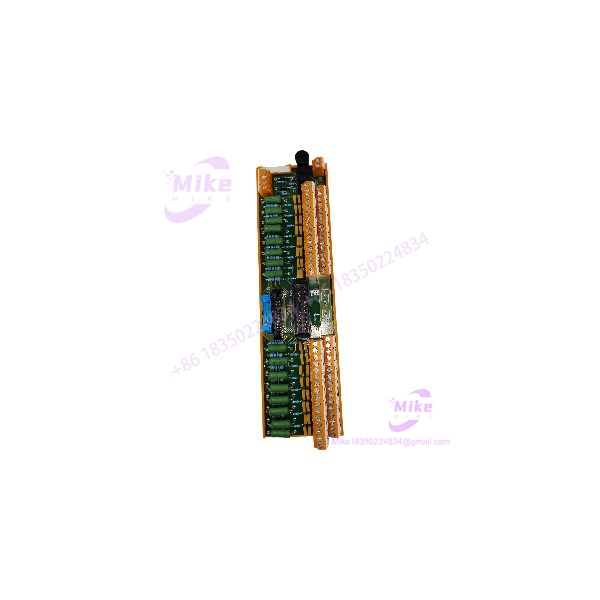
Description
Honeywell FC-TSHART-1620M | 16-Channel HART Analog FTA
Dynamic Product Introduction
If a procurement database calls the FC-TSHART-1620M an “analog input module,” treat that description cautiously. Honeywell puts this hardware in the Field Termination Assembly category. The actual safe high-density analog input module is SAI-1620m; the TSHART-1620m provides the field interface, signal conversion, transmitter power distribution, and HART connection.
The architecture is designed around sixteen analog channels, split into two groups of eight with a common 0 V. Honeywell specifies a 250 Ω ±1% input resistance and direct conversion of the field current signal into a 0–4 VDC signal for the SAI-1620m. A separate HART interface allows connection to supported HART multiplex equipment.
That makes FC-TSHART-1620M materially different from the standard TSAI-1620m FTA. Both serve analog inputs, but the TSHART version adds the HART interface required for field-device communication. Honeywell’s compatibility documentation pairs TSHART-1620m with SAI-1620m, with the HART connection called out separately.
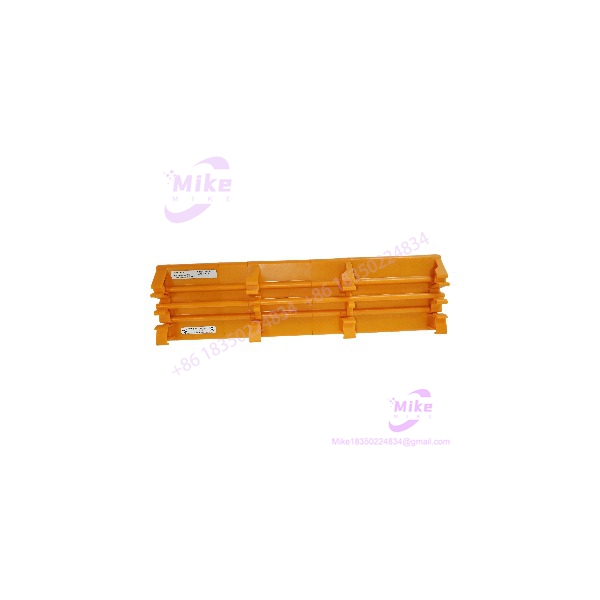
FC-TSHART-1620M
Key Technical Specifications
- Manufacturer: Honeywell
- Model: FC-TSHART-1620M
- Product Type: Safe Analog Input Field Termination Assembly with HART interface
- System: Honeywell Safety Manager
- Input Channels: 16
- Channel Arrangement: 2 groups of 8
- Field Input Current: 0–25 mA
- Intended Analog Signal: 0–20 mA / 4–20 mA
- Input Resistance: 250 Ω ±1%
- External Supply: 30 VDC
- External Supply Current: 3 mA without input-loop loads
- Output to SAI-1620m: 0–4 VDC
- Output Accuracy: 0.10%
- Passive Transmitter Output Resistance: 270 Ω ±5%
- Igniting Current per Channel: <120 mA at 30 VDC
- HART Multiplexer Output: Maximum 5 V peak-to-peak
- HART Interface Series Impedance: >100 nF
- Approvals: CE, TÜV, UL, CSA, FM
- Construction: FC conformal-coated
These are the specifications Honeywell gives for the TSHART-1620m FTA. In particular, the 250 Ω input resistance should not be confused with the 270 Ω series resistance used for passive-transmitter power distribution. They are different parts of the circuit.
System Architecture and Compatibility
The intended signal path is:
Analog/HART Field Transmitter → FC-TSHART-1620M → SICC-0001/Lx → SAI-1620m → Safety Manager
For HART applications, the FTA additionally interfaces with an appropriate HART multiplexer:
Field Transmitter → FC-TSHART-1620M → HART Multiplexer
Honeywell specifies the TSHART-1620m as the interface between field components and the SAI-1620m. The sixteen channels connect through a system interconnection cable to a single or redundant pair of SAI-1620m modules, while the HART interface is provided separately.
Honeywell’s compatibility table is explicit:
TSHART-1620m → SAI-1620m → with HART connection.
That means the FC- should not be treated as a universal replacement for every Honeywell analog FTA. The connected SAI-1620m, SICC cable, HART multiplexer/cabling, transmitter type, and system configuration all matter.
Global Sourcing & Live-Test SOP
Inbound Verification
For incoming inventory:
- Verify the exact model marking.
- Confirm the FC designation and conformal-coated construction.
- Check the Honeywell identification label and hardware revision.
- Inspect all 16 field-terminal positions.
- Inspect the SICC connector for bent, recessed, or contaminated contacts.
- Inspect the HART interface connection.
- Check screw-terminal condition and mechanical integrity.
- Verify there is no evidence of PCB contamination, corrosion, or unauthorized repair.
Do not accept a generic “Honeywell 16-channel HART analog module” as equivalent without checking the actual part number.
Live Simulation
A meaningful functional test requires a compatible SAI-1620m and the appropriate Safety Manager test environment.
Test the FTA as an interface assembly, not as a standalone controller.
Verify:
- Channel continuity.
- Correct 0 V grouping.
- Current-to-voltage conversion.
- Correct SAI-1620m channel mapping.
- Transmitter supply behavior.
- HART signal path.
- HART multiplexer communication where the test configuration supports it.
Analog Verification
Use a calibrated current source or an appropriate controlled transmitter simulator.
The documented conversion is from the field current signal to a 0–4 VDC signal presented to the SAI-1620m, with 0.10% accuracy specified for that output.
Check several representative current points rather than performing only a continuity test. The 250 Ω input resistance should also be verified against the manufacturer’s specification where bench equipment permits.
HART Verification
For a HART-equipped installation, verify the complete communication chain rather than merely measuring the analog loop.
A suitable test should confirm:
- Analog current remains within the expected loop value.
- HART communication reaches the connected multiplexer.
- The expected field device is identifiable.
- HART communication does not interfere with the Safety Manager analog signal path.
Honeywell specifies the HART interface at a maximum 5 V peak-to-peak output and identifies connections to HART multiplex units.
Final Preparation
Record:
- Exact model:
- Hardware/revision marking
- FC coating status
- SAI-1620m module used for testing
- Current-source test points
- Measured 0–4 V output
- HART test configuration
- Channel continuity results
- Terminal and connector inspection
Package the assembly in ESD-safe protective material and protect the field terminals and HART/SICC connectors from impact.
Field Engineer’s Pitfall Guide
❗ Do not confuse FC- with SAI-1620m.
This is the first compatibility trap.
FC- = Field Termination Assembly with HART interface.
SAI-1620m = Safe high-density analog input module.
Honeywell explicitly identifies TSHART-1620m as the FTA and SAI-1620m as its associated input module.
❗ Do not confuse 250 Ω and 270 Ω.
The 250 Ω ±1% specification is the TSHART-1620m input resistance.
The 270 Ω ±5% specification is the output resistance used in the passive-transmitter power path.
They are not interchangeable specifications and should not be listed as though they describe the same circuit element.
❗ Do not assume every 4–20 mA loop automatically has HART capability.
The FTA provides the HART interface, but the complete installation still needs compatible HART field instrumentation and an appropriate HART multiplexer/interface arrangement.
A normal analog transmitter can use the analog portion of the FTA without making the overall loop a HART-enabled system.
Intent-Driven FAQ
What is Honeywell FC-?
It is a 16-channel Safe Analog Input Field Termination Assembly with HART interface for the Honeywell Safety Manager system. It interfaces 0–20 mA / 4–20 mA field signals with the SAI-1620m safe analog input module.
Is FC- an analog input module?
No. It is an FTA. The associated analog input module is SAI-1620m.
How many channels does FC- provide?
It provides 16 analog input channels, arranged as two groups of eight with common 0 V.
Does FC- support 4–20 mA?
Yes. Honeywell classifies TSHART-1620m as a safe 0–20 mA and 4–20 mA analog input FTA. Its documented input range is 0–25 mA.
Does FC- support HART?
Yes. HART is the defining additional function of the TSHART version. Honeywell specifies a dedicated interface for HART multiplex units.
What is the output from FC- to SAI-1620m?
Honeywell specifies 0–4 VDC, with 0.10% accuracy.
What is the input resistance?
The documented input resistance is 250 Ω ±1%.
What is the difference between TSAI-1620m and TSHART-1620m?
Both are 16-channel analog-input FTAs for the SAI-1620m architecture. The TSHART-1620m adds the HART interface for connection to HART multiplex equipment.





