

Description
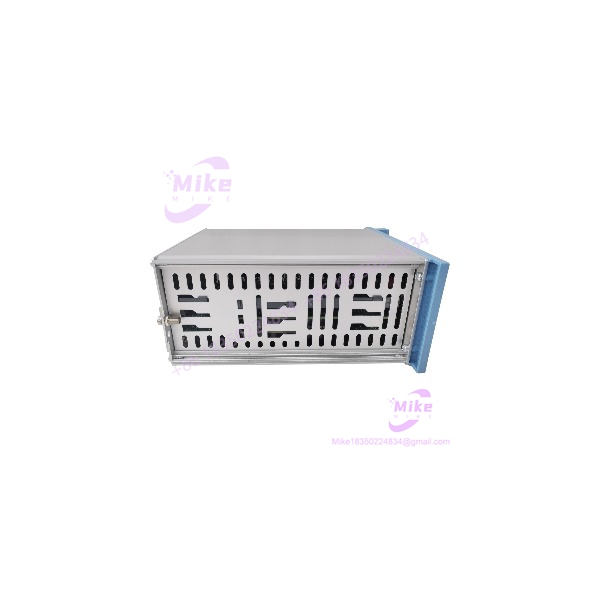
Honeywell FC-QPP-0002 | Safety Manager Quad Processor
Dynamic Product Introduction
The FC-QPP-0002 is not a conventional PLC CPU that you can evaluate by looking only at processor speed, memory size, or communication ports. In a Safety Manager installation, this module is part of the certified safety-control architecture. Its job is to execute the controller application, handle I/O processing, and participate in the diagnostic and fault-monitoring mechanisms that make the Safety Manager suitable for safety applications.
The QPP-0002 is the second-generation enhanced-performance processor architecture for Safety Manager. Honeywell documentation places it directly in the controller chassis, with one processor used in a non-redundant controller and two processor modules used in a redundant controller configuration. In the redundant arrangement, the processor pair operates together as the Control Processor architecture rather than functioning as two unrelated PLC CPUs.
That distinction matters when sourcing a replacement. A physically similar processor is not an acceptable substitute simply because it fits the chassis. The controller firmware, Safety Manager release, hardware revision, processor pairing, and overall system configuration have to be checked before the module is put into service.
Honeywell’s current migration path is also worth noting. Its February 2026 System Hints identifies FV-QPP-0002 as the newer Safety Manager Control Processor intended to replace FC-QPP-0002. Honeywell states that the FV-QPP-0002 is pin-to-pin and backward compatible with FC- and FC-QPP-0001, and is intended to function as either processor type in compatible redundant configurations.
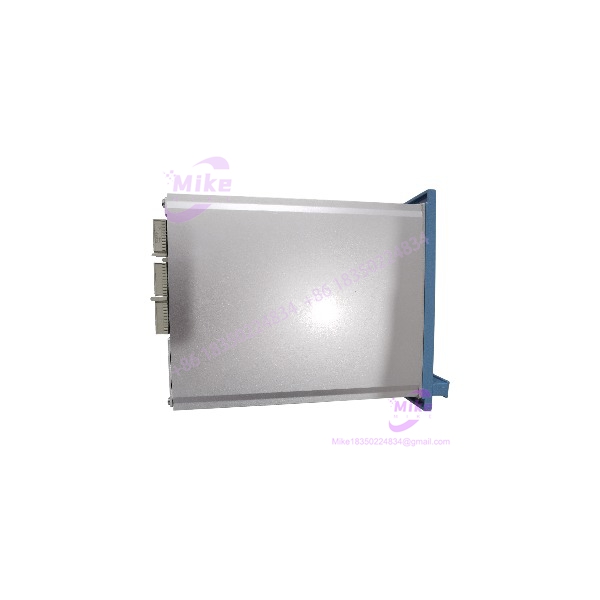
FC-QPP-0002
Key Technical Specifications
- Manufacturer: Honeywell
- Exact Type Number:
- Functional Designation: Quad Processor Pack
- Application: Honeywell Safety Manager Control Processor
- Processor Role: Executes Safety Manager controller operations and application logic
- Controller Architecture: One for non-redundant control; two modules for redundant Control Processor architecture
- 24 VDC Supply: 24 VDC, -15% to +30%
- 24 VDC Supply Current: 25 mA maximum
- 5 VDC Supply: 5 VDC ±5%
- 5 VDC Supply Current: 1.2 A maximum
- +24 Vsd Output: 15–31 VDC
- +24 Vsd Output Resistance: Approximately 1.1 kΩ
- SD Input High: 15–32 VDC
- SD Input Low: <4 VDC
- SD Input Current: Approximately 8 mA at 24 VDC
- WDout Output Current: 750 mA per output
- External Module Temperature: -5°C to +70°C
- Internal Module Temperature: -5°C to +85°C
- Storage Temperature: -40°C to +85°C
- Relative Humidity: 10–95%, non-condensing
- Dimensions: 176 × 88.5 × 212 mm
- Weight: 1.3 kg
- Approvals: CE, UL, CSA, TÜV, FM
These figures are taken from Honeywell’s Safety Manager hardware reference for .
Global Sourcing & Live-Test SOP
1. Inbound Verification
For an FC-, serial and label verification should happen before electrical testing.
Record:
- Exact type number:
- Hardware/version information shown on the module label
- Serial number and manufacturing identification
- Connector condition
- PCB or enclosure damage
- Evidence of moisture, corrosion, contamination, or previous repair
- Packaging condition and ESD protection
Do not automatically accept a listing described generically as “” as an FC-. Honeywell’s Safety Manager product family contains related processor types, and the conformal-coated FC designation is part of the formal type-number identification.
2. Live Simulation
The meaningful functional test is an authentic Safety Manager controller environment, not a generic bench power-up.
The test should verify:
- Processor initialization
- Correct controller recognition
- Safety Manager software/hardware compatibility
- Controller application loading
- I/O communication
- Processor diagnostics
- Watchdog and fault indications
- Stable operation under representative controller load
- Redundant processor synchronization when used in a redundant controller
For a redundant installation, both processor positions should be tested against the actual Safety Manager architecture rather than declaring the module good simply because it boots.
3. Diagnostics
A qualified test should capture diagnostic status before shipment.
At minimum, record:
- Processor startup status
- Controller diagnostic state
- Application execution status
- I/O communication status
- Fault and watchdog indications
- Redundant-controller synchronization status where applicable
- Supply-voltage behavior under operating load
Honeywell’s documentation describes as a processor with extensive internal hardware diagnostics. That makes diagnostic verification considerably more meaningful than a simple power-on test.
4. Final Preparation
Before shipment:
- Record exact hardware identification and revision
- Photograph the module label and connectors
- Preserve the processor configuration information
- Use ESD-safe packaging
- Protect the backplane connectors from impact
- Seal the processor in moisture-resistant packaging where appropriate
- Include the recorded test result with the procurement record
For a safety-system spare, traceability is part of the product—not paperwork that gets added later.
Field Engineer’s Pitfall Guide
❗ Firmware and Safety Manager Release Compatibility
Do not treat FC- as an independent computer module. Its acceptable use depends on the Safety Manager system revision and controller configuration.
A processor that powers up but cannot correctly initialize with the installed Safety Manager software is not a successful replacement.
Honeywell’s documentation states that provides backward compatibility with QPP-0001 when used with Safety Manager systems running R121 firmware or higher. Verify the actual installed system revision before applying a replacement strategy.
❗ Do Not Treat the Processor as a Generic PLC CPU
The FC- belongs in a predetermined Control Processor position inside the Safety Manager chassis. It is not a general-purpose CPU that can be wired into an arbitrary PLC rack.
Field replacement should therefore begin with the controller chassis model, processor position, existing QPP type, software revision, and redundancy arrangement—not with the processor alone.
Honeywell’s hardware reference specifically identifies modules in the processor positions of the redundant CPCHAS-0002 architecture.
❗ Processor Removal Is a Safety-System Procedure
The documentation specifically warns that the module should only be removed or replaced safely with the key switch in STOP. Do not improvise a hot-swap procedure simply because another industrial controller permits energized CPU replacement.
A practical field rule: if the replacement procedure is not explicitly supported by the installed Safety Manager configuration and maintenance documentation, stop and verify it before touching the processor.
Intent-Driven FAQ
What is the Honeywell FC-?
The FC- is Honeywell’s Enhanced Performance Quad Processor Pack for the Safety Manager safety-control system. It functions as the Control Processor module responsible for executing the Safety Manager controller application and coordinating I/O and system operations.
Is FC- the same as FC-QPP-0001?
No. They are different QPP generations. is the enhanced-performance generation. However, Honeywell documentation identifies as backward compatible with QPP-0001 in Safety Manager systems running R121 firmware or higher.
Can FC- be used in a redundant Safety Manager?
Yes. Honeywell’s architecture uses two modules in a redundant Control Processor configuration. The two processors operate as part of the redundant Safety Manager architecture rather than as independent controllers.
What is replacing FC-?
Honeywell’s February 2026 System Hints identifies as the newer Safety Manager Control Processor. Honeywell states that FV- is pin-to-pin and backward compatible with both FC- and FC-QPP-0001 and can function in their place under the supported architecture.
What power does the FC- require?
Honeywell specifies a 24 VDC supply of -15% to +30%, with a maximum 24 V supply current of 25 mA, plus a 5 VDC ±5% supply with a maximum current of 1.2 A. Do not confuse the 24 V control supply with the processor’s 5 V supply rail.
Can I verify FC- on a normal PLC test bench?
Not adequately. A basic power-on test can identify obvious failures, but it does not prove correct Safety Manager operation. A meaningful acceptance test should use the appropriate Safety Manager controller environment and verify processor initialization, application execution, diagnostics, I/O communication, and redundancy behavior where applicable.
Does the supplied marketplace listing prove this is an FC-?
No. The supplied URL currently identifies an FC-QPP-0001 V1.4 listing. It should not be used as evidence for the condition, revision, price, or availability of an FC-.
Procurement Verdict
FC- is a high-value Safety Manager control processor, and exact identification matters.
For a production spare, I would require the supplier to confirm:
- Exact type number
- Hardware revision/version
- Serial and traceability information
- Safety Manager compatibility
- Applicable firmware/release requirements
- Processor startup test
- Controller application test
- I/O communication verification
- Redundant synchronization test when applicable
- ESD-safe packaging
The newer replacement path is particularly relevant for long-term migration planning, because Honeywell has explicitly positioned it as the successor to FC- while maintaining backward compatibility with the existing FC-QPP processor architecture.
For an obsolete-system spare strategy, I would therefore treat FC- as a service-critical processor and FV- as the current migration/replacement path, rather than buying on the QPP family name alone.





