


Description
Honeywell 51303940-250 | Cabinet Fan With Alarm, New Surplus
Architect’s Product Breakdown
The Honeywell 51303940-250 operates as a critical environmental control asset designed to protect sensitive distributed control system hardware housed within standard industrial cabinets. By forcing high-volume airflow across densely packed processor racks and power supplies, it prevents localized thermal throttling and premature electrolytic capacitor dry-out. The integrated monitoring circuitry continuously tracks rotational velocity, tripping a hardware alarm contact if fan degradation or blade stall occurs.
Deploying this module requires verified line voltage alignment with the cabinet power distribution harness, as mismatched suffixes (such as swapping a 115V variant for this 230V model) will lead to immediate electrical failure or zero operational torque. Plant technicians must regularly inspect the intake filter media; restricting airflow forces the internal fans to overspeed and overheats the monitoring relays, triggering false alarm states on the supervisory controller.
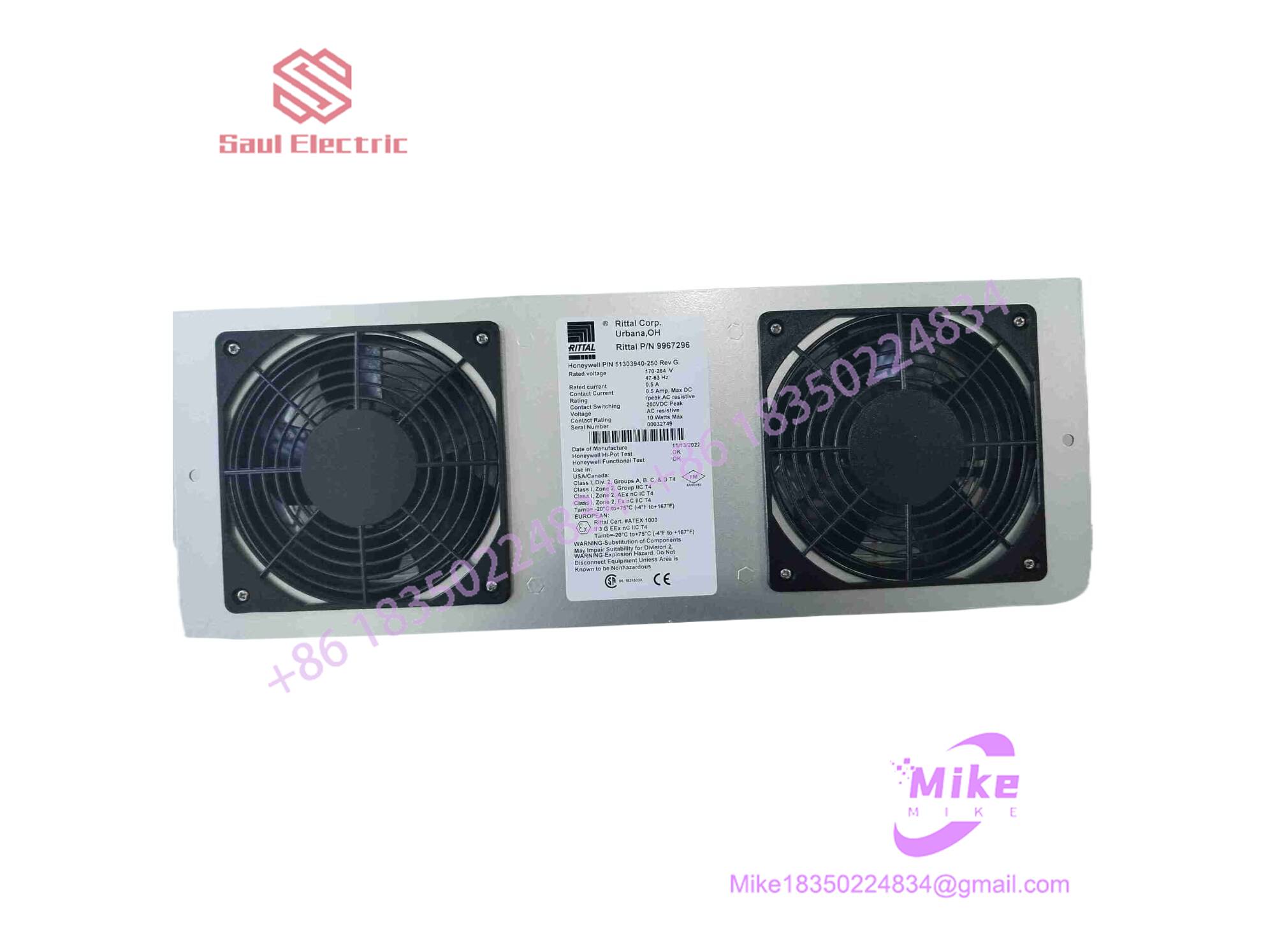
51303940-250
Key Technical Specifications
| Parameter | Specification |
| Manufacturer | Honeywell |
| Part Number | 51303940-250 |
| Module Type | Control Cabinet Fan With Alarm |
| Compatible Architecture | Honeywell UCN / Experion PKS Cabinets |
| Operating Voltage Range | 170–264 VAC |
| Rated Current | 0.5 A |
| Monitoring Type | Built-in rotational speed / stall alarm circuit |
| Operating Temperature | 0°C to +60°C |
| Storage Temperature | -40°C to +85°C |
| Shipping Weight | Approx. 5.0 kg |
Field Engineer’s Pitfall Guide (Unique Value)
- Voltage Suffix Mismatch: Do not mistake the -250 (higher voltage tier) for the -100 or -150 variants. Applying 230V to a lower-rated assembly destroys the windings, while supplying 115V to this unit causes weak airflow and a persistent low-voltage alarm trip.
- Blocked Exhaust Plenums: Installing the fan assembly without maintaining adequate overhead clearance inside the top cabinet hat traps hot exhaust air, neutralizing the cooling benefit and cooking the internal monitoring board.
- Vibration-Induced Terminal Loosening: Continuous cabinet vibration can back out power and alarm wiring screw terminals. I once spent hours tracing an intermittent cabinet alarm fault that boiled down to a micro-arcing spade lug on the fan’s power input block.
QA & Testing SOP (Transparency)
- Visual & Origin Verification: Units are inspected for OEM housing integrity, proper terminal block labeling, and absence of physical obstruction in the impeller blades.
- Test Bench Simulation: The assembly is powered up on a variable AC test rig matching its voltage profile to verify smooth mechanical operation and acoustic baseline levels.
- Alarm Loop Verification: Technicians artificially restrict airflow or test signal feedback loops to ensure the integrated alarm relay accurately transitions state during a simulated stall event.
- Anti-Static & Protective Packaging: Units are packaged in high-impact industrial cushioning boxes to prevent transit damage to the fan housing or mounting flanges.
Technical FAQ
- Can I hot-swap this fan assembly while the process rack is energized? While structurally possible, extreme care must be taken around exposed 230V input terminals. Always follow plant safety protocols and lockout local power feeds if cabinet geometry restricts safe access.
- What causes the integrated fan alarm relay to trip falsely? This is typically caused by severe dust accumulation on the impeller blades throwing off balance, restricted intake filters choking airflow, or low supply voltage sagging the motor speed.
- Does this unit require external wiring for the alarm output? Yes. The alarm dry contacts must be wired back into the cabinet’s digital input or node alarm monitoring loop to register faults in the control room.
- What warranty is provided with a surplus unit? Units carry a standard 12-month replacement warranty backed by functional bench testing.





