

Description
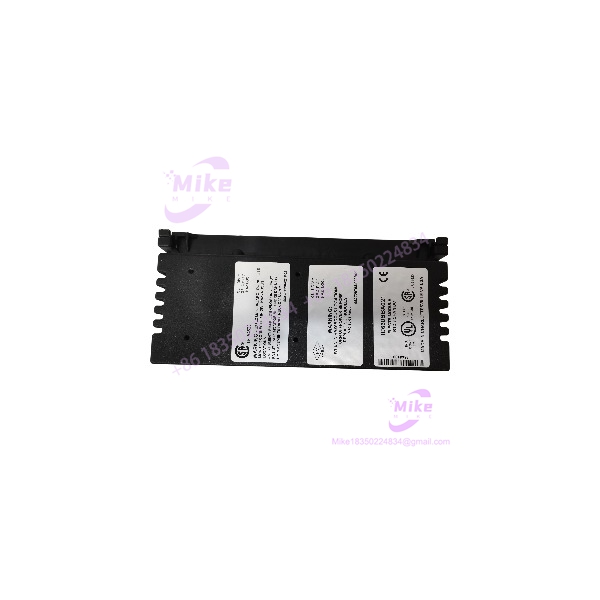
GE Fanuc IC660BBA021 | 6-Channel RTD Input Block
Dynamic Product Introduction
Temperature loops are easy to underestimate until one channel starts reporting an impossible value and the control engineer has to determine whether the problem is the sensor, extension wiring, terminal assembly, Genius bus, or the I/O block itself. The GE Fanuc IC660BBA021 was designed for exactly this kind of distributed temperature acquisition: six RTD inputs are processed locally and communicated through the Genius I/O network rather than requiring every sensor to terminate directly at the PLC rack.
Each input can accommodate platinum, nickel, or copper RTDs, with configurable linearization and resistance parameters. The block can report values in engineering units such as tenths of degrees Celsius or Fahrenheit, tenths of ohms, or counts, depending on configuration. Factory calibration provides 0.1°C input resolution.
The six circuits are arranged as three groups of two, with 300 V group-to-group isolation and 1,500 V block-to-block isolation. That isolation architecture matters in plants where temperature sensors are physically distributed across equipment with different electrical environments.
This is also a legacy platform. Current procurement records identify IC660BBA021 as discontinued, so replacement projects should treat revision, terminal configuration, and existing Genius network architecture as part of the compatibility check rather than assuming that any visually similar Genius block is interchangeable.
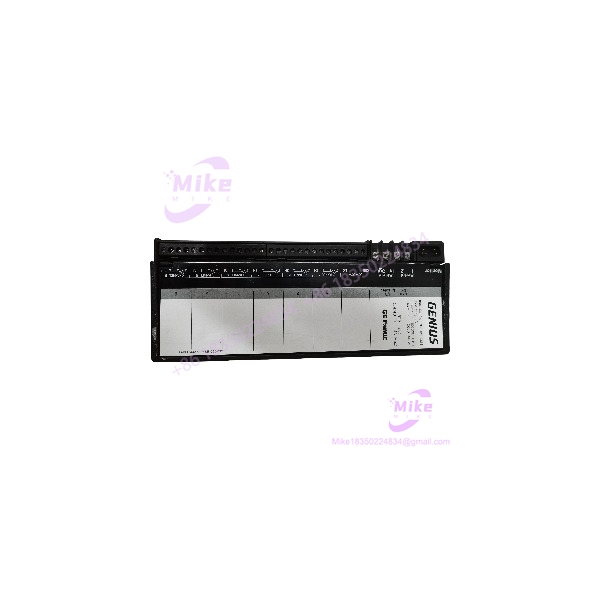
IC660BBA021
Key Technical Specifications
- Model: IC660BBA021
- Series: GE Fanuc Genius I/O
- Function: Six-channel RTD input
- Input Type: Platinum, nickel, or copper RTD
- RTD Linearization: Platinum DIN 43760, nickel DIN 43760, copper, or linear configuration
- Resistance Measurement: 0–5,000 Ω
- Input Resolution: 0.1°C
- Absolute Accuracy: Approximately ±0.5°C typical / ±1.0°C maximum for platinum or nickel; copper accuracy is lower and should be evaluated against the application
- Input Update Frequency: 400, 800, or 1,600 ms
- Input Filter: 400, 800, or 1,600 ms
- Nominal Block Power: 24/48 VDC
- Specified DC Supply Range: 18–56 VDC, with maximum 10% ripple
- Power Consumption / Heat Dissipation: Approximately 7 W maximum
- Channels: 6
- Channel Grouping: 3 groups of 2
- Block-to-Block Isolation: 1,500 V
- Group-to-Group Isolation: 300 V
- Diagnostics: Input short, internal fault, wiring error, open wire, overrange, underrange, high alarm, low alarm
- Operating Temperature: 0°C to +60°C
- Storage Temperature: -40°C to +100°C
- Humidity: 5–95%, non-condensing
- Approximate Dimensions: 8.83 × 3.50 × 3.94 in. (22.44 × 8.89 × 10.00 cm)
- Approximate Weight: 4 lb. (1.8 kg)
The 18–56 VDC figure is the documented operating supply range; some commercial listings simplify the product as a “24/48 VDC” block. For engineering replacement work, use the detailed supply specification rather than the abbreviated catalog description.
Global Sourcing & Live-Test SOP
For an obsolete IC660BBA021, visual inspection alone is not an acceptable incoming inspection.
Inbound verification
- Photograph the complete nameplate before unpacking.
- Confirm IC660BBA021 rather than IC660BBA023, IC660BBA101, or another Genius analog block.
- Record the hardware revision/suffix where present.
- Confirm whether the shipment contains the complete block or an electronics/terminal assembly only.
- Inspect the terminal assembly for cracked housings, damaged screw terminals, corrosion, and evidence of previous field overheating.
- Trace serial/lot markings through the supplier paperwork when available.
- Check enclosure and connector condition for signs of refurbishment or unauthorized rework.
Live simulation
- Apply a controlled 24/48 VDC-class supply within the specified 18–56 VDC range.
- Verify power-up/status indication before connecting process instrumentation.
- Connect calibrated RTD simulators or precision resistance sources to the six channels.
- Exercise representative platinum, nickel, and copper configurations where the intended application requires them.
- Check configured engineering-unit scaling against the expected resistance/temperature relationship.
- Test open-wire and short-input behavior rather than simply confirming that a normal temperature value appears.
- Verify Genius network communication using the applicable controller/bus interface and, where available, the GE Genius Hand-held Monitor.
The manufacturer’s Genius documentation specifically provides diagnostic data for RTD blocks at both block and individual-circuit levels, making diagnostics part of the commissioning process rather than an optional afterthought.
24-hour heat run
- Maintain normal supply voltage.
- Monitor block temperature and status.
- Cycle representative input conditions.
- Record intermittent faults, communication dropouts, and channel drift.
- Confirm that all six channels remain stable.
Final preparation
- Record tested hardware revision and configuration.
- Document any simulator values used during validation.
- Package in ESD-safe material with terminal protection.
- Clearly identify tested condition: tested, refurbished, surplus, or factory sealed.
- Preserve the original nameplate information with the shipment record.
Field Engineer’s Pitfall Guide
❗ Firmware / Revision Mismatch
Do not assume that two visually identical Genius blocks have identical behavior simply because both carry the base number. Revision information can matter in a legacy migration strategy. Record the actual hardware/software revision during inspection and compare it with the existing Genius network documentation.
❗ RTD Wiring and Group Configuration
The six inputs are arranged as three groups of two. Wiring an RTD block as though it were a generic six-channel analog input module is a common commissioning mistake. Verify the terminal assembly and the specific RTD wiring arrangement before applying process power.
Also remember that the block supports different RTD materials and configurable linearization. A platinum RTD configured as nickel—or a resistance input interpreted with the wrong linearization—can produce a perfectly believable but incorrect temperature value. That is more dangerous than an obvious channel fault.
❗ Don’t Substitute a Similar Genius Block by Appearance
is specifically the 24/48 VDC six-input RTD block. IC660BBA023, for example, is the six-input thermocouple block; IC660BBA101 is the 115 VAC/125 VDC RTD variant. Their housings may look familiar, but their electrical functions are different.
Intent-Driven FAQ
Is the a PLC CPU module?
No. The is a Genius distributed I/O block used for six RTD inputs. The PLC or controller communicates with the block through the Genius I/O architecture. GE documentation lists Genius interfaces for systems including Series 6, Series 90-70, Series 90-30, Series Five, and later GE PLC platforms with appropriate Genius interfaces.
What RTDs can the accept?
The block supports platinum, nickel, and copper RTDs, with selectable linearization. Platinum and nickel RTD configurations are associated with DIN 43760 characteristics in the documented specifications.
What is the input resolution?
The documented resolution is 0.1°C. Do not confuse resolution with absolute accuracy; the two specifications are not interchangeable.
Does the provide diagnostics?
Yes. Diagnostics include input shorts, internal faults, wiring errors, open-wire conditions, overrange/underrange indications, and high/low alarms. Fault reporting can be configured on an individual circuit basis.
Can I hot-swap the ?
Do not assume hot swapping is safe simply because the block is a distributed I/O device. Follow the machine’s approved shutdown and Genius I/O maintenance procedure, including isolation of field power where required. The actual risk depends on the installation, terminal assembly, controller architecture, and site electrical procedure.
Is the still an OEM-current product?
It is a legacy/discontinued GE Fanuc product. Current aftermarket records identify the as discontinued, so procurement should focus on exact part number, hardware revision, physical condition, test evidence, and replacement compatibility.
What should I verify before buying an ?
At minimum, verify:
- Exact catalog number
- Hardware/revision suffix
- Complete block versus terminal/electronics assembly
- 24/48 VDC RTD function
- Six-channel configuration
- Terminal condition
- Genius I/O compatibility
- Tested versus untested condition
- Actual warranty terms supplied by the seller





