

Description
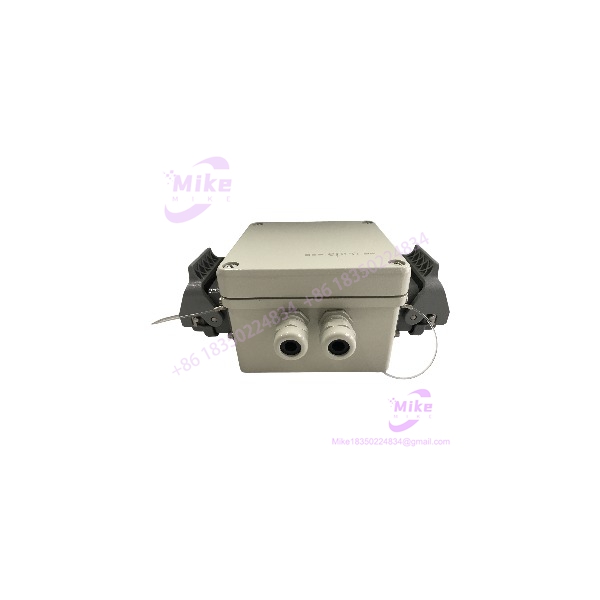
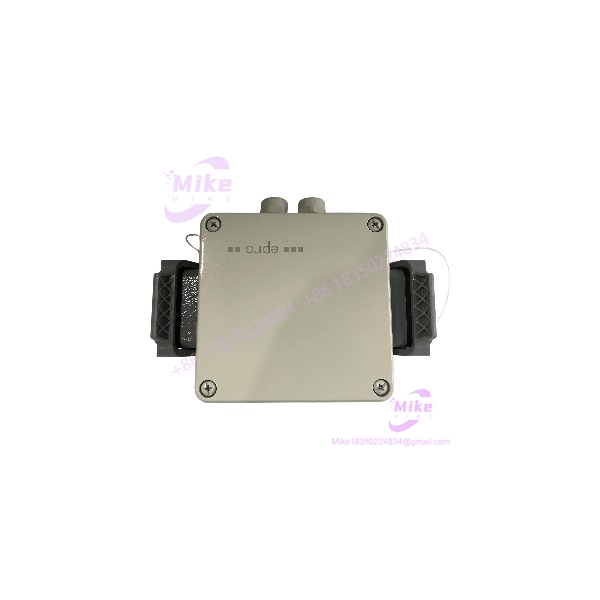
EPRO MMS3120/022-000 | Dual-Channel Vibration Transmitter
Product Introduction
The EPRO MMS3120/022-000 is a two-channel vibration transmitter designed to turn bearing-housing vibration measurements into usable industrial monitoring signals. It belongs to the MMS 3000 transmitter family and is intended for continuous monitoring and protection of rotating equipment such as turbines, compressors, pumps, fans, gearboxes, and other turbomachinery.
The important distinction is that this module measures absolute bearing vibration, rather than shaft-relative displacement. It accepts signals from compatible electrodynamic vibration transducers, processes the two channels independently, and provides standardized 0/4–20 mA outputs for connection to a PLC, DCS, protection system, or supervisory monitoring system. The transmitter also incorporates self-test functions for the electronics and connected transducers.
MMS3120/022-000
Key Technical Specifications
- Model: EPRO MMS3120/022-000
- Model shorthand encountered in inventories: MMS3120022-000
- Series: MMS 3000
- Product function: Dual-channel bearing vibration transmission and supervision
- Measurement principle: Absolute bearing vibration measurement
- Number of channels: 2
- Input type: Electrodynamic vibration transducer signals
- Supported transducers: PR 9268/20, PR 9268/30, PR 9268/60, and PR 9268/70 families
- Measured condition: Bearing/housing vibration associated with rotating machinery
- Output type: 0/4–20 mA
- Output architecture: Channel-dependent analog vibration outputs
- Alarm function: Limit supervision
- Diagnostics: Integrated self-checking of electronic circuitry and transducers
- Processor: Integrated microcontroller
- Power supply: Two redundant 24 VDC inputs
- Mounting: Designed for direct machine installation
- System family: MMS 3000 transmitter system
- Typical machinery: Steam turbines, gas turbines, hydro turbines, compressors, pumps, fans, gearboxes, and similar rotating equipment
- Plant environments: Power generation, refinery, chemical processing, and other industrial machinery-monitoring applications
- Hazardous-area suitability: Not intended for hazardous areas
- Approximate listed dimensions: 160 × 160 × 120 mm; verify enclosure dimensions against the physical unit before mechanical replacement.
- Approximate listed weight: 0.8 kg; actual shipping weight may vary.
Application Scenarios & Pain Points
Turbine Bearing Protection
Bearing vibration is one of the basic machine-health signals in turbine monitoring. The MMS3120/022-000 provides two measurement channels so separate bearing locations can be monitored without installing a separate transmitter for every point.
Compressor and Pump Monitoring
For compressors, pumps, and fans, rising bearing vibration can accompany mechanical imbalance, bearing degradation, looseness, or other developing faults. The 0/4–20 mA outputs make the transmitter suitable for integration with conventional industrial control and monitoring systems.
Legacy MMS 3000 Installations
Older plants often have transmitters mounted close to the machinery, with current signals routed back to a PLC or DCS. Replacing the transmitter while retaining the existing field wiring can be attractive — but only if the sensor type, signal scaling, alarm behavior, and supply arrangement match.
Distributed Machine Monitoring
The MMS 3000 architecture was designed for both larger plants with PLC/host-computer systems and smaller installations with only a limited number of measurement points. This makes the MMS3120/022-000 useful where a full centralized rack system is unnecessary.
Troubleshooting an Unstable Vibration Signal
A transmitter replacement should not be the first assumption when the DCS trend suddenly becomes noisy. Check the vibration sensor, cable, grounding/shielding, power supply, transmitter input, and current-loop receiver separately. Otherwise, a good MMS3120/022-000 can be blamed for a field-side problem.
QA & Live Testing SOP
For an incoming , acceptance testing should reproduce the actual vibration signal path as closely as practical.
- Visual inspection: Examine the housing, terminals, PCB area, connector condition, mounting points, and evidence of corrosion or unauthorized repair.
- Power verification: Apply a controlled 24 VDC source and verify stable operation on the applicable supply input.
- Redundant supply test: Check both 24 VDC supply paths independently where the test setup permits.
- Channel verification: Exercise Channel 1 and Channel 2 separately. Do not assume one functioning channel proves the second channel is healthy.
- Sensor simulation: Use an appropriate vibration-signal simulator or calibrated source rather than injecting arbitrary voltage into the transmitter.
- Output-loop test: Verify the corresponding 0/4–20 mA output while varying the simulated vibration input.
- Alarm verification: Check configured limit-supervision behavior and verify that alarm states change at the expected thresholds.
- Self-test verification: Confirm the transmitter’s diagnostic response to controlled sensor or signal faults.
- Current-loop integrity: Check loop polarity, receiver impedance, and isolation requirements before connecting the unit to a live DCS/PLC input.
- Field-sensor comparison: If the original PR 9268 sensor remains installed, compare the replacement transmitter against the known-good transmitter before changing plant scaling.
- ESD handling: Package the electronics in ESD-safe material and mechanically protect the terminals and enclosure during transport.
A power-up test alone is not sufficient. The meaningful acceptance test is sensor input → signal processing → current output → alarm/diagnostic response.
Field Engineer’s Pitfall Guide
❗ Do not confuse bearing vibration with shaft vibration. The /022-000 is intended for absolute bearing vibration using electrodynamic vibration transducers. It is not the same measurement architecture as an eddy-current shaft-displacement monitor.
❗ Verify the PR 9268 sensor variant. The documented compatible families include PR 9268/20, /30, /60, and /70 variants. A physically similar vibration sensor does not automatically provide the correct electrical characteristics for the transmitter.
❗ Check the current-loop scaling before swapping the unit. A 4–20 mA vibration signal is only useful when the receiving DCS/PLC channel uses the correct engineering-unit scaling. Verify the existing configuration before commissioning the replacement.
❗ Do not treat the two channels as interchangeable without testing. Check both measurement paths independently, including sensor input, processing, current output, and alarm behavior.
❗ Keep hazardous-area requirements separate from ordinary industrial installation. The documented transmitter is not designed for hazardous-area use. If the machine is installed in a classified location, the complete sensor/transmitter/interface architecture must be reviewed rather than assuming the transmitter is intrinsically safe.
❗ Verify whether the existing installation uses direct machine mounting. The family was designed for installation close to the monitored machine, so enclosure location, cable routing, environmental exposure, and grounding can affect replacement planning.
Intent-Driven FAQ
Q: What is the EPRO /022-000?
A: It is a dual-channel bearing vibration transmitter in the EPRO MMS 3000 system. It measures absolute bearing vibration from compatible electrodynamic vibration transducers and provides standardized analog outputs.
Q: How many vibration channels does /022-000 have?
A: Two independent channels. Each channel is intended to process a bearing-vibration measurement.
Q: Which sensors are compatible with /022-000?
A: The documented sensor families include PR 9268/20, PR 9268/30, PR 9268/60, and PR 9268/70 electrodynamic bearing-vibration transducers.
Q: What output does the /022-000 provide?
A: The transmitter provides 0/4–20 mA current outputs for integration with industrial monitoring and control systems.
Q: Does /022-000 support redundant power?
A: Yes. The documented design has two redundant 24 VDC supply inputs.
Q: Is /022-000 part of the MMS 6000 system?
A: The /022-000 belongs to the MMS 3000 transmitter system. It should not be treated as interchangeable with MMS 6000 rack-based measurement cards merely because both product families originate from EPRO.
Q: Is /022-000 a shaft-vibration monitor?
A: Its primary documented function is absolute bearing vibration measurement. Shaft-relative vibration/displacement applications normally use a different sensor and signal-conditioning architecture.
Q: Can /022-000 be installed in a hazardous area?
A: The available technical description explicitly states that the transmitter is not designed for hazardous-area use. The installation classification and any required intrinsic-safety barriers must therefore be evaluated separately.
Q: What should be checked before ordering a replacement /022-000?
A: Confirm the exact designation, PR 9268 sensor variant, channel count, 0/4–20 mA scaling, alarm requirements, 24 VDC supply arrangement, mounting location, and the DCS/PLC input configuration. Those details determine whether the replacement will reproduce the existing measurement loop correctly.





