

Description
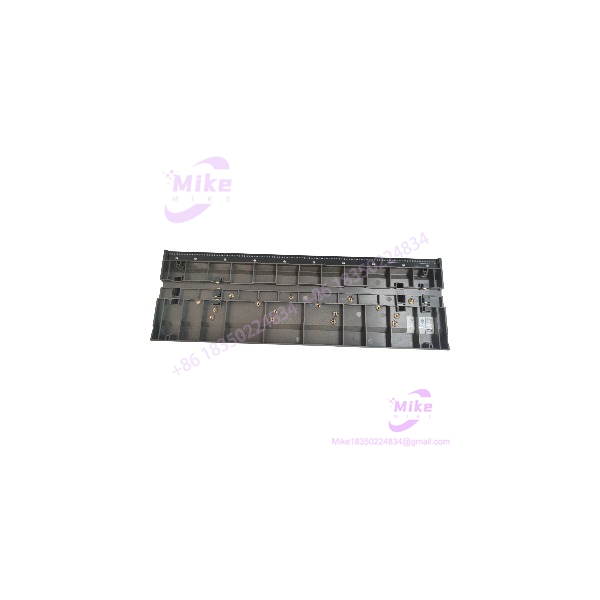
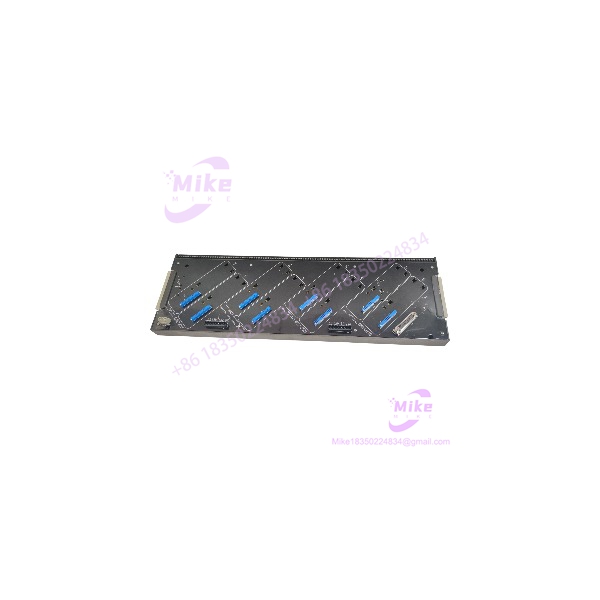
Emerson KJ4002X1-BA1 | DeltaV 8-Wide Vertical I/O Carrier
Product Introduction
A DeltaV carrier replacement is not simply a matter of matching the connector and mounting footprint. The Emerson KJ4002X1-BA1 is listed as a left-side, 8-wide vertical carrier used in the DeltaV I/O architecture. Its job is to provide the carrier structure and LocalBus connection for compatible modules—not to perform signal acquisition, control logic, or communication processing on its own.
For maintenance teams supporting legacy DeltaV installations, the correct carrier orientation and system arrangement are essential. Confirm the complete part number, installed carrier layout, LocalBus connections, and applicable installation documentation before substituting a surplus unit.
Supplier references identify 12.6 VDC at 15 A LocalBus power and 30 VDC at 6.5 A field-circuit power for this carrier. These values should be treated as reported ratings pending confirmation against the exact OEM documentation and hardware revision, rather than universal limits for every DeltaV carrier configuration.
KJ4002X1-BA1
Key Technical Specifications
- Model: KJ4002X1-BA1
- Manufacturer: Emerson
- Platform: DeltaV M-Series
- Component Category: I/O carrier
- Carrier Type: Left-side vertical carrier
- Carrier Width: 8-wide
- LocalBus Circuit Power: 12.6 VDC, reported maximum 15 A
- Field Circuit Power: 30 VDC, reported maximum 6.5 A; verify the exact carrier documentation
- Installation Orientation: Vertical carrier arrangement
- System Function: Mechanical support and LocalBus interconnection for compatible I/O modules
- Signal Processing: Not a standalone I/O signal-processing module
- Controller Function: Not a standalone controller or CPU
- Environmental Ratings: DeltaV carrier-family documentation lists −40°C to +70°C for specified related carrier/extender products; verify the rating applicable to the exact BA1 assembly
- Humidity / Contaminants: Related DeltaV carrier documentation specifies 5–95% non-condensing humidity and ISA-S71.04 Class G3; confirm applicability to the exact BA1 configuration
- Protection Rating: IP20 is specified for related DeltaV carrier/extender hardware; verify the exact model’s certification sheet
- Installation Restrictions: DeltaV LocalBus carriers and extender cables must be handled in accordance with the applicable system power-down and hazardous-area instructions
Specification note: Emerson’s available documentation for related KJ4002X1 components establishes important family-level installation and electrical limits, but the exact KJ4002X1-BA1 rating sheet should be obtained before using these values as acceptance criteria. The BA1 should not be confused with KJ4002X1-BE1/BF-series extender cables or BC2/BD2 power/controller carriers.
Global Sourcing & Live-Test SOP
For a used or surplus KJ4002X1-BA1, inspection should focus on identity, physical integrity, and carrier-level electrical continuity. A carrier that looks intact may still have damaged LocalBus contacts or mounting features.
1. Inbound Verification
- Photograph the full nameplate and part-number label.
- Confirm the complete designation KJ4002X1-BA1.
- Verify that the unit is the left-side, 8-wide vertical carrier—not a related extender cable or a different-width carrier.
- Record serial number, revision, manufacturing information, and available OEM documentation.
- Inspect the housing, mounting points, retaining features, and connector interfaces.
- Check LocalBus contacts for oxidation, deformation, contamination, or evidence of overheating.
- Compare the carrier layout and connection orientation with the customer’s installed DeltaV assembly.
- Record the seller’s condition classification separately from the inspection findings.
2. Physical and Electrical Inspection
- Inspect carrier connectors under suitable lighting or magnification.
- Check for cracked housings, bent contacts, loose hardware, or prior repair.
- Verify that mounting and retention features are intact.
- Use only an OEM-approved procedure and suitable test equipment for electrical checks.
- Do not apply operating power to unidentified contacts or attempt an improvised LocalBus simulation.
- Record all observed defects before proceeding to system-level testing.
3. System-Level Verification
A carrier should not be declared fully functional based on appearance alone.
- Confirm the DeltaV carrier arrangement and compatibility with the installed system.
- Verify that the carrier is installed in the documented position and orientation.
- Check that adjacent LocalBus connections and any extension components are correctly identified.
- Follow the site’s approved DeltaV maintenance procedure for de-energization, installation, and restart.
- After installation, verify that the system recognizes the installed modules as expected.
- Check for carrier-related diagnostics, LocalBus faults, or unexpected module communication loss.
- Record the system configuration and test results.
4. Extended Run and Diagnostics
Where the maintenance procedure and operating environment permit, perform a monitored system run after installation.
Record:
- Carrier part number and revision
- Installed carrier position
- Adjacent carrier/extender configuration
- System diagnostics before and after replacement
- Any LocalBus or module-recognition faults
- Test date and responsible technician
Do not claim a successful 24-hour burn-in or operational test unless that test was actually performed and documented.
5. Final Preparation and Packaging
- Preserve all customer-supplied labels and configuration records.
- Photograph the unit before packing.
- Protect exposed contacts with suitable ESD-safe packaging.
- Use impact-resistant packaging to protect mounting features and connectors.
- Include inspection findings and any available OEM documentation.
- Clearly identify whether the item is new, used, refurbished, or untested based on verifiable condition evidence.
Field Engineer’s Pitfall Guide
❗ Do not mistake the carrier for an I/O module
The is a carrier assembly. It does not independently provide analog input, digital output, or controller functionality. Confirm that the replacement is the required carrier and that the actual I/O modules are compatible with the installed DeltaV architecture.
❗ Do not substitute a related variant by appearance
The family includes carriers and LocalBus extender assemblies with different functions. Emerson documentation separately identifies BE1 as a top extender and BF-series parts as bottom extenders; BC2 and BD2 are 4-wide vertical power/controller carriers. Match the complete suffix and the required physical role.
❗ Never disconnect a carrier or LocalBus extender under energized system power
Emerson’s related extender documentation states that the assembly must not be inserted or removed with system power energized. Follow the applicable DeltaV installation procedure, including hazardous-area requirements, before disconnecting carrier or LocalBus hardware. Do not assume that a carrier is hot-swappable.
Intent-Driven FAQ
What is son ?
It is a DeltaV left-side, 8-wide vertical I/O carrier. It provides carrier infrastructure and LocalBus interconnection for compatible DeltaV modules; it is not a standalone controller or signal-processing module.
the an I/O module?
No. It is a carrier assembly. The actual I/O functions are performed by compatible modules installed in the DeltaV system.
What is the LocalBus power rating?
A supplier lists 12.6 VDC at 1the . Treat this as a reported rating and confirm it against the exact OEM documentation before using it for engineering or acceptance decisions.
the discontinued?
Radwell lists the model as discontinued by the manufacturer. That indicates legacy sourcing conditions, but it does not establish that no remaining inventory exists. Confirm current availability, condition, and warranty terms directly with the seller.
Can I hthe ?
Do not assume so. Emerson’s related carrier/extender documentation prohibits insertion or removal with system power energized. Follow the exact system and installation instructions for the installed hardware.
the include a DeltaV controller or I/O electronics?
No. It is a carrier, not a controller CPU or a standalone I/O signal-processing module. Verify the complete assembly and required companion hardware before ordering.
What should I verify before purchasing a replacement?
Confirm the exact part number, left-side 8-wide vertical configuration, physical condition, connector integrity, installed carrier layout, and any applicable revision or certification requirements. Ask the seller for clear label and connector photographs, and request test documentation if the item is represented as tested.
Bottom Line for Buyers
The is a legacy DeltaV left-side, 8-wide vertical I/O carrier. Its replacement suitability depends on matching the exact carrier configuration and preserving the intended LocalBus architecture.
Before purchasing, request photographs of the nameplate, mounting features, and LocalBus interfaces. Confirm the applicable OEM electrical and environmental ratings, and do not accept a generic “DeltaV carrier” description as proof of exact-model compatibility.
For reference, Emerson’s official DeltaV documentation is available through the Emerson website. Related installation information should be checked against the exact carrier and system configuration.





