

Description
Emerson KJ3241X1-BA1 | DeltaV Redundant Serial Interface Card
Product Introduction
When a DeltaV serial communications card fails, matching the part number is only the first step. The replacement must also suit the installed terminal block, system configuration, and serial communications setup. An incorrect card or unverified substitute can turn a routine maintenance job into a communications troubleshooting exercise.
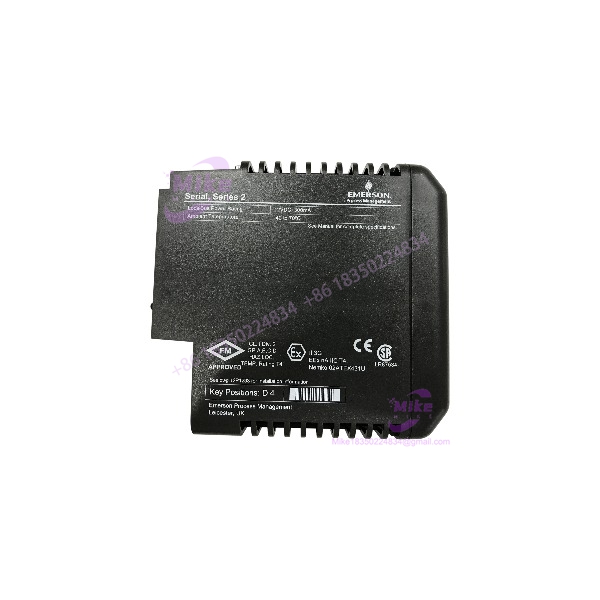
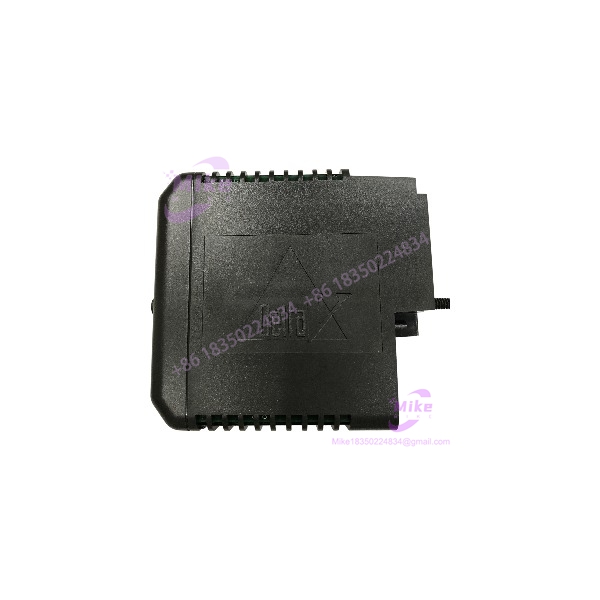
The Emerson KJ3241X1-BA1 is a Series 2 redundant serial interface card for the DeltaV M-series platform. Emerson’s ATEX instruction sheet documents a 12 VDC, 300 mA LocalBus power requirement and D4 terminal-block keying. Supplier records associate the model with ordering number 12P2506X032, although other ordering-number suffixes appear in the market. Confirm the exact number against the physical label and installed configuration before purchase.
This is a legacy control-system component intended for configuration-matched maintenance and replacement. Preserve the existing DeltaV configuration, verify the companion terminal block, and validate serial communications after installation. Do not assume that a similar-looking serial card or a different KJ3241 suffix is a direct substitute.
KJ3241X1-BA1
Key Technical Specifications
- Model: KJ3241X1-BA1
- Manufacturer: Emerson
- Platform: DeltaV M-series
- Module Type: Series 2 redundant serial interface card
- Associated Ordering Number: 12P2506X032, supplier-listed; verify against the unit
- LocalBus Power Rating: 12 VDC at 300 mA
- Terminal-Block Key Position: D4
- Ambient Temperature: −40°C to +70°C
- Shock Rating: 10 g half-sine wave for 11 ms
- Vibration: 1 mm peak-to-peak from 5–16 Hz; 0.5 g from 16–150 Hz, per the instruction sheet
- Relative Humidity: 5–95%, noncondensing
- Airborne Contaminants: ISA-S71.04-1985 Class G3
- Protection Rating: IP20
- Maintenance: No user-serviceable parts; calibration is not required
- Removal/Insertion: Energized removal/insertion is restricted; follow the exact OEM hazardous-area procedure
- Compatibility: Requires the correct DeltaV carrier, terminal block, keying, and system configuration
The power, environmental, keying, and maintenance details above are documented in Emerson’s instruction sheet. The associated ordering number is supplier-reported and should be treated as a procurement cross-reference—not proof that every listed suffix is interchangeable.
Global Sourcing & Live-Test SOP
For a used or surplus KJ3241X1-BA1, acceptance should establish exact identity, physical condition, configuration compatibility, and actual communications performance.
1. Inbound Verification
- Photograph the complete nameplate and model markings.
- Confirm KJ3241X1-BA1, including the full suffix.
- Record the associated ordering number, serial number, and hardware revision where available.
- Inspect the card edge connector, faceplate, LEDs, and housing for damage.
- Check for corrosion, contamination, heat discoloration, cracked components, or evidence of unauthorized repair.
- Verify the terminal-block key position against the approved DeltaV documentation.
- Retain supplier traceability records and condition disclosures.
2. Configuration & Compatibility Review
- Identify the installed DeltaV carrier and companion terminal block.
- Verify D4 terminal-block keying and card compatibility.
- Compare the complete model and ordering number with the removed card.
- Confirm the approved serial interface configuration and connected equipment.
- Review any proposed alternate or replacement model against Emerson documentation.
- Do not treat the supplier-suggested KJ3241X1-BA2 replacement as automatically interchangeable; confirm migration requirements first.
3. Bench Inspection & Power-Up
- Use a compatible DeltaV test carrier and approved test procedure.
- Verify the 12 VDC LocalBus supply and current capacity.
- Inspect the card’s connector engagement and seating.
- Observe startup and diagnostic LED behavior.
- Check for unexpected faults or abnormal heating.
- Do not apply power through improvised pin connections or an unverified adapter.
4. Serial Communications Diagnostics
A successful power-up does not establish serial interface functionality. The card must be tested in a compatible DeltaV configuration.
- Connect the card to an approved serial test setup.
- Verify the interface wiring and serial configuration against the system documentation.
- Test communications with a known-good device or simulator.
- Confirm expected data exchange and controller-side diagnostics.
- Where the application uses redundancy, verify the configured redundant arrangement through an approved test procedure.
- Record communication errors, intermittent faults, and diagnostic status.
Do not advertise a card as fully communications-tested if the test only confirms power-up or LED activity.
5. Extended Run & Stability Check
Where the test setup permits, perform an extended run with representative serial traffic.
Monitor:
- Card diagnostic status
- Serial communication stability
- Unexpected resets or faults
- Connector seating and mechanical stability
- Abnormal heating
- Redundancy behavior, where applicable and tested
Record the test duration, carrier, terminal block, configuration, and observed results. Do not claim a 24-hour burn-in unless it was actually performed and documented.
6. Final Preparation & Shipment
- Record the exact model, ordering number, revision, and serial number.
- Photograph the card and connector condition before packing.
- Clearly disclose whether the card is used, refurbished, repaired, or untested.
- Include only accessories confirmed as part of the sale.
- Protect the card against ESD, impact, and connector damage.
- Retain test and traceability records with the shipment.
Field Engineer’s Pitfall Guide
❗ D4 terminal-block keying must match
Emerson’s instruction sheet identifies terminal-block key position D4 for the KJ3241X1-BA1. Confirm the keying and companion terminal block before installation. Mechanical fit alone does not establish system compatibility.
❗ Do not assume energized removal is permitted
The OEM instruction sheet restricts removal and insertion with system power energized, with a limited hazardous-area exception only when the area is known to be non-hazardous and only one unit is handled at a time. Follow the exact Emerson procedure and site isolation requirements.
❗ Verify any proposed BA2 replacement before substitution
A surplus supplier lists KJ3241X1-BA2 as a suggested replacement for the discontinued BA1. That listing alone does not establish drop-in compatibility for every installed system. Confirm the approved replacement path, terminal block, and DeltaV configuration with Emerson documentation before making the change.
Intent-Driven FAQ
What is the Emerson ?
It is a DeltaV M-series Series 2 redundant serial interface card. Emerson’s instruction sheet identifies it as a redundant serial interface card and documents its LocalBus power and installation requirements.
What is the LocalBus power requirement?
The documented LocalBus power rating is 12 VDC at 300 mA. Use the OEM specification and approved carrier configuration when verifying power capacity.
What terminal-block key position does it use?
The uses D4 terminal-block keying. Confirm the installed terminal block and carrier arrangement before replacement.
Is the discontinued?
Radwell lists the model as discontinued by the manufacturer and identifies KJ3241X1-BA2 as a suggested replacement. Check current OEM support and verify the proposed replacement against the installed configuration before ordering.
Is the hot-swappable?
Do not assume unrestricted hot swapping. Emerson’s instruction sheet states that energized removal/insertion is restricted and provides a limited exception for a known non-hazardous area. Follow the applicable OEM procedure and site rules.
Does the card require calibration?
Emerson’s instruction sheet states that calibration is not required. Functional verification of the serial interface and its system configuration is still appropriate after replacement.
What should buyers verify before purchasing a used ?
Confirm the full model and ordering-number markings, serial number, revision, D4 keying, companion terminal block, and DeltaV configuration. Request clear photos and a written description of the seller’s actual test scope. Verify any proposed alternate part number against OEM documentation.
Bottom Line for Buyers
The is a DeltaV M-series Series 2 redundant serial interface card with a documented 12 VDC at 300 mA LocalBus requirement and D4 terminal-block keying. Emerson’s instruction sheet also specifies −40°C to +70°C ambient operation, IP20 protection, and restrictions on energized removal/insertion.
For procurement, verify the complete part number and ordering suffix, confirm the D4 terminal-block match, and document the intended serial configuration. Because the BA1 is listed as discontinued and a BA2 has been suggested as a replacement by a supplier, obtain explicit compatibility confirmation before substituting another revision.





