

Description
Emerson HD22005-3A | 220VDC 5A Rectifier Module
Dynamic Product Introduction
The first thing to get right with the HD22005-3A is its voltage class. This is a 220 VDC-class rectifier, with a documented nominal output of 220 VDC and a rated output value of 234 VDC. The unit accepts 323–475 VAC three-phase input and delivers up to 5 A continuously at its rated operating point, with a documented maximum output current of 5.5 A. Maximum output power is specified at 1430 W.
This architecture is aimed at industrial DC systems where the rectifier works with a battery bank and DC distribution bus. Vertiv documentation specifically identifies the HD22005-3A for applications including transformer substations, hydropower plants, and power plants. The design uses high-frequency soft-switching technology, distributed CPU control, current limiting, protection functions, and RS-485 communication.
For replacement procurement, the “-3A” suffix matters. Do not substitute an HD22005-3, HD22010-3, HD11010-3A, or ER-series module solely because the front-panel dimensions appear similar. The output-voltage class and current rating can be different (and that difference is not something to discover after energizing a DC bus).
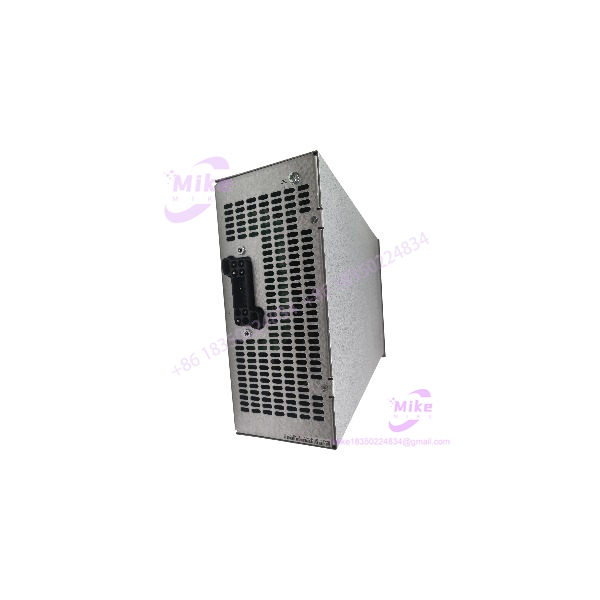
HD22005-3A
Key Technical Specifications
- Model: HD22005-3A
- Product Category: High-frequency switching rectifier / charging module
- Nominal Output Voltage: 220 VDC
- Rated Output Voltage: 234 VDC
- Minimum Output Voltage: 176 VDC
- Maximum Output Voltage: 286 VDC
- Rated Output Current: 5 A
- Maximum Output Current: 5.5 A
- Maximum Output Power: 1430 W
- Input Voltage: 380 VAC nominal
- Input Voltage Range: 323–475 VAC
- Input Configuration: Three-phase, 3-wire + PE
- Input Frequency: 45–65 Hz
- Efficiency: Up to 90%
- Voltage Regulation: ≤ ±0.5%
- Current Regulation: ≤ ±1%
- Current-Limit Range: 10–110% of rated current
- Soft-Start Time: 3–8 seconds
- Ripple: ≤0.1% RMS
- Load-Sharing Accuracy: ≤ ±5% from 50–100% rated load
- Noise: ≤55 dB
- Communication: RS-485
- Cooling: Intelligent air cooling
- Fan Start/Stop: Starts at approximately 50°C; stops at approximately 38°C
- Operating Temperature: -10°C to +40°C
- Relative Humidity: ≤95%
- Altitude Reference: 0–3000 m
- Storage/Transport Temperature: -25°C to +55°C
- Dimensions: Approximately 110 × 257 × 413 mm
- Weight: ≤6 kg
- RoHS: R10
These figures are taken from Vertiv’s published technical specifications for the HD22005-3A / HD11010-3A rectifier family.
Global Sourcing & Live-Test SOP
1. Inbound identity verification
- Photograph the nameplate before removing the unit from its packaging.
- Confirm HD22005-3A, not merely “HD22005.”
- Record serial number, hardware revision, manufacturing/date information, and visible labels.
- Check that the physical terminal arrangement corresponds to the expected three-phase AC input and high-voltage DC output.
- Inspect the rear connector, power terminals, fan assembly, ventilation openings, and guide rails.
- Check for evidence of previous overheating, capacitor leakage, terminal discoloration, or fan replacement.
2. Electrical pre-check
This unit should not be treated like an ordinary bench power supply.
- Verify the intended AC source is compatible with the 323–475 VAC three-phase input range.
- Confirm protective earth continuity.
- Inspect the DC-side isolation and downstream battery/DC-bus arrangement before energization.
- Use appropriately rated test equipment and probes for the 220 VDC-class output.
- Do not connect the module to a battery bank merely to determine whether it “works.”
3. Controlled functional test
A suitable test sequence should verify:
- AC input acceptance.
- Correct startup sequence.
- Stable DC output.
- Output voltage regulation.
- Current limiting.
- Fan operation.
- RS-485 communication where the system test fixture supports it.
- Protection response under controlled test conditions.
- Load sharing if the unit will operate in a parallel rectifier system.
The published specification identifies over-voltage, under-voltage, phase-loss, short-circuit, and over-temperature protection. The short-circuit limiting behavior is specified at approximately 40% of rated current with self-recovery.
4. Heat-run screening
For used or refurbished inventory, perform a monitored extended run under an appropriate load. Record:
- AC input voltage
- DC output voltage
- DC output current
- Fan status
- Internal/external temperature
- Alarm/protection status
- Communication status
A 24-hour heat run is useful for screening aging fans, capacitors, thermal interfaces, and intermittent control faults.
5. Final preparation
Record the tested serial number and electrical measurements. Package the module with protection around the front controls, terminals, and ventilation openings. For a high-voltage DC-system spare, retain the test report with the physical unit.
Field Engineer’s Pitfall Guide
❗ Do not mistake the 220 VDC output for a conventional “220 V power supply”
The is part of an industrial DC power architecture. Its nominal 220 VDC output is intended for systems such as substation and power-plant DC installations. It is not a generic source for 24 VDC PLC equipment.
❗ Input voltage is three-phase 323–475 VAC
The documented input is 380 VAC nominal, with an operating range of 323–475 VAC, using a three-phase 3W+PE configuration. A single-phase test setup is therefore not an appropriate substitute for the intended input arrangement.
❗ Do not assume parallel modules are automatically interchangeable
he supports load sharing, with a documented load-sharing coefficient of ≤±5% at 50–100% rated load. However, the rectifier’s system controller, communication wiring, DC bus arrangement, and parallel-module configuration still need to match the installed system.
This is especially important on an older substation DC panel: a physically identical spare can pass a basic power-up test yet still behave incorrectly if the system’s communication or current-sharing arrangement is wrong.
Intent-Driven FAQ
What is thon used for?
It is a high-frequency AC-to-DC rectifier/charging module for industrial DC power systems. Documented applications include transformer substations, hydropower plants, power plants, and related DC supply systems.
What is the outphe ?
The nominal output is 220 VDC, with a documented rated output of 234 VDC, minimum of 176 VDC, and maximum of 286 VDC. Rated output current is 5 A, with a maximum of 5.5 A. Maximum output power is 1430 W.
What inputhe require?
The specified input is 380 VAC nominal, three-phase, with a range of 323–475 VAC. The documented frequency range is 45–65 Hz.
he support hot swapping?
Yes. The published technical specification identifies hot swap as available. The same documentation describes the hot-swap arrangement in the context of the complete DC power system, so the installed system must have the required architecture before treating a module as removable under power.
Does it communicate with the system controller?
Yes. RS-485 is specified as the communication interface. The module also uses distributed CPU control, which allows the rectifier to participate in the system’s monitoring and control functions.
Is interchangeable with HD11010-3A?
No, not as a direct electrical substitution. The two modules belong to the same documented rectifier family, but the is the 220 VDC / 5 A model, while the HD11010-3A is the 110 VDC / 10 A model. Their DC output classes are fundamentally different.
What should I verify when buyied ?
Verify the exact nameplate, input/output terminal configuration, fan condition, physical connector/guide hardware, serial information, and documented loaded-test results. For refurbished inventory, ask specifically for measured AC input, DC output voltage, loaded output current, fan operation, and alarm/protection test results.
Procurement note: The safest purchase description is on , 220 VDC 5 A high-frequency rectifier module, three-phase 380 VAC input.” Do not shorten the specification to simply “Emerson power module”; that leaves too much room for an electrically incompatible substitute.





