


Description
Emerson 5X00241G02 | CPU Controller Module In Stock Ready to Ship
Architect’s Product Breakdown
The Emerson Ovation 5X00241G02 is a core Central Processing Unit (CPU) module built for OCR1100-series Ovation Controllers. Sitting directly in the main controller base assembly, it acts as the master execution engine for continuous PID control, complex sequential boolean logic, advanced control algorithms, and sequence-of-events (SOE) timestamping across critical power generation and continuous process drops.
Designed to handle heavy control loop loads without scan cycle jitter, the G02 hardware variant features a high-throughput 32-bit RISC architecture paired with onboard RAM and non-volatile flash memory. It coordinates real-time data acquisition from local and remote I/O sub-racks via the controller backplane, managing communication handshakes with the primary Ovation fast-Ethernet network. It supports tracking synchronization between primary and backup drops, facilitating bumpless automatic failovers in redundant controller configurations.
During drop overhauls or emergency system restorations, replacing a failing processor card with an exact 5X00241G02 revision prevents firmware loading locks and memory alignment errors. Installing a mismatched processor revision can cause boot-looping or force the controller drop into a HALT state during database restoration from Developer Studio. Swapping in a verified 5X00241G02 ensures immediate hardware recognition and rapid logic restoration during tight outage schedules.
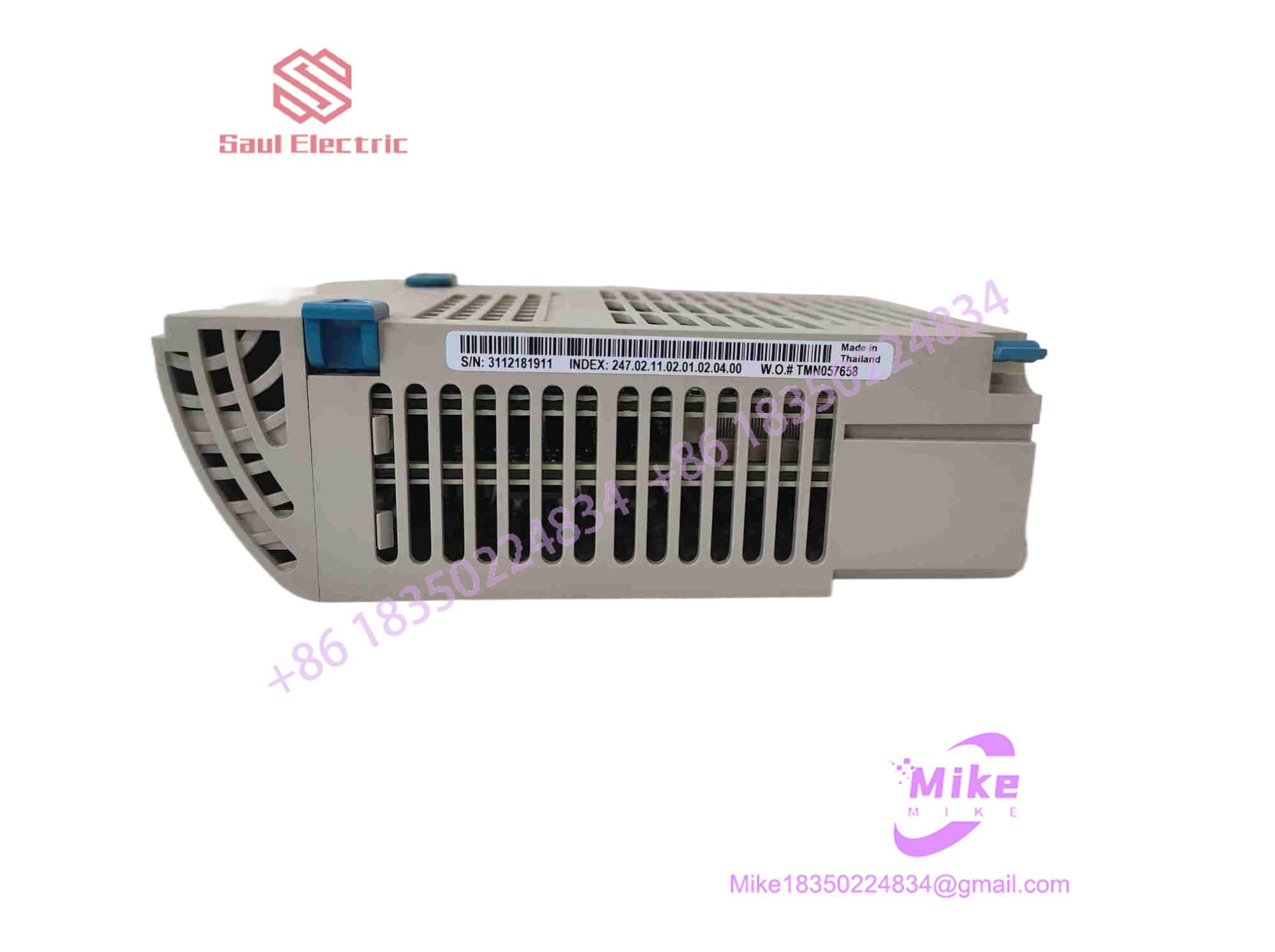
5X00241G02
Key Technical Specifications
| Parameter | Specification / Value |
| Component Type | Central Processor Unit (CPU) Module |
| System Family | Emerson Ovation OCR1100 Controller |
| Processor Architecture | High-Performance 32-bit RISC Processor |
| Point Capacity | Originates up to 32,000 database points per drop |
| Network Interfaces | Fast Ethernet (Redundant Ovation Network interface via base) |
| Internal Memory | Extended onboard RAM + Flash EEPROM for logic retention |
| Operating Temperature | 0°C to +60°C (32°F to 140°F) |
| Storage Temperature | -40°C to +85°C (-40°F to 185°F) |
| Humidity Range | 5% to 95% non-condensing |
| Mounting Slot | Primary CPU Slot in OCR Controller Chassis (e.g., 5X00225 base) |
Field Engineer’s Pitfall Guide
WARNING: Unsynchronized Redundant Drop Firmware Flashing
I’ve seen a combined-cycle plant lose automatic failover protection for three days because an engineer swapped a 5X00241G02 into Drop A without matching its underlying OS/kernel build to Drop B. Even if both cards read “5X00241G02” on the handle, mismatching low-level bootrom or operating system firmware prevents the memory-tracking bus from synchronizing. Before placing a new module into a live redundant pair, verify and align boot parameters in Developer Studio via the diagnostic console.
WARNING: Thermal Throttling in Unventilated Enclosures
The 5X00241G02 processor dissipates significant thermal energy under high logic execution loads. If cabinet cooling fans fail or ambient enclosure temperatures exceed 60°C, the processor can suffer thermal stress, resulting in unannounced system resets or memory parity errors. Always verify that cabinet heat exchangers and fan assemblies are operational prior to racking a replacement CPU.
WARNING: Static Shock Damage During Hot-Handling
While the module features robust industrial shielding, high-speed onboard memory chips and bus transceivers are highly sensitive to Electrostatic Discharge (ESD). Technicians must wear a grounded ESD wrist strap when handling the card and avoid touching the gold edge-connector pins or exposed PCB tracks during installation into the chassis slot.
QA & Testing SOP
Every 5X00241G02 Processor Module undergoes a rigorous 4-step validation before release:
- Microscopic Component & PCB Audit: Inspection of high-density surface-mount components, bus edge connectors, ground planes, and original OEM serial labels under optical magnification.
- Bench Power-Up & Diagnostics: Inserted into a live Ovation OCR test chassis. Power-up self-tests (POST), logic voltage stability, and bootloader routines are monitored via serial console logs.
- Full Logic Load & Network Stress Test: Loaded with a standard 32,000-point database. Process logic loops, network communication handshakes, and high-speed data acquisition are run continuously for 24 hours under full load.
- Thermal Soak & ESD Protection: Tested in an elevated thermal environment to verify clock stability, cleaned using anti-static protocols, and sealed in static-shielding wrap with protective edge covers.
Technical FAQ
Will inserting a 5X00241G02 clear my existing controller program?
The module itself houses non-volatile flash memory and RAM. If you insert a blank replacement module into an existing drop, it will not contain your specific plant database. Once installed, you must perform a drop download from your Ovation Developer Studio engineering station to restore control logic and point definitions.
Can I replace the 5X00241G02 in a redundant controller setup while running?
Yes, provided you follow proper redundant switchover procedures. You must verify that the secondary drop is fully synchronized and in control (“PRIMARY” status), force control over if necessary, and completely power down the drop chassis housing the target CPU before extracting the module. Never pull a CPU card from a drop while it is actively controlling the process.
What should I do if the CPU front panel diagnostic LEDs indicate a “HALT” condition upon boot?
A HALT LED state typically indicates a bootloader error, corrupt flash memory, or a hardware memory test failure. First, attempt to clear the drop memory and re-download the controller database via the engineering network. If the HALT state persists immediately upon power-up before network initialization, the card has suffered internal memory corruption or a hardware failure and requires replacement.
Is the 5X00241G02 backward compatible with older Ovation WDPF migration drops?
The 5X00241G02 is specifically engineered for Ovation OCR series controller architectures. While it can process logic that interfaces with legacy I/O branches via appropriate bridge modules, it cannot be physically plugged into legacy 1C-series WDPF controller chassis.





