


Description
Eaton F271-IS | 12-Port Fieldbus Hub with Terminator
Dynamic Product Introduction
When a fieldbus segment has to serve a large number of instruments in a hazardous area, the wiring architecture becomes part of the reliability equation. The Eaton F271-IS addresses that problem by providing a 12-way intrinsically safe fieldbus connection point with an integrated terminator.
The F271-IS belongs to Eaton’s MTL F2xx-IS Megablock family. Eaton identifies it specifically as a 12-way Megablock with screw terminals and an internal terminator, intended for intrinsically safe fieldbus installations.
This is not a conventional PLC I/O module. The F271-IS is a passive fieldbus wiring component, so there is no PLC scan time, firmware revision, or application logic to troubleshoot. The engineering concern instead shifts toward trunk/spur topology, intrinsic-safety entity parameters, termination, field-device loading, and hazardous-area certification.
For an existing installation, that distinction matters. Replacing the F271-IS with a visually similar wiring hub that lacks the correct intrinsic-safety certification or termination arrangement can alter the fieldbus segment behavior and invalidate the intended installation design.
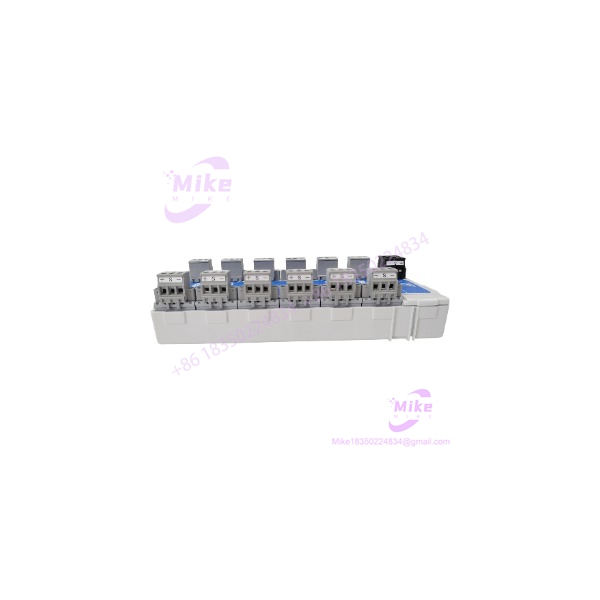
F271-IS
Key Technical Specifications
- Model: F271-IS
- Manufacturer: Eaton / MTL
- Product Family: MTL F2xx-IS
- Product Type: Intrinsically safe fieldbus Megablock
- Number of Spur Connections: 12
- Terminal Type: Screw terminals
- Terminator: Internal fieldbus terminator
- Hazardous-Area Protection: Ex ia IIC T4 Ga
- Approvals: ATEX and IECEx
- Fieldbus Application: Foundation Fieldbus / compatible intrinsically safe fieldbus architectures
- Entity Trunk Parameters: Ui ≤ 24 V, Ii ≤ 250 mA, Pi ≤ 1.2 W
- FISCO Parameters: Ui ≤ 17.5 V, Ii ≤ 380 mA, Pi ≤ 5.32 W
- Operating Ambient Range: -50°C to +70°C according to the IECEx certificate documentation.
- Ingress Protection: IP20 minimum for the apparatus enclosure.
The certification documentation identifies the as a fieldbus interconnection block in which the trunk is connected to the bus and the outputs feed fieldbus devices.
Global Sourcing & Live-Test SOP (Transparency Core)
The is simpler than an intelligent controller, but that does not make incoming inspection optional. Its safety significance comes from the electrical and hazardous-area installation parameters.
Inbound Verification
For each Eaton :
- Verify the complete model marking.
- Record serial number and manufacturing information where present.
- Inspect the enclosure for cracking or deformation.
- Check all screw terminals for damage.
- Inspect the internal/external terminator arrangement.
- Check for corrosion, contamination, or evidence of unauthorized modification.
- Confirm the certification marking is consistent with the intended installation.
Eaton’s current documentation lists the under its intrinsically safe F2xx-IS Megablock family and identifies ATEX/IECEx approval.
Live Simulation
A fieldbus wiring hub should not be “tested” by randomly applying voltage to its terminals.
A controlled bench check should instead use:
- An appropriate certified fieldbus power source
- Known-good fieldbus instruments or test loads
- Correct intrinsic-safety barriers/isolators where required
- Fieldbus diagnostic equipment
- A properly terminated test segment
Verify:
- Trunk continuity
- Spur continuity
- Correct terminal identification
- Fieldbus communication
- Terminator operation at the appropriate segment location
The internal terminator is significant. Eaton’s documentation specifically differentiates the from the 12-port F269-IS by identifying the as the 12-port version with a terminator.
Diagnostics
Recommended checks include:
- Fieldbus voltage measurement
- Segment current measurement
- Continuity testing
- Fieldbus protocol diagnostics
- Shield/grounding inspection
- Terminator verification
A Fluke meter is useful for basic electrical verification, but it does not prove fieldbus signal quality or intrinsic-safety compliance. For commissioning, use an appropriate fieldbus analyzer and the site’s approved hazardous-area test procedure.
Final Preparation
Before shipment:
- Record the exact model.
- Record certification markings.
- Photograph the terminal configuration for internal QC records.
- Protect terminals against mechanical impact.
- Use appropriate ESD and packaging controls.
- Maintain serial-number traceability where applicable.
Do not represent a tested wiring hub as “certified for every installation.” Certification applies within defined electrical and installation conditions.
The Field Engineer’s Pitfall Guide
❗ Do not confuse with F269-IS.
Both are 12-way members of the MTL family, but the includes an internal terminator. The F269-IS is identified in the IECEx documentation as the corresponding 12-port version without the terminator.
❗ Do not add another terminator simply because the segment appears unstable.
The already incorporates a terminator. Fieldbus segments require controlled termination at the appropriate locations; adding an unnecessary terminator can create communication problems rather than solve them.
❗ Do not treat Ex i certification as a generic wiring license.
The has defined entity and FISCO parameters. The complete fieldbus segment still has to satisfy the applicable intrinsic-safety calculations, including the power source, trunk, spurs, and connected devices.
Intent-Driven FAQ
What is the Eaton used for?
The is an intrinsically safe fieldbus wiring hub used to connect multiple field devices to a fieldbus trunk in hazardous-area installations. It provides 12 spur connections and an internal terminator.
Is the a PLC I/O module?
No. The is a fieldbus interconnection component, not an intelligent PLC or DCS I/O card. The IECEx documentation describes it as a fieldbus interconnection block whose outputs feed fieldbus devices.
How many devices can the connect?
The is a 12-way Megablock, providing 12 spur connections. Actual usable device count still depends on the fieldbus architecture, power budget, entity/FISCO calculations, and installation rules.
Does the have a built-in terminator?
Yes. This is one of the defining differences between the and the corresponding non-terminated 12-way configuration.
Is the suitable for hazardous areas?
Yes, within its certification and installation conditions. Eaton lists the under its intrinsically safe F2xx-IS family with ATEX and IECEx approvals, while certification documentation identifies Ex ia IIC T4 Ga.
What should I check when replacing an ?
Verify the exact model, 12-way configuration, internal terminator, terminal arrangement, fieldbus topology, intrinsic-safety parameters, and applicable hazardous-area certification. Do not substitute based solely on physical dimensions.
Does the have firmware?
No. It is a passive wiring/interconnection component rather than a programmable controller. Firmware compatibility is therefore not the normal replacement issue; electrical compatibility, termination, certification, and topology are.
Procurement verdict: The is a specialized 12-way intrinsically safe fieldbus Megablock with an internal terminator. The most important replacement checks are not software-related — they are topology, termination, intrinsic-safety parameters, certification, and exact terminal configuration. Eaton currently lists the within its MTL F2xx-IS product family, with ATEX and IECEx approval information available for the range.





