


Description
B&R 8LSA35.R0030D200-0 | AC Servo Motor 3000 RPM
Dynamic Product Introduction
Having spent two decades troubleshooting line trips on high-speed packaging cells, I can tell you that shaft heat build-up and optical feedback drift account for half of all unaccounted servo drive faults. B&R built the 8LSA35.R0030D200-0 specifically to eliminate those thermal bottlenecks. By optimizing the stator winding density and rotor inertia ratio, this unit delivers exceptionally high power density in a compact Size 3 frame—meaning you get tight dynamic positioning without cooking your motor bearings during continuous duty cycles.
When swapping out older 8LSA generation units or equivalent third-party motors, the difference shows up immediately in system bandwidth and thermal headroom. The integrated EnDat feedback system communicates directly with ACOPOS servo drives, executing automatic parameter downloads upon drive boot. That cuts commissioning time down from hours of manual feedback configuration to a plug-and-play handshaking sequence.
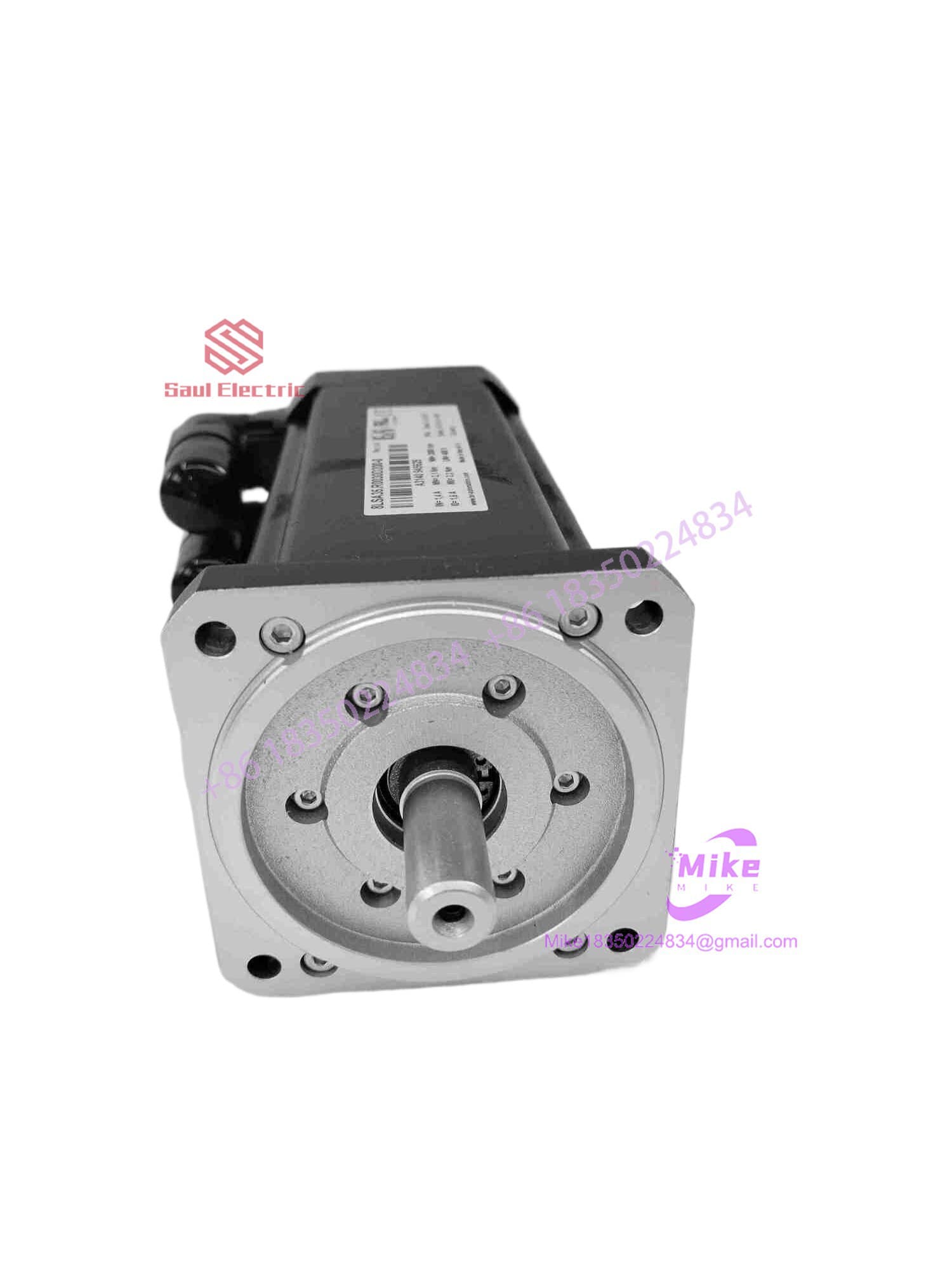
8LSA35.R0030D200-0
Key Technical Specifications
| Parameter | Specification | Field Note / Operational Limit |
| Rated Speed | 3000 RPM | Continuous operation limit under nominal voltage |
| Stall Torque | ~1.65 Nm | At nominal current, \Delta T = 100 K |
| Feedback System | Absolute Encoder (EnDat 2.2 / Inductive) | Embedded serial EEPROM holding electronic nameplate |
| Protection Rating | IP65 (Shaft seal standard) | Requires proper cable gland fitment for liquid resistance |
| Cooling Method | Natural Convection | Requires minimum 50mm clearance around housing |
| Holding Brake | Optional / Model Dependent | Check digit code for 24V DC holding option |
| Connection Type | Circular SpeedTEC / Intercontec | Right-angle rotatable dual connectors |
| Operating Temp | 0^\circC to +40^\circC | De-rate power output by 1% per degree above 40^\circC |
Global Sourcing & Live-Test SOP (Transparency Core)
Buying replacement servo hardware on the secondary or surplus market can be a minefield if the vendor just wipes down the casing and slaps an “Inspected” sticker on the box. Here is our exact multi-stage verification SOP before this unit leaves our ESD floor:
- Inbound Verification: We trace serial numbers against OEM database records to spot re-badged units. Shaft play is physically measured using dial indicators (checking both radial and axial runout against factory tolerance bands).
- Live Simulation Setup: The unit goes straight to an authentic test bench equipped with an ACOPOS 1090 drive and an Automation Studio test rack. We do not rely on passive multimeter checks alone.
- Diagnostics & Bench Test:
- Feedback Validation: We query the EnDat electronic memory to confirm zero bit-error counts and ensure the motor parameters load automatically into Automation Studio.
- Full-Scale Drive Handshake: We execute a 4-hour dynamic torque/velocity profile run, monitoring stator thermal rise via internal KTY/PT1000 sensors.
- Brake Test (If equipped): Hold torque is verified using an inline torque wrench to ensure no slippage under rated holding loads.
- Final Prep: Firmware/parameter dump report is logged to the unit’s serial record. Shafts receive rust-inhibitor caps, and the unit is packed in anti-vibration custom foam enclosures inside ESD shielding.
The Field Engineer’s Pitfall Guide
- ❗ Feedback Alignment & Electronic Nameplate Corruption: Never attempt to loosen or adjust the rear encoder housing yourself. On B&R motors, the absolute encoder phase offset is calibrated at the factory relative to the rotor’s magnetic poles. I’ve seen plant technicians try to “inspect” the rear encoder, misalign the optical disc by half a millimeter, and immediately trip ACOPOS drive overcurrent alarms (
Overcurrent 9000) upon the next power cycle because the commutation angle went completely out of phase. - ❗ Connector Over-Torquing and Pin Recession: The rotatable SpeedTEC connectors make cable routing clean, but turning the connector housing while the mating plug is fully tightened will strip the internal wiring harness or push signal pins back into the casing. Always loosen the cable coupling completely before adjusting the connector angle on the motor body.
- ❗ Shaft Keyway & Coupling Alignment Misjudgments: If you are replacing an 8LSA motor on a high-cycle indexing table, do not hammer the coupling onto the motor shaft. Direct axial impact will damage the precision ball bearings and ruin the optical encoder disc directly behind the rear bearing. Use a pull-up bolt tool utilizing the tapped thread on the shaft end instead.
Intent-Driven FAQ
Will my ACOPOS drive automatically recognize this motor when I plug it in?
Yes. Assuming you are running standard Embedded Parameter settings in Automation Studio, the EnDat feedback interface transmits the motor parameters (stator resistance, inductance, torque constant, and thermal thresholds) directly to the drive at power-up. You won’t need to manually enter motor data sheets into your project configuration.
Can I replace an older 8LSA3 series motor with this exact model number without altering my logic program?
If the full model code matches (specifically the frame, length, winding code, and encoder type), it is a drop-in replacement. No PLC code modification is required. However, if your old motor had a different encoder resolution or a brake option that this specific sub-code lacks, the ACOPOS drive will throw a hardware mismatch fault during initial startup.
What should I do if the ACOPOS drive gives a motor temperature sensor fault right after installation?
First, check the feedback cable connection. The thermal sensor signal shares pins inside the multi-core encoder cable. A loose or pin-recessed connector usually reports as an open circuit (showing extreme high temperature like 150^\circC+ in Automation Studio). If the cable is seated properly, verify that your drive’s firmware configuration matches the thermal sensor type (KTY84 vs. PT1000) stored in the motor’s electronic nameplate.
Is it safe to hot-swap this motor while the drive backplane is powered?
No. Never disconnect or reconnect the motor power or encoder cables while the DC bus on the ACOPOS drive is energized. Arcing across the heavy-duty power pins can weld contacts, and high-voltage spikes on the signal lines will instantly destroy the low-voltage EnDat encoder transceiver.
How do I verify if a surplus 8LSA35 motor is truly “Factory Sealed” or refurbished?
Look at three specific areas: the shaft keyway, the mounting flange bolt holes, and the circular connector contacts. Refurbished or previously mounted units will show micro-scoring inside the flange bolt passes and minor clamping marks on the connector pins. Genuine factory-sealed stock ships with clear protective plastic covers over the connectors, a greased/capped shaft, and pristine, unmarred mounting holes.





