


Description
Bently Nevada 163179-02 | 3500/60 Temperature Monitor Module Core Category
Dynamic Product Introduction
Monitoring vital thermal boundaries across heavy industrial rotating assets—such as bearings, thrust plates, and fluid headers—requires high-precision measurement hardware capable of continuous operation in harsh environments. The Bently Nevada 163179-02 operates as the front-board 3500/60 Temperature Monitor module engineered to accept up to six RTD or thermocouple inputs while providing built-in analog recorder outputs for each channel. Unlike standard monitors that lack external analog trending capabilities, this variant allows plant control systems to track thermal metrics continuously via dedicated analog feeds.
Moving beyond older legacy temperature monitoring cards, this module integrates seamlessly into the standard 3500 safety rack architecture. Field service records confirm that swapping in a verified replacement 3500/60 monitor instantly resolves channel faults, eliminates erratic temperature spikes, and restores dependable thermal protection mapping for critical plant machinery.
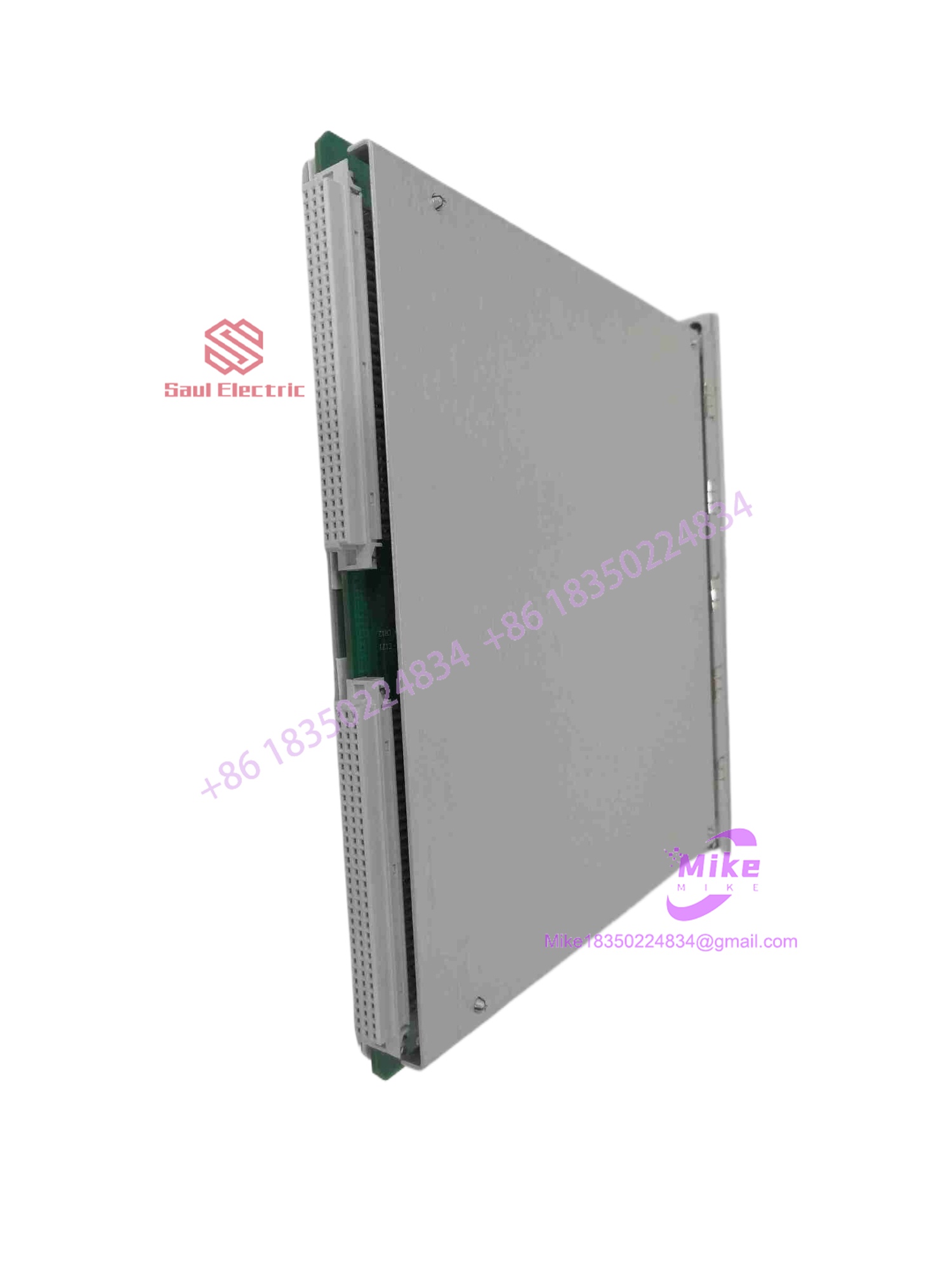
163179-02
Key Technical Specifications
- Module Architecture: 3500/60 Temperature Monitor Module with Recorder Outputs (Front-Board Card)
- System Compatibility: Bently Nevada 3500 Series Machinery Protection Racks
- Channel Capacity: 6 independent temperature monitoring channels
- Supported Sensor Types: Resistance Temperature Detectors (RTD) and Thermocouples (TC)
- Recorder Output Option: Includes dedicated analog recorder outputs per channel (-10V to +10V or 4–20 mA compatible via rear I/O pairing)
- Power Consumption: ~9 Watts typical
- Programming Features: User-programmable Alarm and Danger setpoints per channel
- Operating Temperature Range: -30^\circC to +65^\circC (-22^\circF to +149^\circF)
- Weight: ~0.8 to 3.0 kg (configured standard module and packaging scale)
Global Sourcing & Live-Test SOP (Transparency Core)
Deploying replacement temperature monitor modules on active asset protection racks requires an uncompromising verification protocol to guarantee thermal measurement accuracy and recorder output linearity.
- Inbound Verification: Incoming modules are audited against original Bently Nevada manufacturing lots. Front-panel LEDs, cold-junction compensation blocks, internal processor chips, recorder output stages, and backplane connector pins are inspected under optical magnification for pin pitting, corrosion, or thermal wear.
- Live Simulation: The module is inserted into a dedicated 3500 test backplane matched with a compatible rear temperature I/O module and a regulated power supply.
- Diagnostics: Technicians inject simulated millivolt (TC) and resistance (RTD) signals across all six channels, verifying linearization accuracy, setpoint trip response time, and analog recorder output scaling stability across a continuous 24-hour thermal soak cycle.
- Final Prep: Once diagnostic logs clear baseline standards, interface pins are cleaned, and the module is sealed inside an anti-static moisture-barrier shield.
The Field Engineer’s Pitfall Guide
❗ Hot-Plugging Front Cards Without Backplane Alignment: Shoving the 163179-02 module forcefully into the rack slot without checking backplane pin alignment can bend delicate connector pins, resulting in system boot errors or channel communication faults. (I’ve seen technicians damage backplane headers by rushing card insertions.) Always guide the card smoothly along the internal rack rails.
❗ Mismatching Sensor Types in Software vs. Hardware: Physically wiring an RTD sensor into a rear terminal block while the corresponding channel in the 3500 rack software is configured for a Thermocouple (or vice versa) results in severe temperature errors and “Not OK” flags. Always verify software programming matches field hookups.
❗ Ignoring Recorder Output Ground Loops: Tying analog recorder output signal lines directly to external control system inputs without checking ground references can introduce ground-loop currents, causing fluctuating temperature trends. Always ensure proper signal common grounding.
Intent-Driven FAQ
Will swapping this 163179-02 module require reprogramming the 3500 rack?
Because channel configuration settings, sensor types, and alarm setpoints are stored in the rack’s system software memory, dropping in a replacement 163179-02 module typically retains operational parameters, though verifying channel scaling in the software is recommended.
Can this temperature monitor module be replaced while the turbomachinery is running?
Yes. The front-layer 3500/60 monitor card resides within the rack framework, but care must be taken regarding voting logic. If the channels on this module are tied to active machinery shutdown trips, pulling the card can impact safety interlocks. Coordination with operations and adherence to bypass protocols are mandatory.
What causes a channel on this module to register a persistent “Not OK” status?
A “Not OK” status typically points to an open RTD element, a broken thermocouple wire, loose terminal screws on the rear I/O block, or a mismatch between the software configuration and the physical input type. Checking loop resistance and software setup isolates the fault.
What is the difference between the 163179-01 and 163179-02 models?
The 163179-02 model includes built-in support for analog recorder outputs, allowing each temperature channel to feed external trending systems, whereas the -01 variant lacks recorder output capabilities.
What kind of warranty accompanies surplus or refurbished units?
Reputable industrial suppliers typically back tested surplus or refurbished Bently Nevada hardware with a standard 1-to-2 year replacement warranty, supported by an independent bench test report confirming temperature measurement and recorder output accuracy.





