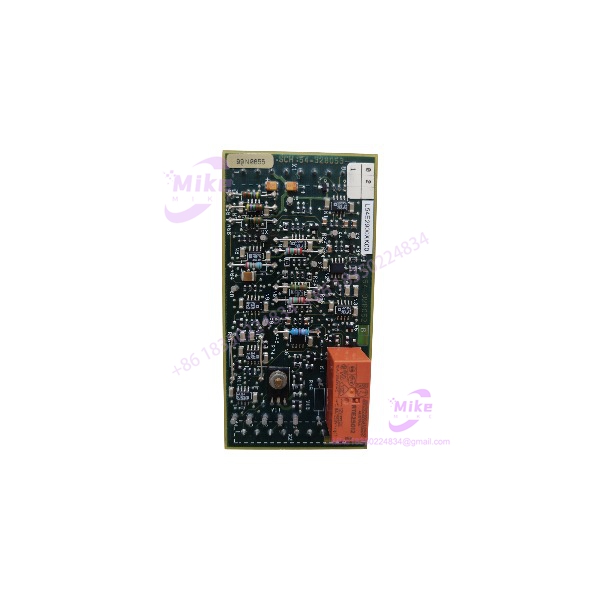
Description
ALSTOM EP3-E-4-EN | EPIC III Control Module
Product Introduction
When an ESP control cabinet has been running for years, the difficult part of a failure is often not diagnosing the dead controller. It is finding a replacement that actually belongs to the same control architecture. The ALSTOM EP3-E-4-EN is identified as an EPIC III control module used with electrostatic precipitator systems, placing it squarely in the legacy environmental-control segment rather than general-purpose PLC hardware.
The EP3-E-4-EN is intended for process-specific control and monitoring within an ESP installation. That distinction matters during a brownfield replacement: connector similarity, processor capability, or nominal electrical compatibility alone does not establish functional interchangeability.
For plants maintaining older ALSTOM precipitator equipment, preserving the existing controller architecture can be considerably less disruptive than redesigning the cabinet, field wiring, control logic, and commissioning procedure around a completely different platform.
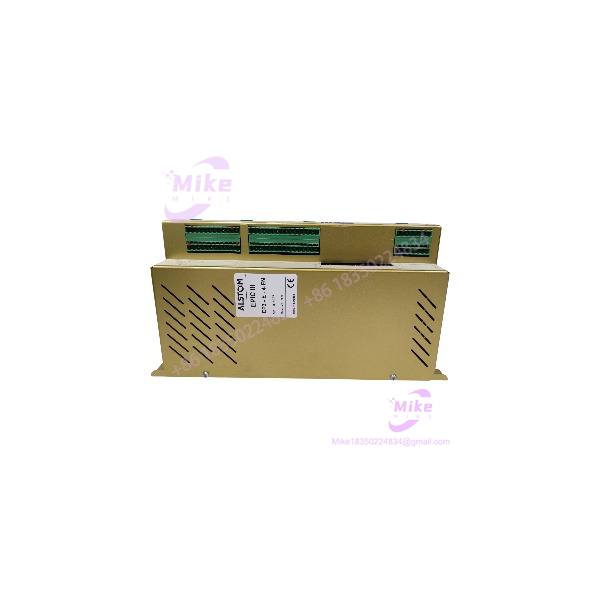
EP3-E-4-EN
Key Technical Specifications
- Manufacturer: ALSTOM
- Model: EP3-E-4-EN
- Product Family: EPIC III
- Product Type: Electrostatic precipitator control module
- Primary Application: ESP process control and monitoring
- Controller Architecture: Microprocessor-based
- Digital Inputs: Reported as 32 × 24 VDC by secondary technical references
- Analog Inputs: Reported as 4 × 0/4–20 mA
- Supply Input: Reported as 100–240 VAC ±10%
- Typical Power Consumption: Reported as approximately 15 W
- Logic Isolation: Reported as 1.5 kVAC supply-to-logic isolation
- Real-Time Clock: Battery-backed RTC reported
- Reported Operating Temperature: −20°C to +70°C
- Reported Storage Temperature: −40°C to +85°C
- Reported Humidity: 5–95% RH, non-condensing
- Reported Weight: Approximately 2.2 kg
Specification warning: The identification of the EP3-E-4-EN as an EPIC III control module is well supported, but the detailed electrical figures above originate from secondary technical listings rather than an authenticated ALSTOM datasheet available for verification. Treat them as procurement-reference values, not guaranteed acceptance-test specifications, until the installed unit’s documentation or nameplate confirms them.
Application Scenarios & Pain Points
Legacy Electrostatic Precipitator Maintenance
The most obvious application is replacement of a failed or unreliable controller in an existing EPIC III ESP installation. The goal is simple: restore the control system without unnecessarily disturbing the high-voltage process equipment.
Thermal Power Generation
ESP systems are commonly deployed for particulate-emission control in large combustion plants. A controller fault can become an operational problem rather than a simple electronics repair, particularly when the spare-part chain for legacy equipment is thin.
Cement and Heavy Industrial Processing
Dust-heavy processes place continuous demands on particulate collection systems. Maintaining the original control architecture can reduce the engineering scope associated with a full control-system migration.
Brownfield Control-System Migration
A legacy controller may be retained as an interim solution while a larger modernization project is engineered. This can avoid forcing a rushed replacement of field interfaces, control logic, communication paths, and commissioning procedures.
Maintenance Spare Strategy
For facilities with multiple compatible EPIC III installations, a tested spare controller can reduce mean time to repair and limit downtime associated with an unexpected electronics failure.
QA & Live Testing SOP
A model number is not enough for legacy industrial electronics. I would qualify the actual unit before putting it into an operating ESP cabinet.
1. Identity Verification
- Confirm the front-panel and nameplate marking: EP3-E-4-EN.
- Record serial number and visible hardware/revision markings.
- Photograph all connectors and terminal interfaces.
- Compare the physical configuration with the customer’s installed controller.
2. Physical Inspection
- Inspect the PCB and enclosure for corrosion, contamination, overheating, cracked solder joints, and damaged connectors.
- Check connector pins for oxidation or mechanical deformation.
- Inspect mounting points and hardware for damage.
3. Power-Up Test
- Energize using an appropriate controlled test setup.
- Verify normal startup behavior.
- Check for abnormal current draw, fault indications, or unexpected processor behavior.
4. I/O Verification
- Where suitable test equipment is available, simulate the applicable digital and analog signals.
- Verify input response and signal scaling.
- Record actual measured results rather than marking the module simply as “tested.”
5. Functional Verification
- Verify the controller against an approved EPIC III/ESP test procedure where available.
- Check communication behavior and system-level interfaces applicable to the customer’s configuration.
- Do not connect an unverified replacement directly to a live high-voltage precipitator as the initial test.
6. ESD-Safe Packaging
- Handle the module using ESD precautions.
- Protect connectors against impact and contamination.
- Use antistatic packaging and adequate mechanical cushioning for international shipment.
Field Engineer’s Pitfall Guide
❗ Do not confuse with EP3-E-4-A. They are both associated with the EPIC III family, but the suffix is part of the identification. Match the complete model number before treating either unit as a replacement.
❗ Do not assume the published I/O figures are sufficient for compatibility. Even if the reported 32 digital inputs and four analog inputs match your cabinet, firmware, configuration, connector assignment, and system-level interfaces still need verification.
❗ Do not replace the controller without preserving configuration information. Record existing parameters, wiring, revision markings, and cabinet settings before removing the original unit whenever the system condition permits.
❗ Do not perform an uncontrolled live test. ESP equipment interfaces with high-voltage electrical systems. A controller that powers up correctly is not necessarily ready to control a live precipitator.
❗ Verify the exact hardware revision. Legacy EPIC III systems can contain revision-dependent hardware and configuration differences. Treat the actual installed controller as the baseline, not a catalog photograph.
Intent-Driven FAQ
What is the ALSTOM ?
The is an EPIC III control module associated with electrostatic precipitator systems. It is application-specific industrial control hardware rather than a conventional general-purpose PLC CPU.
What does control?
It belongs to the control architecture used for industrial electrostatic precipitators, where controller functions support monitoring and regulation of the ESP process.
Is an EPIC III module?
Yes. Multiple technical references identify the as an EPIC III control module.
Can directly replace EP3-E-4-A?
Do not assume so. Both model numbers are associated with EPIC III equipment, but the complete hardware designation, configuration, firmware, I/O assignment, and cabinet architecture must be checked before approving a substitution.
Is a PLC?
It is better described as a dedicated EPIC III control module for ESP applications. Calling it a generic PLC can create the wrong expectations about programming, I/O expansion, and interchangeability.
What should I verify before purchasing an ?
Verify the complete model marking, hardware revision, serial information, connector arrangement, installed system architecture, and the original controller’s configuration. If the unit is being purchased as a replacement, photographs of the actual controller are particularly useful for preventing suffix and revision errors.
What condition should be specified for a legacy ?
For critical plant maintenance, request the actual unit condition and a documented functional test. “Powers on” is not equivalent to a complete controller test, especially for a legacy ESP control module.
Why is an exact model match important?
Because the controller sits inside a larger control architecture. A physically similar module can still have different I/O assignments, firmware behavior, communication interfaces, or configuration requirements. Exact model matching is therefore part of the engineering qualification process, not merely a purchasing preference.