


Description
PFTL101A 2.0KN 3BSE004172R1 Tension Sensor
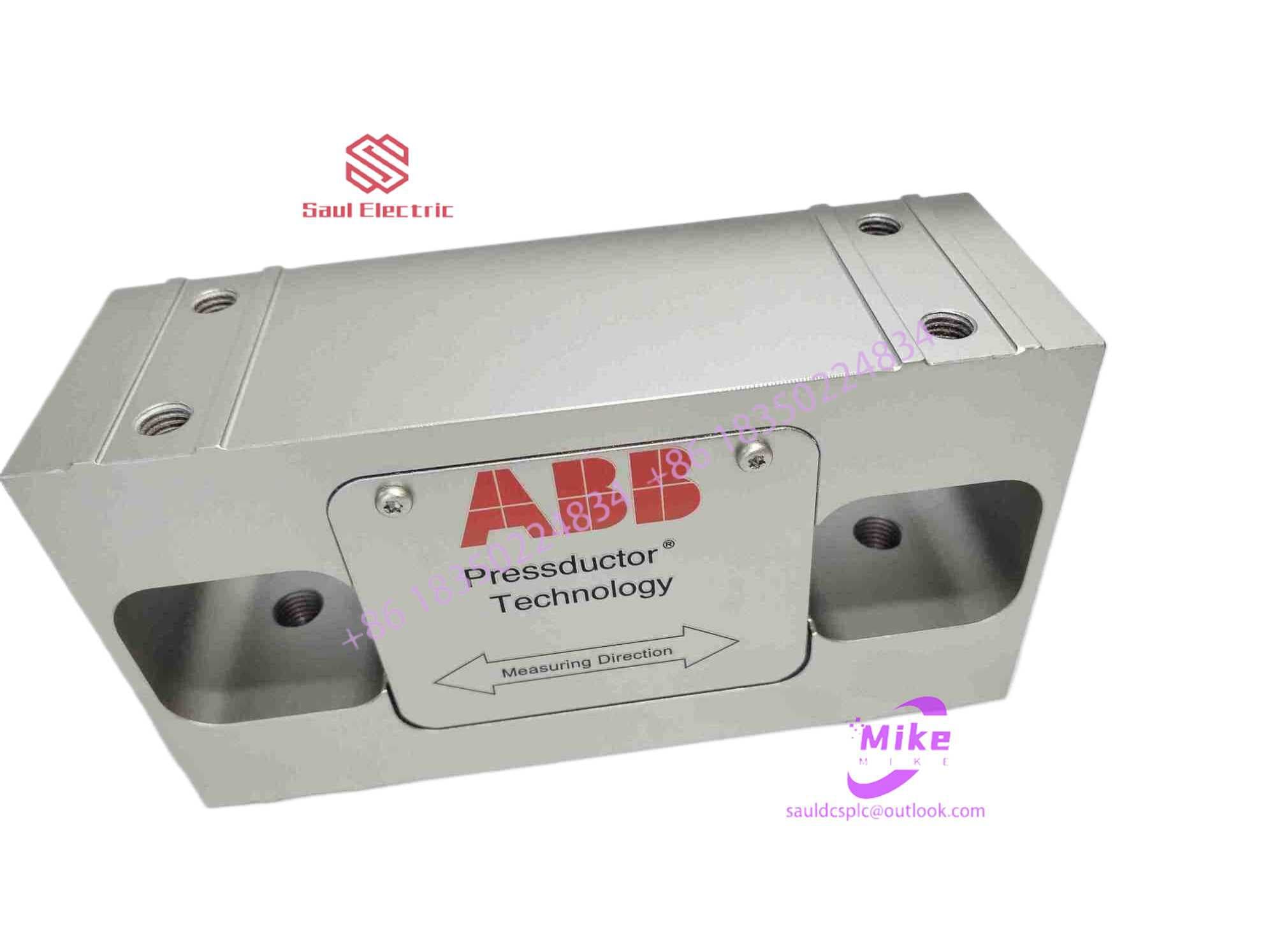
PFTL101A 2.0KN 3BSE004172R1 Tension Sensor
What is a motion controller? How does a motion controller work and what are its applications?
What is a motion controller?
Motion controllers are used to achieve precise position control, speed control, acceleration control, torque or force control of mechanical motion. Based on their structure, motion controllers can be classified into PLC programmable logic controllers, microcontroller controllers, stand-alone motion controllers, PC-based motion control cards, and network controllers.
For example, an electric motor can be controlled by a limit switch to move an object upwards to a designated position and then downwards. Alternatively, a time relay can be used to control the motor’s forward and reverse rotation or to control it to rotate intermittently. The application of motion control in robotics and CNC machine tools is more complex than in specialized machines because the latter have simpler motion patterns and are often referred to as general motion control (GMC).
Motion controller architecture composition
A motion controller generates a feedback loop for the trajectory point (desired output) and closed position. Many controllers can also internally close a velocity loop. A driver or amplifier converts the motion controller’s control signal (typically a speed or torque signal) into a higher-power current or voltage signal. More advanced intelligent drives can self-close position and velocity loops for more precise control. An actuator, such as a hydraulic pump, cylinder, linear actuator, or motor , outputs motion. A feedback sensor , such as a photoelectricencoder , resolver, or Hall effect device, feeds back the actuator’s position to the position controller to achieve the closure of the position control loop.
Numerous mechanical components are used to convert the motion of an actuator into the desired motion. These include gearboxes, shafts, ball screws, toothed belts, couplings, and linear and rotary bearings. Typically, a motion control system functions as both speed control and point-to-point control. Many methods exist for calculating a motion trajectory, often based on a velocity curve such as a triangular, trapezoidal, or S-shaped velocity curve. Examples include electronic gears (or electronic cams). In this case, the driven shaft’s position mechanically follows the position of the driving shaft. A simple example is a system containing two turntables rotating at a given relative angle. Electronic cams are more complex than electronic gears, ensuring that the follow-up relationship between the driving and driven shafts is a function. This curve can be non-linear, but it must be a functional relationship.





