


Description
Emerson Fisher 38B5786X092 | Industrial Valve Positioner Component
Dynamic Product Introduction
Control loop oscillation on heavy process lines frequently stems from degraded internal instrumentation rather than primary controller failure. When an aging control valve starts hunting or missing precise travel targets, minor loop tuning cannot compensate for physical wear inside the actuator housing. Integrating the Emerson Fisher 38B5786X092 directly resolves this internal hardware fatigue, restoring tight positioning accuracy without requiring an entire valve body replacement.
In field refits, utilizing exact-match OEM subassemblies prevents the calibration drift common with aftermarket patch parts. (Though verifying supply air cleanliness upstream remains a prerequisite.) It handles harsh process environments reliably, minimizing unexpected downtime in continuous chemical and oil-and-gas operations.
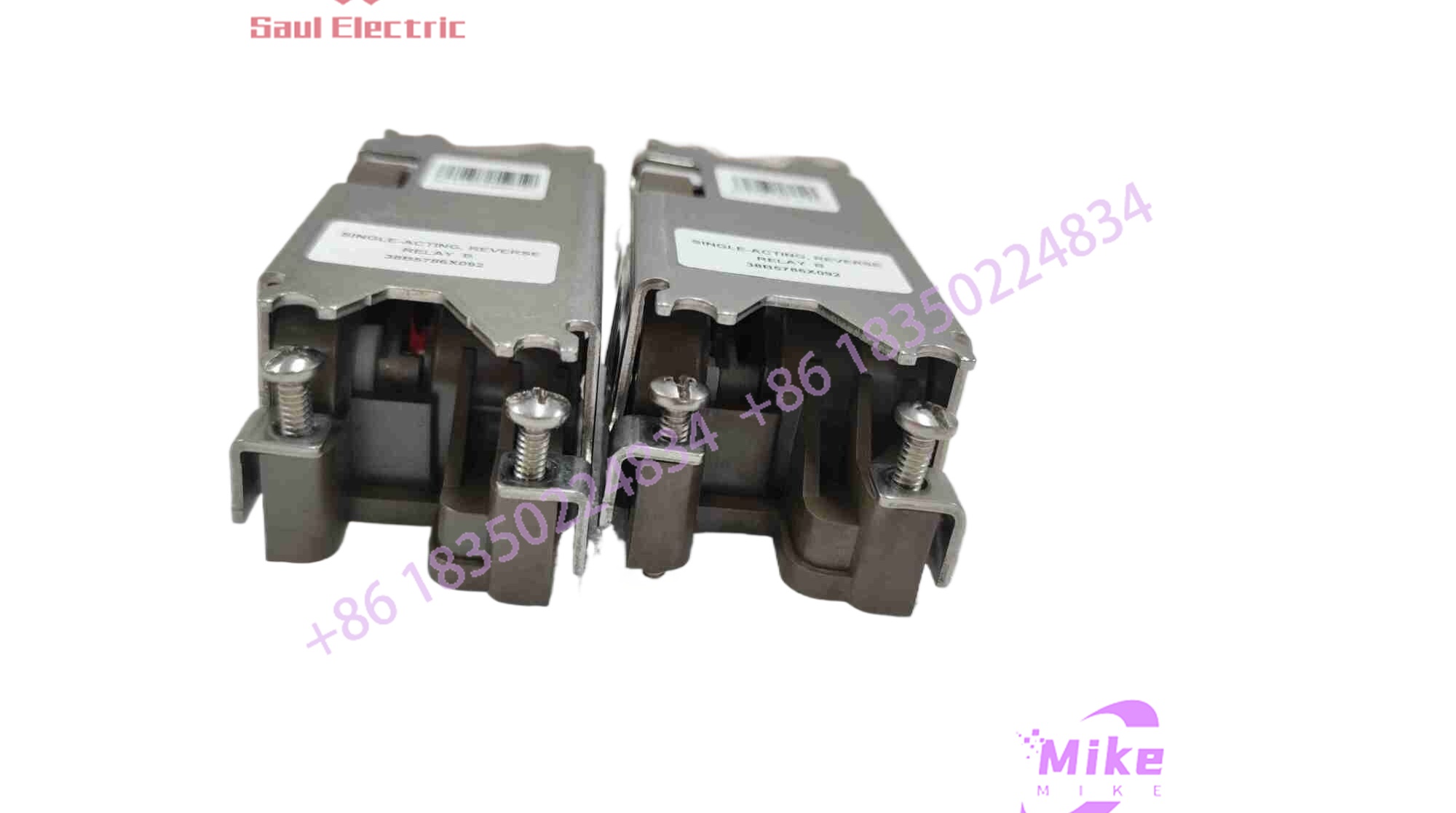
38B5786X092
Key Technical Specifications
| Technical Parameter | Specification Detail |
| Device Category | Valve Instrumentation / Internal Assembly |
| Series Compatibility | Standard Fisher Actuator and Positioner Lines |
| Material Construction | Corrosion-resistant industrial grade alloy |
| Operating Pressure | Rated for standard industrial pneumatic thresholds |
| Ambient Operating Temp | -40^\circC to 85^\circC |
| Mounting Type | Direct internal housing integration |
| Calibration Tolerance | Precision factory-calibrated tolerances |
| Seal Integrity | High-nitrile / elastomer sealing elements |
Global Sourcing & Live-Test SOP (Transparency Core)
Sourcing critical flow control components requires strict validation to guarantee mechanical integrity before installation in high-pressure loops.
- Inbound Verification: Every incoming part undergoes stringent origin tracing, paperwork verification, and physical metallurgical inspection against OEM design prints.
- Live Simulation: Where applicable, subassemblies are integrated into a dedicated test bench to evaluate pressure holding capabilities and mechanical response times.
- Diagnostics: Technicians execute cyclic pressure testing, leak-rate monitoring, and thermal stress checks to ensure zero micro-fractures or seal degradation.
- Final Prep: Components are treated with anti-corrosion barriers, sealed in anti-static moisture-barrier bags, and packed in reinforced shipping cartons.
The Field Engineer’s Pitfall Guide
❗ Part-Number Revision Overlooks: Installing a subassembly with a mismatched suffix string can alter internal port sizing or electronic feedback characteristics. I once saw a technician spend a full day troubleshooting erratic valve stroke movement because a minor revision shift changed the bleed-rate profile. Always match the exact dash number.
❗ Contaminated Instrument Air: Dropping a pristine component into a pneumatic line contaminated with moisture or compressor oil will ruin internal seals within hours. Always purge and dry your supply headers before buttoning up the actuator housing.
❗ Torque Blindness on Sealing Bolts: Over-tightening housing bolts during reassembly can warp precision seating surfaces, causing chronic internal leakage. Use a calibrated torque wrench to follow manufacturer-specified cross-pattern tightening sequences.
Intent-Driven FAQ
Will this exact part number integrate cleanly into my existing Fisher assembly?
Yes, as long as the base instrument model and dash suffix align with your technical manual. Cross-referencing your valve serial number with factory build sheets ensures an exact fit.
Are these components factory sealed or surplus stock?
We maintain both factory-sealed OEM surplus and certified-refurbished stock. Each product entry clearly details the hardware condition to meet your facility’s safety compliance rules.
Can this component withstand corrosive chemical plant environments?
Yes. The assembly is built from high-grade industrial alloys designed to resist typical atmospheric and process-side corrosion found in heavy processing plants.
What kind of warranty applies to this replacement part?
Every unit is backed by our comprehensive operational warranty, covering material integrity, dimensional accuracy, and functional performance from the date of delivery.
Do you verify pressure ratings before dispatching control components?
Yes. Our quality assurance protocol includes rigorous pressure and seal testing on dynamic bench rigs to ensure zero leakage upon arrival.





