


Description
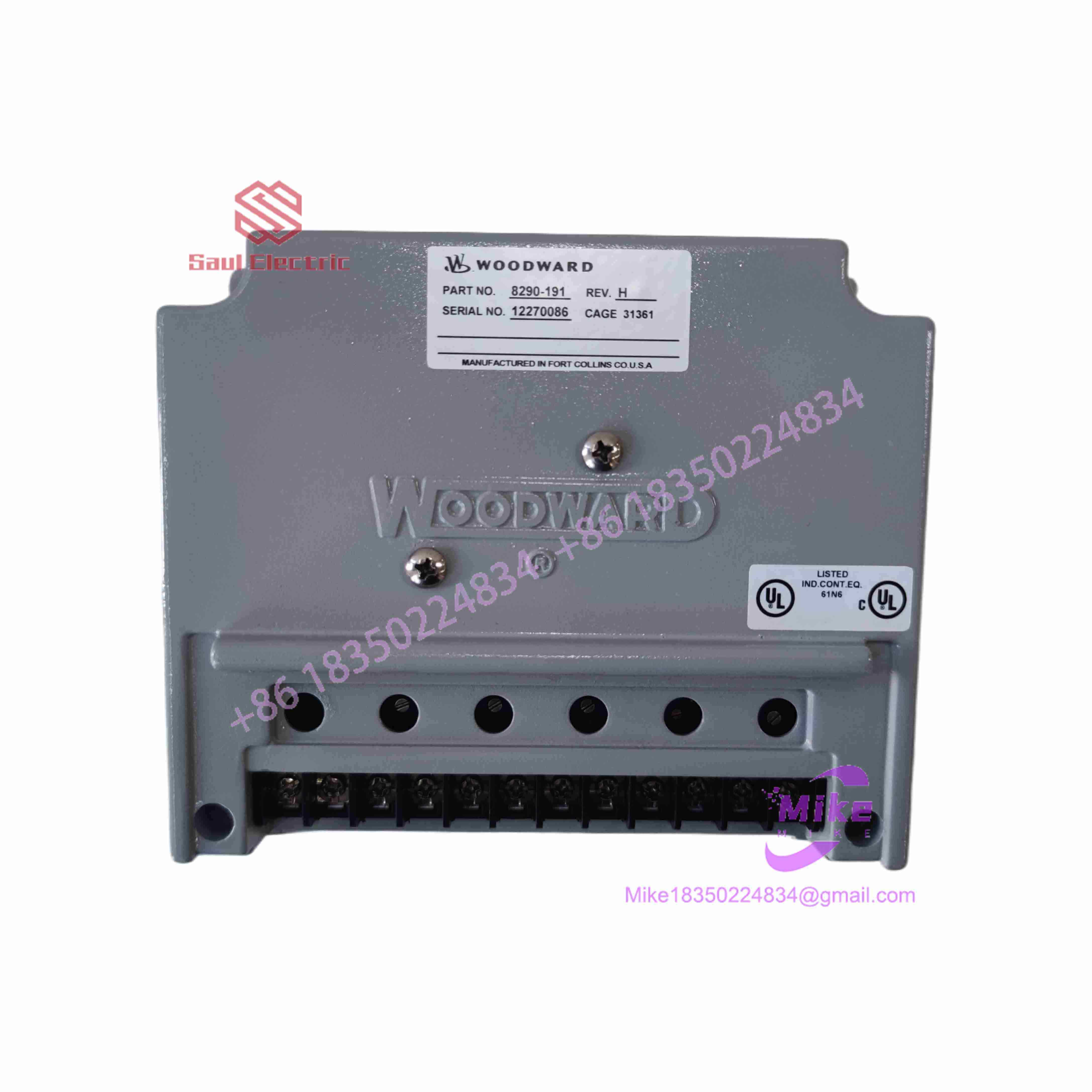
Woodward 8290-191 | EPG Controller 24V Droop Control
Architect’s Product Breakdown
The Woodward 8290-191 functions as an essential variant within the EPG (Electric Power Governor) product family, specifically configured to provide speed regulation alongside droop control capabilities. In multi-engine switchgear environments where generators must share active load proportional to their capacity, the droop function prevents inter-unit fighting and power oscillations. The unit accepts frequency input signals from a magnetic pickup (MPU) tracking flywheel rotation, processes the error against a reference setpoint, and drives a proportional electronic actuator.
Field configuration and tuning are managed via physical onboard potentiometers (such as Gain, Stability, and Droop adjustment), allowing veteran technicians to dial in dynamic response without requiring a PC laptop or proprietary flashing software. However, achieving stability across fluctuating load profiles requires precise manual tuning during the hot commissioning phase.
Cabinet installation demands clean power supply isolation and strict adherence to signal shielding rules on the MPU input to block plant electromagnetic interference. Deploying an 8290-191 provides a direct replacement path for legacy EPG setups, keeping existing terminal layouts intact while restoring tight, dependable multi-unit load sharing.
8290-191
Key Technical Specifications
| Parameter | Technical Specification |
| Operating Voltage | 24 VDC nominal battery systems |
| Power Consumption | Max 50 W (plus external actuator load) |
| Speed Sensor Input | 100 to 10,000 Hz (from magnetic pickup) |
| Control Mode | Speed Control with Droop capability |
| Adjustments | Gain, Stability, Droop, Speed Setting (Onboard pots) |
| Operating Temperature | -40°C to +85°C (-40°F to +185°F) |
| Vibration Resistance | 10G (5 to 2000 Hz) |
| Enclosure Rating | Chassis mount, vibration-resistant potting |
| Physical Weight | ~1.2 kg (2.65 lbs) |
Field Engineer’s Pitfall Guide
- WARNING: Actuator Output Phasing. Reversing the actuator wiring harness during installation will cause an uncontrolled positive feedback loop, forcing the engine straight to overspeed conditions on startup. Verify actuator phase continuity before energizing the fuel system.
- WARNING: Potentiometer Over-Torque. Forcing the miniature trimpots past their internal physical end-stops will strip the adjustment gears. Use a precision screwdriver and make delicate, fractional adjustments when tuning Gain and Droop.
- WARNING: Unbalanced Droop Setting. Failing to match the droop percentage across parallel running generators will cause one unit to hog the active kilowatt load while the other loafs. Verify droop potentiometer calibration during synchronized load testing.
QA & Testing SOP (Transparency)
- Visual & Origin Verification: Inspection of factory seals, OEM labeling, housing structure integrity, and pin block cleanliness against baseline specifications.
- Bench Power & Signal Injection: Modules are locked to an active test bench, powered via an isolated DC source, and fed calibrated frequency sweeps to simulate MPU speed inputs.
- Actuator Load Simulation: Technicians monitor current output stability and transient response curves against simulated actuator loads to ensure precise droop and speed tracking behavior.
- Final Packaging: Units are cleaned, fitted with terminal protective caps, sealed in anti-static shielding bags, and crated with dense shock-absorbing foam.
Technical FAQ
Can I hot-swap this module while the engine is running?
No. Disconnecting or replacing the 8290-191 while the prime mover is online drops the control output instantly, causing an abrupt fuel shutoff and engine trip. Always perform swaps during scheduled system shutdowns.
What is the primary difference between this and isochronous EPG models?
The 8290-191 includes built-in droop control functionality, making it specifically suited for generators operating in parallel with other sources or a utility grid where load sharing stability is mandatory.
Does this unit require programming software?
No. The 8290-191 is an analog-electronic controller. All adjustments—including gain, stability, speed, and droop percentage—are handled via physical onboard potentiometers.
Are calibration settings lost during a complete power failure?
Yes and No. Because tuning relies on physical analog potentiometers rather than volatile memory blocks, the baseline calibration settings remain locked and permanently saved through total power losses.





