


Description
Woodward 5464-333 | MicroNet Isolated Thermocouple Input Module
Product Introduction
In heavy gas turbine, steam turbine, and industrial engine control systems, precise monitoring of turbine exhaust temperature spreads, bearing temperatures, and combustion chambers is critical for safe, efficient operation. The Woodward 5464-333 is an isolated thermocouple input module engineered specifically for Woodward’s high-reliability MicroNet Simplex and MicroNet Plus digital control platforms. Unlike standard non-isolated sensor cards prone to ground-loop interference, this card features channel-to-channel and channel-to-bus galvanic isolation, ensuring pristine sensor data feeds directly to the core controller CPU.
Designed as a slide-in MicroNet rack module, the 5464-333 processes high-level thermocouple millivolt signals with onboard cold-junction compensation (CJC) and high-speed A/D conversion. It operates reliably across industrial panel temperature ranges while filtering out high-voltage electrical noise and EMI common in power generation and mechanical drive environments. Whether replacing an existing module during a scheduled outage or stocking critical spares for a MicroNet cabinet, this unit delivers exact functional continuity.
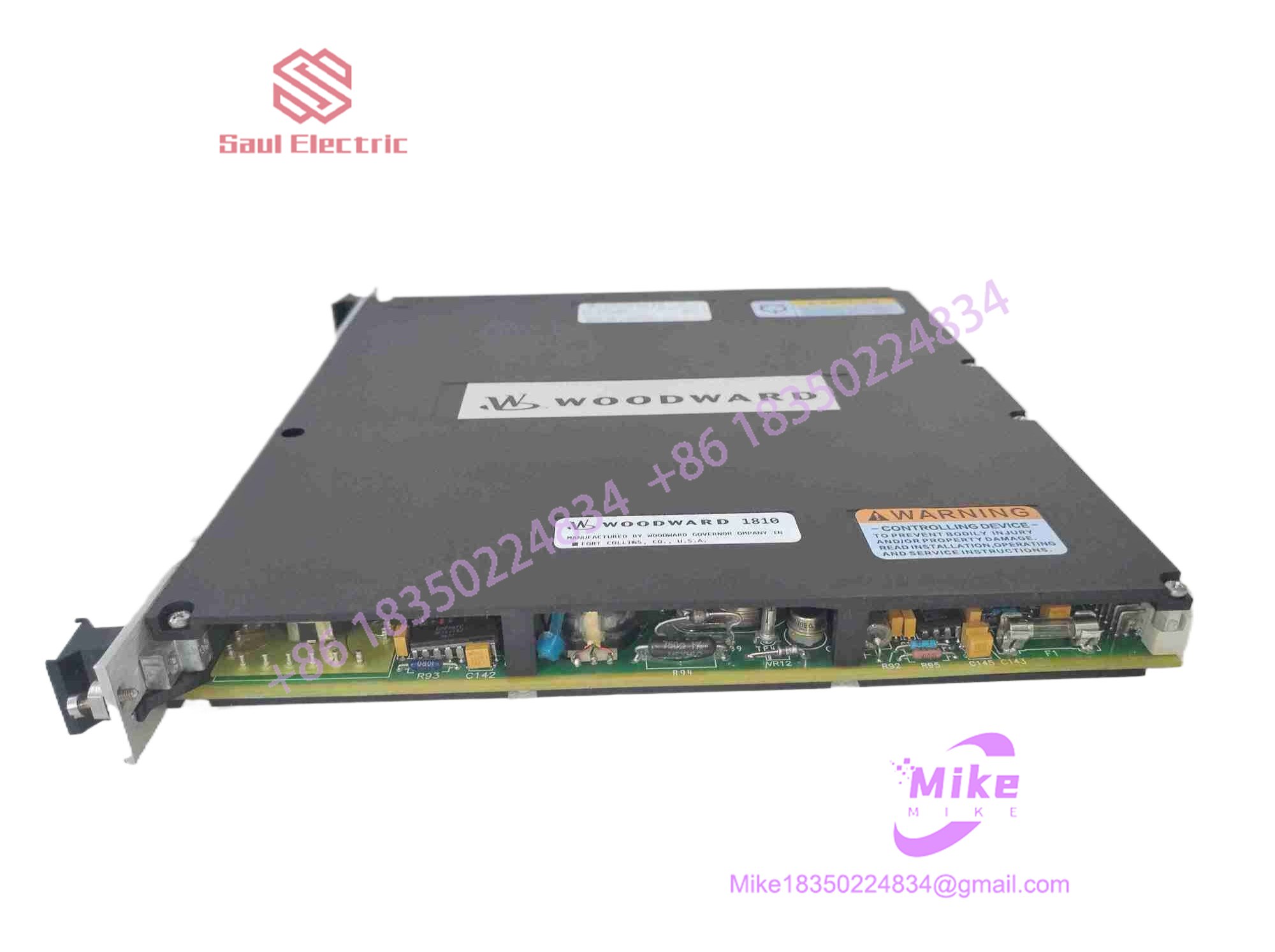
5464-333
4. Key Technical Specifications
| Parameter | Specification Metric |
| Device Category | Isolated Thermocouple (T/C) Input Module |
| System Compatibility | Woodward MicroNet Simplex, MicroNet Plus, & Vertex Pro Platforms |
| Channel Count | 8 isolated thermocouple input channels |
| Supported T/C Types | High-level input types (J, K, T, E, N, R, S, B compliant) |
| Isolation Rating | Galvanic optical isolation (Channel-to-Channel & Channel-to-Bus) |
| Signal Processing | High-precision A/D conversion with cold-junction compensation (CJC) |
| Diagnostic Features | Onboard fault detection (open thermocouple lead detection, out-of-range sensor alerts) |
| Operating Temperature | 0^\circC to +50^\circC standard industrial tier |
| Power Requirements | Powered via MicroNet chassis backplane power supply rails |
Application Scenarios & Pain Points
- Turbine Exhaust Gas Temperature (EGT) Monitoring: Gas turbines rely on multi-point thermocouple spreads across exhaust ducts to detect flameout, combustion imbalance, or hot spots. The 5464-333 provides isolated multi-channel sensing to prevent false trip conditions.
- Bearing & Stator Winding Overheat Protection: Steam turbines and large generators monitor metal temperatures continuously. Individual channel isolation prevents stray ground currents from corrupting sensitive millivolt temperature signals.
- Industrial Compressor Skid Monitoring: Multi-stage gas compressors require continuous temperature tracking across stage discharges. This module offloads temperature conversion locally without burdening main CPU processing loops.
QA & Live Testing SOP (Trust Signal)
We don’t warehouse precision turbine I/O cards without verifying signal path accuracy and backplane integrity; every 5464-333 unit goes through our rigorous bench protocol:
- Visual & Edge Connector Audit: Inspected under optical magnification for backplane pin integrity, trace health, surface-mount component stability, and complete absence of conformal coating degradation or corrosion.
- Dynamic MicroNet Rack Power-Up: Slotted into an authorized Woodward MicroNet test chassis to verify clean backplane handshakes, power rail stability, and firmware initialization.
- Multi-Channel Thermocouple Simulation: Connected to a calibrated precision millivolt/thermocouple calibrator to inject reference signals (Types K, J, T) across all 8 channels, verifying A/D accuracy, CJC offset stability, and open-lead detection alarms.
- Protective Packaging: Sealed inside heavy-duty anti-static barrier packaging and padded with high-density structural foam to prevent electrostatic and mechanical transit damage.
Field Engineer’s Pitfall Guide
- ❗ Thermocouple Extension Wire Matching: Always use the correct thermocouple extension wire corresponding to your sensor type (e.g., KX wire for Type K T/Cs); using standard copper wire at cold junction terminals introduces significant temperature measurement error.
- ❗ Cold-Junction Compensation (CJC) Sensor Wiring: Ensure the external field terminal module (FTM) CJC sensor is wired properly and located near the terminal interface; missing or damaged CJC sensors cause uniform temperature offsets across all channels.
- ❗ Grounding Shield Integrity: Ground thermocouple extension shields at a single point (typically the cabinet ground bus) to avoid ground loop noise, even though the 5464-333 provides internal channel isolation.
Intent-Driven FAQ
Is the Woodward 5464-333 hot-swappable in a MicroNet chassis?
In MicroNet Plus redundant chassis configurations, I/O modules support online replacement, provided proper safety procedures and system redundancy rules are observed. Always consult your platform manual prior to live extraction.
How does open-circuit detection behave on this module?
When a thermocouple lead breaks or disconnects, the onboard diagnostic logic detects the open loop and drives the channel value out-of-range (high or low configurable), triggering system fault diagnostics.
Does this module support high-level thermocouple ranges?
Yes. The 5464-333 (ISO T/C HIGH IN) is engineered specifically for high-level thermocouple millivolt ranges. Verify your sensor type and millivolt range match module specifications.
What causes an input channel temperature reading to drift?
Temperature drift is commonly caused by improper cold-junction compensation calibration at the field terminal module, loose terminal block connections, or degraded extension wire compensation.
What kind of warranty covers this surplus I/O module?
Every unit is backed by our comprehensive replacement guarantee, supported by multi-point pre-shipment bench testing to ensure absolute signal accuracy out of the box.





