

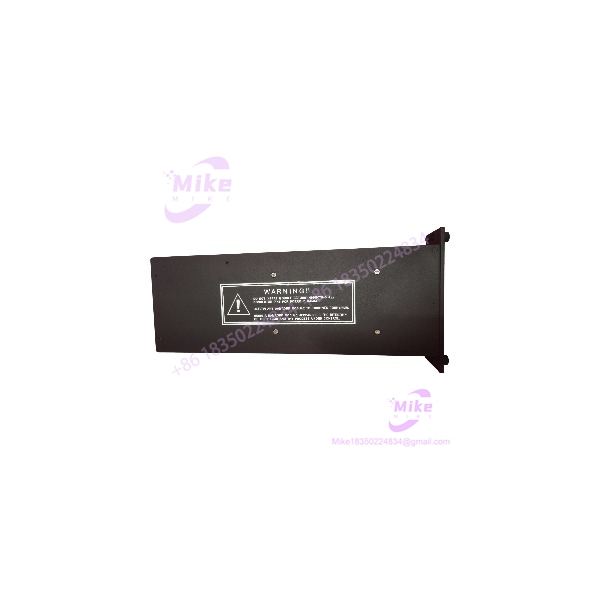
Description
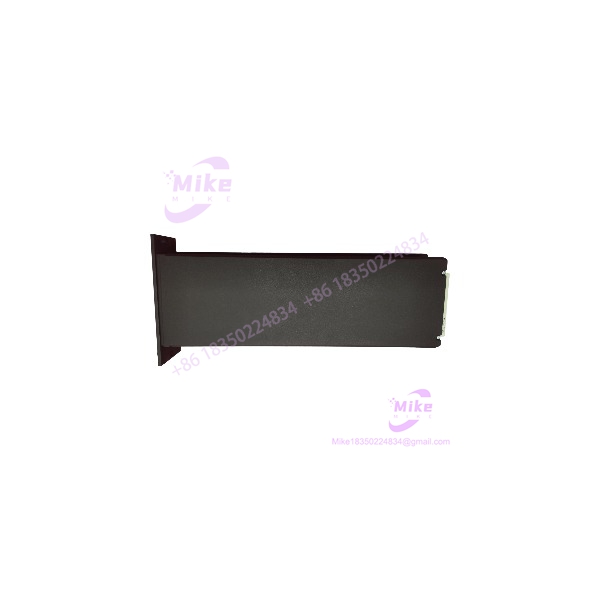
Triconex HD8311 | 24 VDC Tricon Power Supply Module
Product Introduction
Power-module substitutions are one of those maintenance jobs that look simple until the replacement is installed and the chassis starts reporting secondary faults. The TRICONEX HD8311 / 8311 is a chassis power module designed to convert a 24 VDC source into regulated power for the Tricon backplane. The documented 8311 provides 6.5 VDC ±1%, with up to 27 A at a 60°C chassis ambient and 175 W output at 60°C.
The 8311 belongs to the Tricon power-module family alongside the 8310 and 8312. The important distinction is the input source: 8311 is the 24 VDC version, while 8310 and 8312 are intended for different input-power arrangements. The verified product documentation lists the 8311 for Main, Expansion, and RXM chassis.
For procurement, do not rely on a seller title alone. If a listing says “HD8311,” “8311,” “8311 Power Supply,” or even incorrectly calls the unit an I/O module, the physical nameplate, chassis compatibility, connector arrangement, and electrical ratings should be checked before installation.
HD8311
Key Technical Specifications
- Model: 8311; commonly marketed by some secondary suppliers as HD8311
- Product Type: Tricon Power Module
- System: Tricon safety controller platform
- Chassis Compatibility: Main / Expansion / RXM
- Nominal Input: 24 VDC
- Recommended Input Range: 24 VDC, -15% / +20%
- Extended Input Range: 19.2–36 VDC
- Input Protection: Reverse-connection protection documented
- Input Fuse: 15 A, time-delay
- Typical Steady-State Input Current: 5 A
- Maximum Steady-State Input Current: 10 A
- Maximum Inrush Current: 23 A at 24 VDC for 10 ms
- Input Power Requirement: Minimum 240 W per power source
- Output Voltage: 6.5 VDC ±1%
- Maximum Output Current: 27 A at 60°C ambient
- Output Power: 175 W at 60°C ambient
- Input/Output Isolation: >1,000 VAC or 1,500 VDC
- Output Overvoltage Protection: Approximately 115% threshold; recycle power to restart
- Output Overcurrent Protection: Approximately 110% in the referenced installation documentation, with automatic restart
- Output Hold-Up: Documentation varies by revision/source; the product guide specifies at least 2.8 ms, while a planning guide gives additional typical/minimum values. Verify the applicable system revision before using hold-up time as a design parameter.
- Diagnostic Indicators: PASS, FAULT, ALARM, TEMP, BAT LOW
- Overtemperature Monitoring: Internal power-module temperature warning around 83°C
- Environmental Reference: 60°C ambient is the documented full-load reference point
The electrical figures above are based primarily on Tricon technical/product documentation rather than marketplace descriptions.
Global Sourcing & Live-Test SOP
For a safety-system spare, receiving inspection should be treated as part of the engineering process rather than a warehouse formality.
1. Inbound identity verification
- Photograph the complete nameplate before unpacking.
- Confirm 8311 against the purchase order and system BOM.
- If the seller uses HD8311, verify that the physical unit is actually a Tricon 8311 power module.
- Record serial number, hardware revision, date codes, and visible manufacturing marks.
- Check packaging and paperwork for inconsistencies between the claimed OEM and the physical module.
- Inspect connector surfaces, mounting hardware, fuse area, and enclosure for evidence of refurbishment or mechanical rework.
2. Electrical inspection
- Check the input terminals for contamination, corrosion, loose hardware, or insulation damage.
- Verify the 24 VDC source before connecting the module.
- Measure supply voltage with a calibrated DMM rather than trusting a PLC/HMI value.
- Check polarity carefully; do not use a bench supply with an incorrectly configured current limit.
- Verify the incoming supply can satisfy the documented 240 W minimum per power source requirement where applicable.
3. Functional simulation
A controlled bench test should verify:
- Correct startup behavior.
- PASS/FAULT/ALARM/TEMP/BAT LOW indicator operation as applicable.
- Stable output around the documented 6.5 VDC level.
- Output response under a controlled load.
- Abnormal input behavior within the permitted test envelope.
- Absence of excessive heating, audible switching noise, or abnormal current draw.
Do not connect a questionable spare directly into a live safety controller simply because the front panel powers up.
4. Extended heat run
For a used or refurbished HD8311 / 8311, a monitored 24-hour heat run is a useful screening step. Record input voltage, input current, output voltage, enclosure temperature, and diagnostic status at defined intervals.
5. Final preparation
Record the tested serial number and test results with the spare. Package the module in ESD-safe material and protect the connector/terminal areas against mechanical impact and contamination. Keep the original configuration and procurement records with the hardware.
Field Engineer’s Pitfall Guide
❗ Firmware is not the primary compatibility issue — chassis power architecture is
Unlike a processor or communication module, the 8311 is fundamentally a power-conversion module, so firmware compatibility is not the normal first-order concern. The critical checks are the exact Tricon chassis, input-power arrangement, physical interface, and electrical ratings.
Do not accept a seller’s claim that an unrelated “” I/O or communication module is equivalent merely because the model number looks similar.
❗ Do not confuse 8311 with 8310 or 8312
This is an easy purchasing mistake. The documented family uses different input-power configurations:
- 8310: 120 VAC/VDC class input
- 8311: 24 VDC input
- 8312: 230 VAC input
All three are power modules, but their incoming power arrangements are not interchangeable.
❗ Never assume “hot swap” means “remove any module without checking redundancy”
Tricon documentation describes redundant power-module operation, and secondary technical records describe online replacement. However, the maintenance procedure still needs to follow the applicable Tricon installation/maintenance documentation and confirm that the remaining power module is healthy and capable of carrying the chassis load.
A power module is not a casual plug-and-play spare just because the chassis is designed around redundancy.
Intent-Driven FAQ
Is TRICONEX the same as Triconex 8311?
The verified Tricon documentation identifies 8311 as the 24 VDC Power Module. I could not verify “” as a separate OEM model number in the technical documentation reviewed. Therefore, if a supplier lists , request a photograph of the nameplate and verify that it is actually an 8311 before purchasing.
What does the Triconex 8311 actually do?
It converts the incoming 24 VDC supply into regulated internal power for the Tricon chassis backplane. The documented output is 6.5 VDC ±1%, with up to 27 A at 60°C ambient and 175 W at 60°C.
Can the 8311 replace an 8310?
Not as a generic electrical substitution. The 8310 and 8311 use different incoming power configurations. The 8311 is the 24 VDC model, while the 8310 is specified for 120 VAC/VDC-class input. The chassis installation and power-distribution arrangement must match the replacement module.
What should I check before buying a used ?
At minimum, verify the physical nameplate, exact model, chassis compatibility, terminal arrangement, condition of the housing and connector area, serial/date information, and whether the seller has performed a loaded functional test. For a safety-system spare, a powered-on demonstration alone is not sufficient evidence of condition.
What output should I measure during testing?
The documented regulated output is 6.5 VDC ±1%. Test it under controlled conditions and compare the measured value against the applicable Tricon documentation for your system revision. Also monitor input current, output loading, temperature, and diagnostic indicators rather than checking voltage alone.
Is the 8311 obsolete?
The Tricon platform and individual hardware generations have a long installed base, and aftermarket suppliers continue to list 8311 units. That does not establish current OEM lifecycle status for every revision. For a migration strategy, verify availability and support status directly against the installed Tricon system generation rather than treating an aftermarket “in stock” statement as an OEM lifecycle statement.
What warranty should I expect?
Warranty coverage is seller-specific, not an inherent specification of the Triconex 8311 itself. For used, refurbished, or surplus stock, obtain the warranty period and test coverage in writing. For factory-sealed material, retain photographs of the original packaging and serial number at receipt.
Procurement note: For this part, I would write the purchase description as “Triconex 8311, 24 VDC Power Module — buyer listing designation ; verify nameplate before shipment.” That wording reduces the risk of receiving an unrelated product marketed under the keyword.





