

Description
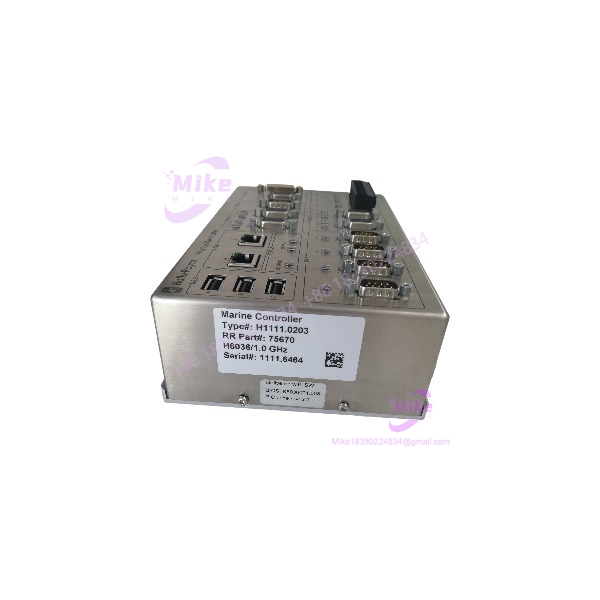
Rolls-Royce H1111.0203 | 1.0GHz Marine Controller
Product Introduction
The Rolls-Royce H1111.0203 is a dedicated marine automation controller rather than a conventional general-purpose PLC. Exact industrial records identify this model as RR Part 75670, using an H6036 1.0 GHz computing platform, BIOS K6036001.008, and PIC Code Rev. 2.2. Those identifiers are repeated across independent marine automation inventories and are the most useful procurement checkpoints for this part.
In vessel-control applications, the controller sits within a larger automation architecture handling real-time control, equipment status, communications, and system-level logic. Secondary marine documentation associates the H1111.0203 with propulsion, dynamic positioning, power-management, and general ship automation applications.
For replacement work, the hardware revision and system software are as important as the model number. A physically matching H1111.0203 is not automatically a drop-in spare if its PIC revision, BIOS, firmware, application image, or vessel-specific configuration differs from the installed controller.
H1111.0203
Key Technical Specifications
- Model: H1111.0203
- RR Part Number: 75670
- Hardware designation: H6036
- Processor designation: 1.0 GHz
- BIOS: K6036001.008
- PIC Code: Rev. 2.2
- Product category: Marine automation controller
- Control role: Main/system controller
- Application: Vessel automation and machinery-control systems
- Reported weight: 2.070 kg
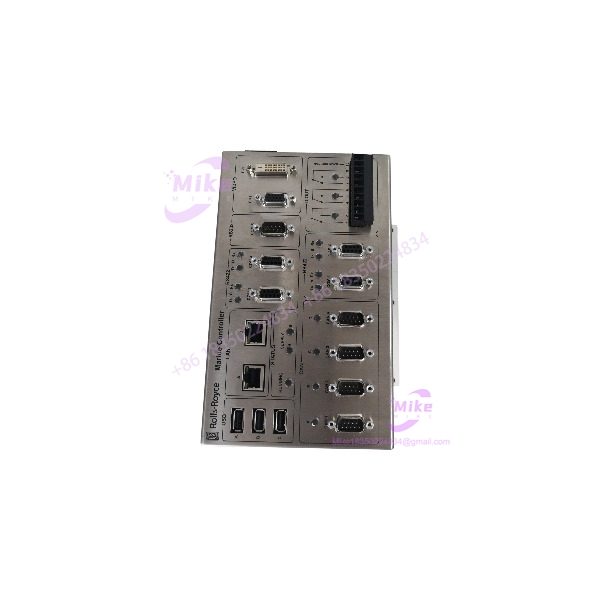
- Communication interfaces: Ethernet and marine fieldbus interfaces are reported by secondary sources
- Reported bus technologies: CAN and Profibus are cited in some industrial listings; verify the actual connector/interface configuration before integration
- Application functions: Control logic, equipment supervision, data processing, communications, and diagnostics
- Installation: Marine control cabinet / automation system
- Replacement status: Legacy equipment; exact-system matching required
The 75670 / H6036 / 1.0 GHz / K6036001.008 / Rev. 2.2 combination is particularly useful when inspecting surplus inventory. A seller listing only “H1111.0203” without photographs of these identifiers should not be treated as a fully verified configuration.
Global Sourcing & Live-Test SOP
1. Inbound Verification
For the , verify the complete hardware identity before applying power.
- Confirm model marking: .
- Confirm RR Part No. 75670.
- Confirm H6036 / 1.0 GHz marking where present.
- Verify BIOS identification as K6036001.008.
- Confirm PIC Code Rev. 2.2.
- Record serial number.
- Photograph every connector and status LED.
- Inspect the housing for corrosion, salt contamination, and moisture exposure.
- Check mounting hardware for vibration damage.
- Inspect PCB and connectors for oxidation.
A marine controller can appear clean externally while showing significant connector or PCB degradation after years aboard a vessel.
2. Power-Up Test
Use a controlled bench arrangement.
Before power application:
- Verify the nameplate supply requirements.
- Check polarity and protective grounding.
- Inspect the power connector.
- Measure for abnormal resistance between supply and chassis.
- Use current-limited laboratory power where practical.
- Monitor startup current.
- Record boot behavior and diagnostic indicators.
Do not rely on generic reseller specifications for the exact allowable input voltage. Public sources for .0203 are inconsistent on electrical details.
3. Firmware and Configuration Verification
Record:
- BIOS version
- PIC Code revision
- Firmware version
- Application software
- Controller/node address
- Network settings
- CAN configuration
- Fieldbus configuration
- Vessel-specific control database
- Redundancy configuration, if applicable
The exact .0203 is repeatedly listed with PIC Rev. 2.2.
That revision should be compared against the controller being replaced before installation.
4. Communications Test
Where the required interfaces are physically present, test them individually:
- Ethernet link
- CAN bus
- RS-485/serial interfaces if fitted
- Other system-specific fieldbus interfaces
- Status/diagnostic signals
Use an isolated maintenance network for initial testing. Do not place an unverified replacement controller directly onto an operational vessel control network.
5. Functional Simulation
Where the original system documentation is available, reproduce the controller’s normal communication environment.
Check:
- Boot sequence
- Controller diagnostics
- Network initialization
- CAN communication
- I/O data exchange
- Inter-controller communication
- Alarm/event handling
- Watchdog behavior
- Application startup
- Data logging
- Redundant-controller behavior, if installed
For propulsion or dynamic-positioning applications, functional validation should remain isolated from actual propulsion actuators until the controller and application image have passed the engineering acceptance test.
6. Extended Heat and Communication Test
For critical spare inventory, operate the controller continuously while monitoring:
- Supply current
- Processor/system temperature
- Fan behavior where applicable
- Network errors
- CAN bus errors
- Unexpected resets
- Watchdog events
- Application faults
- Communication stability
A controller that simply reaches its operating screen has not demonstrated production readiness.
7. Final Procurement Record
Record:
- .0203
- RR Part 75670
- H6036
- 1.0 GHz designation
- BIOS K6036001.008
- PIC Rev. 2.2
- Serial number
- Firmware/application version
- Interface configuration
- Test results
- Condition at receipt
- Packaging condition
Store the controller in ESD-safe packaging with connectors protected against mechanical impact and moisture.
Field Engineer’s Pitfall Guide
❗ Do Not Substitute by Prefix Alone
The and are separate part numbers. The preceding model may look similar and belongs to the same general marine-controller family, but their internal hardware and system roles should not be assumed interchangeable.
For .0203, the documented identifiers include 75670, H6036, 1.0 GHz, BIOS K6036001.008, and PIC Rev. 2.2. Match these before accepting a replacement.
❗ Firmware Is Part of the Replacement
Marine controllers are not ordinary computers where replacing the hardware and reinstalling an operating system necessarily restores functionality.
The vessel’s application software, controller identity, communications configuration, and control database may be tightly coupled to the hardware revision. A controller can boot correctly and still fail its system-level integration test.
❗ Verify the Actual Communication Hardware
Secondary sources associate the .0203 with Ethernet, CAN, Profibus, and other communication interfaces, but public documentation does not establish that every .0203 has the same physical interface population.
Match connector count, pinout, interface type, and network architecture against the original controller before installation. Do not purchase solely from a generic specification sheet.
Intent-Driven FAQ
What is Rolls-Royce .0203?
It is a Rolls-Royce Marine automation controller, identified in industrial inventory records as RR Part 75670. It is used as a system-level control/processing unit in marine automation applications.
What processor does .0203 use?
The exact-part records identify the hardware as .
What is the BIOS version?
The commonly documented configuration specifies .





