


Description
Yokogawa ALE111-S50 Ethernet Communication Module | Core DCS Node
Dynamic Product Introduction
Tying third-party programmable controllers and protocol gateways into an established control network requires matching exact hardware suffix configurations. The Yokogawa ALE111-S50 provides the foundational 10BASE-T Ethernet interface for CENTUM VP field control stations, bridging data loops without adding unnecessary hazardous-area constraints. When legacy interface cards suffer transceiver degradation, swapping in a verified, surplus-tested unit restores full polling integrity across plant subsystems.
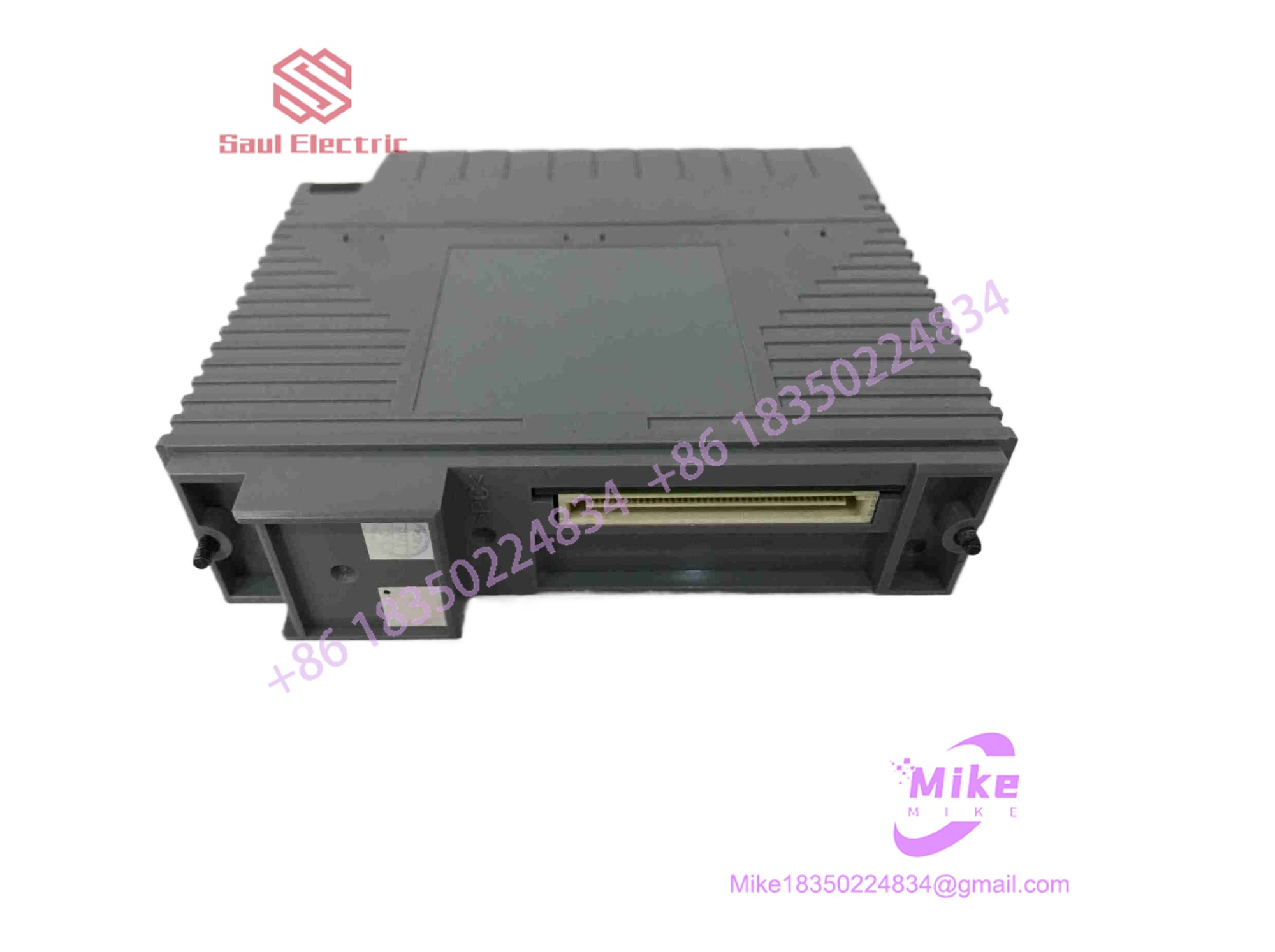
ALE111-S50
Key Technical Specifications
| Technical Parameter | Specification Value |
| Device Type | Ethernet Communication Module (FIO / N-IO) |
| Model & Suffix S | Standard Type |
| Suffix Code 5 | Non-explosion protected deployment rating |
| Suffix Code 0 | Basic standard base type |
| Physical Layer Interface | IEEE 802.3 10BASE-T (Half-duplex) |
| Transmission Speed | 10 Mbps |
| Port Configuration | Single RJ-45 connection port |
| Supported Protocols | Modbus, FA-M3, MELSEC, YFGW, PLC-5/SLC500 |
| Current Consumption | 0.5 A |
| Mounting Architecture | Node unit slot-in card (ANB10□, ANB11□, AFV30□, AFV40□) |
Global Sourcing & Live-Test SOP (Transparency Core)
Procuring secondary market DCS communication hardware demands rigorous testing of packet framing integrity and physical layer transceivers. Every inbound Yokogawa ALE111-S50 unit goes through a precise evaluation pipeline:
- Inbound Verification: Serial number pedigree checks against global automation ledgers, microscopic inspection of gold-edge backplane connectors, and capacitor health audits.
- Live Simulation: Slotted directly into an authentic Yokogawa CENTUM VP test node chassis running a live rack backplane.
- Diagnostics: Full-scale 10BASE-T frame transmission loops, Modbus/TCP register handshake verification, port isolation testing, and a 24-hour thermal burn-in run under continuous load.
- Final Prep: RJ-45 port contact cleaning, anti-static shielding bag placement, and heavy-duty ESD-safe vacuum sealing.
The Field Engineer’s Pitfall Guide
- ❗ Half-Duplex Switch Mismatches: Forcing an unmanaged network switch or modern auto-negotiating port configuration to fixed full-duplex modes without verifying transceiver compatibility will trigger massive packet collision rates.
- ❗ Backplane Bus Slot Misalignment: Jamming the communication module into an unassigned or mechanically mismatched node slot can bend sensitive backplane pins and corrupt system-level communication rings.
- ❗ Firmware Major Revision Conflicts: Deploying an older hardware revision module into a high-level CENTUM VP software release environment without verifying driver and database compatibility can block subsystem register mapping.
Intent-Driven FAQ
- Will replacing the Yokogawa ALE111-S50 erase my subsystem configuration maps?
No. Subsystem communication definitions and control parameters are housed within the CENTUM VP engineering database and downloaded to the node, though verifying node address switches is critical.
- Can this communication module be hot-swapped in an active node chassis?
Hot-swapping is supported only if the node and system architecture are explicitly engineered and configured for redundant or online maintenance mode; otherwise, upstream power must be isolated.
- What indicates a failing physical transceiver layer on this module?
Observing continuous link-status LED flickering, intermittent packet drops, or complete communication timeout errors while cable continuity tests measure entirely normal points to an internal PHY chip failure.
- What is the structural difference between the -S50 and -S51 variants?
The suffix digits define specific base styling or regional compliance tracking iterations, but both share identical core 10BASE-T physical specifications and slot dimensions.
- What type of warranty covers this surplus hardware?
Verified units are backed by an industry-standard replacement warranty covering electrical functionality and operational stability under factory conditions.





