


Description
Yokogawa AAI141 | Analog Input Module 4-20mA 16-Channel
Dynamic Product Introduction
Analog signal degradation represents the most common hidden cost in aging control systems, often manifesting as erratic valve positioning or drift in pressure loop feedback. The Yokogawa AAI141 module manages these mission-critical inputs with localized hardware filtering, ensuring that field-level disturbances don’t propagate into your control strategy. Honestly, replacing a faulty input card is straightforward—provided your marshaling cabinet environment doesn’t mirror the harsh, corrosive atmosphere of the process unit itself.
This module provides the direct density required to collapse your I/O footprint while maintaining the signal integrity expected from the Centum platform. Upgrading legacy cards to the AAI141 typically resolves timing-related errors in high-speed data acquisition loops that older, discrete analog boards struggle to maintain.
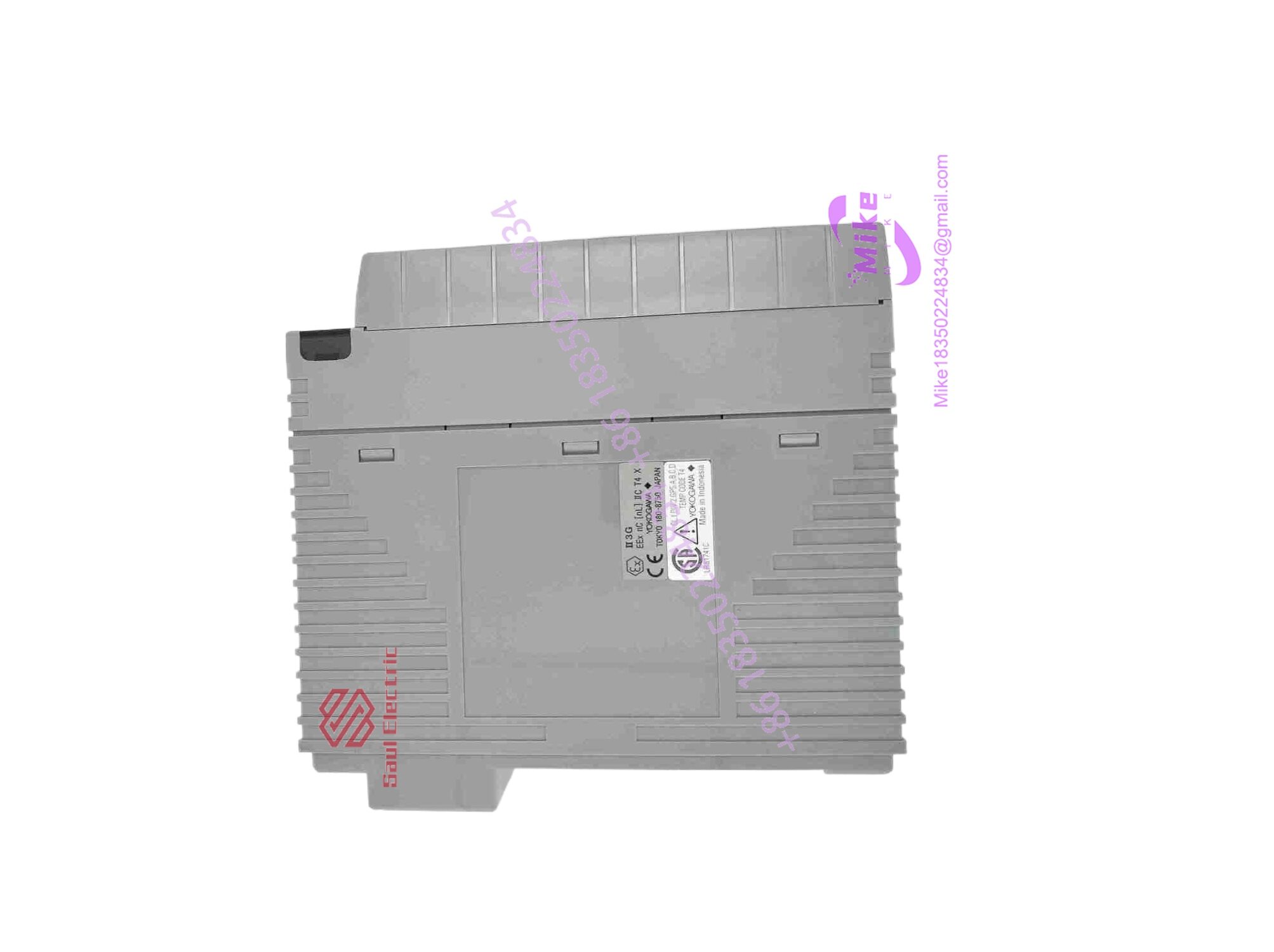
AAI141
Key Technical Specifications
| Parameter | Specification Detail |
| Number of Channels | 16 Channels |
| Input Signal | 4 to 20 mA DC |
| Resolution | 12-bit (approx. 4.88 µA/bit) |
| Accuracy | ±0.1% of span |
| Signal Isolation | Galvanic isolation between channels and system bus |
| Input Resistance | 250 Ω |
| Power Consumption | 300 mA (at 5V DC) |
| Operating Temp | -5°C to 70°C |
| Mounting | Dedicated I/O module base plate |
Global Sourcing & Live-Test SOP
Supply chain integrity for Yokogawa components is our primary operational focus. We mitigate the risk of counterfeit or “black market” components through the following SOP:
- Inbound Verification: Every module is inspected for original OEM anti-tamper holographic seals. We trace the batch manufacturing date codes against Yokogawa factory records to ensure hardware lifecycle compatibility.
- Live Simulation: We utilize a dedicated Centum VP test rack. Each AAI141 is initialized on the bus, and we monitor the NCN (Node Control Network) status to confirm valid module handshakes.
- Diagnostics: Using a calibrated Fluke 789 process meter, we inject precise 4mA, 12mA, and 20mA signals into each of the 16 channels. We cross-reference the DCS engineering station readout against the meter to ensure zero-percent deviation.
- Final Prep: Once the module clears the 24-hour soak test, we document the internal firmware revision, package it in anti-static, moisture-barrier shielding, and include a signed QC verification report.
The Field Engineer’s Pitfall Guide
❗ Galvanic Isolation Assumptions: Never assume all field loops are electrically isolated from the chassis ground. If you are replacing a non-isolated card with an isolated AAI141 variant, you may create ground loops if your shield bonding at the marshaling cabinet isn’t adjusted accordingly.
❗ Terminal Block Keying: The mechanical keying on the AAI141 connector block is designed to prevent incorrect module insertion, but I have seen field techs force the plastic housing, resulting in bent backplane pins. If it doesn’t slide home with minimal pressure, stop and check for debris in the connector pins.
❗ Loop Power Dependency: The requires an external loop power source. I’ve seen startup delays spanning entire shifts because a junior engineer forgot to bridge the 24VDC loop power supply on the external terminal board, leaving the 4-20mA transmitters dead on arrival.
Intent-Driven FAQ
Will I lose my DCS configuration if I hot-swap an ?
The Centum VP system supports hot-swapping for the ; however, the module must be physically identified as a spare in your database. If you remove an active module without putting the logic in a “Maintenance” or “Off-Scan” state, the DCS will register a Hardware Alarm.
Is the compatible with older CS 3000 systems?
Yes, the is largely backward compatible with the CS 3000 series, but you must verify that your current I/O module base plate and firmware versions are compatible with the specific hardware revision of the card you are installing.
Can I use this for HART signals?
No. The is a standard analog input card. If your loop requires HART communication, you must utilize the AAI143 or another HART-enabled module to maintain digital transparency for smart instrumentation.
Does this module require a specific firmware version to talk to my CP461 processor?
Generally, no, but if your CP461 controller firmware is severely outdated, it may not recognize the latest hardware revision of the . Always perform a check on your controller’s current firmware build before finalizing your spare parts purchase.
What is the typical failure mode for these modules?
They are robust, but lightning surges via the field wiring are the number one killer of these input stages. We recommend checking your surge suppression blocks at the cabinet entrance if you are replacing a module that has failed prematurely.





