


Description
Vision DVSC-TT-14C-09 | AC Servo Drive, In Stock
Architect’s Product Breakdown
The Vision DVSC-TT-14C-09 (frequently associated with Doosan CNC equipment architectures) operates as a dedicated digital AC servo drive designed to command industrial motion axes under high-demand environments. Its core operational responsibility involves taking speed and position reference instructions from a central CNC controller or PLC, modulating high-voltage switching pulses, and delivering precise closed-loop control to multi-kW servo motors.
Because this hardware tier is heavily integrated into legacy machine tools, sourcing exact part number matches is mandatory during maintenance cycles. Swapping out a drive requires meticulous verification of parameter settings, feedback cable assignments, and incoming line voltages to prevent over-voltage faults or axis runaway conditions during initial machine homing.
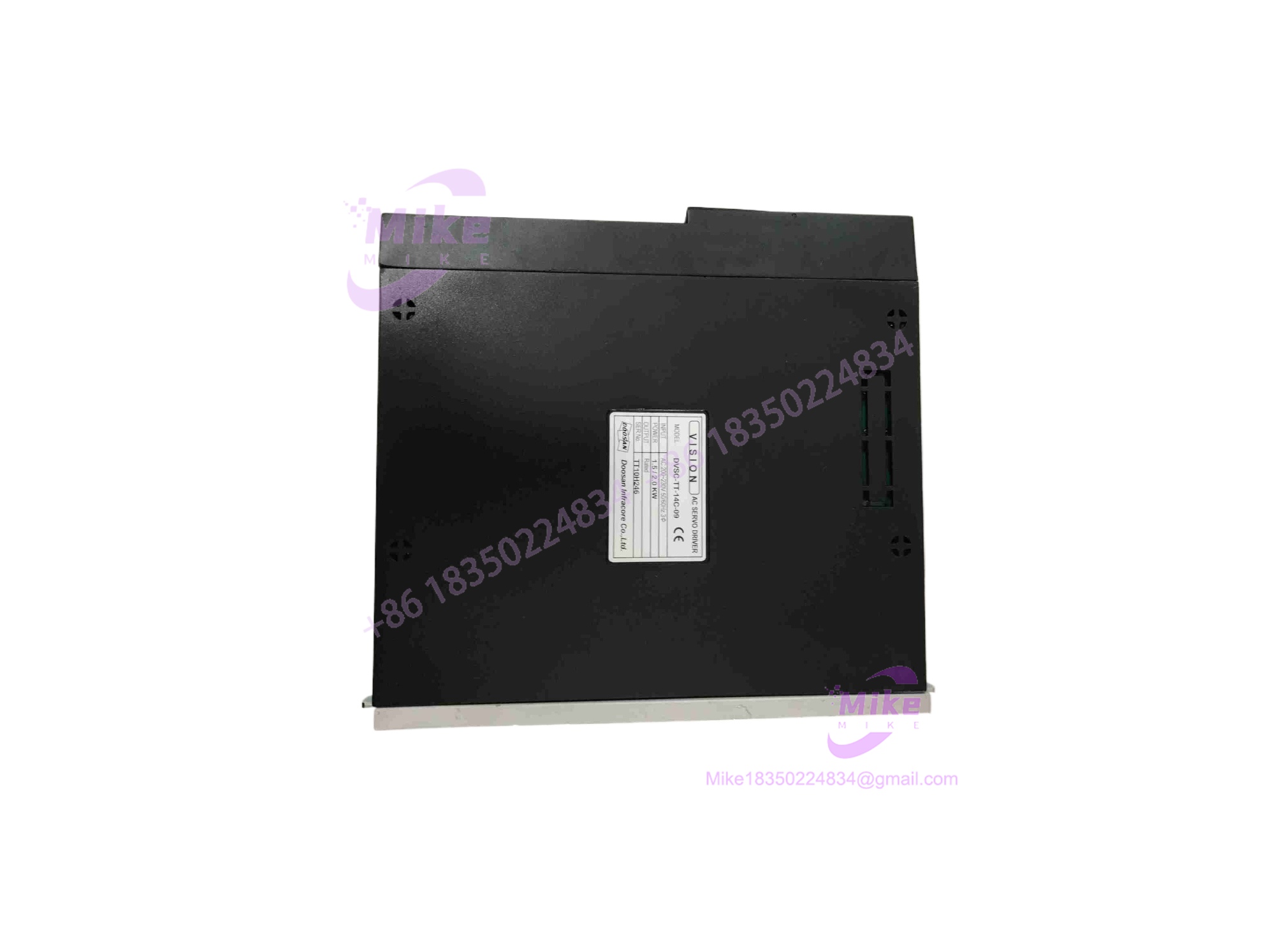
DVSC-TT-14C-09
Key Technical Specifications
| Parameter | Specification |
| Series | Vision DVSC AC Servo Family |
| Model / Part Number | DVSC-TT-14C-09 |
| Input Voltage | AC 200V ~ 230V (50/60 Hz) |
| Power Output Rating | 1.5 kW / 2.0 kW capacity profiles |
| Control Architecture | Closed-loop vector regulation (Position / Velocity / Torque) |
| Mounting Type | Enclosure back-panel / cabinet chassis mounting |
| Operating Temperature | 0°C to +45°C |
| Environmental Protection | Industrial rack enclosure housing (conformal-coated internal logic cards) |
Field Engineer’s Pitfall Guide
- WARNING: DC Bus Capacitance Discharge. Never touch power terminals immediately after powering down the DVSC-TT-14C-09; residual high-voltage charge stored in the internal DC bus capacitors can cause severe electrical shock.
- WARNING: Unmatched Parameter Configurations. Installing a replacement drive without transferring or verifying the original axis tuning parameters will cause severe motor hunting, vibration, or immediate overcurrent trips.
- WARNING: Poor Regenerative Braking Dissipation. Failing to ensure proper thermal clearance or omitting a required external braking resistor during high-inertia deceleration cycles can cause drive over-voltage faults.
- Field Anecdote: I remember a CNC machining center experiencing frequent drive shutdown faults during rapid tool changes because a replacement servo amplifier was installed without updating the acceleration/deceleration ramp limits to match the spindle axis load inertia.
QA & Testing SOP
- Visual & Origin Verification: Inspect the chassis, heat sink fins, and internal power board terminals for physical damage, component burn marks, and verify original Vision/Doosan manufacturing labels.
- Live Test Bench Environment: Mount the servo drive onto a specialized load-test fixture powered by an isolated variable AC supply with current-limiting protection.
- Diagnostics & Dynamic Testing: Execute pulse command sweeps, verify gate-driver switching waveforms, and check feedback loop tracking under simulated mechanical resistance.
- Anti-Static & Secure Packaging: Enclose the unit in thick anti-static packaging and heavy-duty structural foam to protect connection headers and control boards during transit.
Technical FAQ
Can the DVSC-TT-14C-09 be used as a drop-in replacement for other manufacturer drives?
No. This drive is custom-tailored for specific legacy Vision and Doosan automation topologies, utilizing proprietary control firmware and hardware handshakes incompatible with third-party systems.
Does this drive require software tools for parameter setup?
Yes. Configuration adjustments, gain tuning, and diagnostic monitoring typically require a specialized handheld programmer, software interface, or front-panel keypad depending on the specific integration setup.
What causes an overcurrent (OC) fault on startup?
An overcurrent fault usually points to a shorted motor winding, damaged power cable insulation, a grounded encoder shield, or improper internal transistor switching within the output bridge.
Is this drive hot-swappable while powered on?
No. Connecting or disconnecting motor leads, encoder feedbacks, or control wiring while the unit is energized will cause electrical arcing and permanent internal component destruction.





