

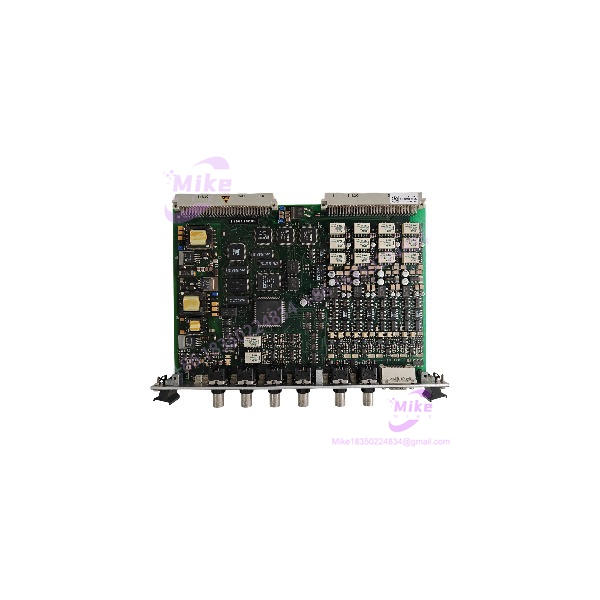
Description
Vibro-Meter 200-510-076-114 | MPC4 Machinery Protection Card, Category ID
Architect’s Product Breakdown
The 200-510-076-114 card acts as the computational core for high-speed vibration surveillance within rack configurations. Positioned directly in the VM600 backplane bus, it processes raw signals from accelerometers, velocity sensors, and proximity probes mounted on critical rotating assets like steam turbines and large compressors. Its logic execution time handles multi-channel digital signal processing locally, mitigating the processing burden on the broader distributed control system (DCS).
Integrating this module requires careful attention to firmware revisions and associated input/output cards (IOC4T). Swapping a legacy iteration requires verifying that the rack backplane bus communication protocols match the target revision to prevent timeout errors. Upgrading an aging installation reduces unplanned downtime by providing high-density condition monitoring without requiring massive cabinet footprint expansions.
Plant engineers frequently encounter challenges with terminal pin assignments and chassis grounding on older racks. Ensuring proper shielded cabling and ground bus continuity prevents common-mode noise from corrupting low-level dynamic signals during transient machine start-ups.
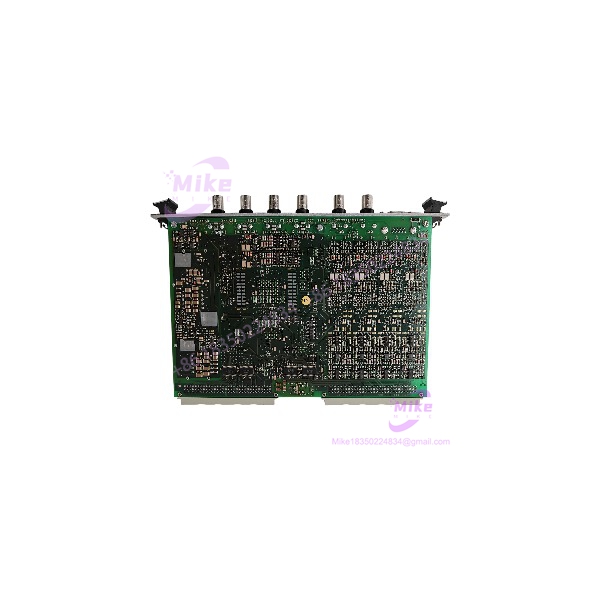
MPC4 200-510-078-115
Key Technical Specifications
| Parameter | Specification |
| Manufacturer | Vibro-Meter (Meggitt) |
| Module Type | Machinery Protection Card (MPC4) |
| Dynamic Channels | 4 channels (acceleration, velocity, displacement) |
| Tachometer Channels | 2 channels (speed / keyphasor inputs) |
| Frequency Range | DC to 20 kHz |
| Dynamic Range | 80 dB |
| A/D Conversion | 24-bit resolution |
| Safety Integrity | SIL 2 approved |
| Operating Temperature | 0°C to +65°C |
| Power Consumption | Approx. 7W nominal |
Field Engineer’s Pitfall Guide
- Firmware Revision Mismatches: Swapping a card into an existing rack without verifying the firmware version can break the internal backplane bus handshake. I once watched a commissioning team lose an entire weekend because a minor revision mismatch prevented the rack monitoring software from recognizing channel configuration data.
- Forgotten Jumper and Configuration Settings: Hardware-selectable options on the companion IOC4T card must match the transducer type (e.g., -20 VDC proximity probe vs. IEPE accelerometer). Neglecting this step risks blowing internal signal conditioning circuitry upon power-up.
- Cabinet Temperature Limits: Placing this module in a tightly packed cabinet without active ventilation will push ambient card temperatures past its thermal threshold, leading to erratic trip behavior during summer peaks.
QA & Testing SOP
- Visual & Origin Inspection: Verify OEM security seals, serial number plate integrity, and anti-static packaging compliance against factory production standards.
- Live Test Environment: Insert the card into a fully powered VM600 test rack simulator to validate backplane communication stability and internal power supply regulation.
- Diagnostics & Handshake Tests: Inject simulated signals ranging from DC to 20 kHz across all four dynamic channels and verify pulse counts on both tachometer inputs.
- Firmware Recording: Document the exact firmware version loaded onto the flash memory, then pack the unit in humidity-controlled, dissipative shielding bags.
Technical FAQ
Can I hot-swap this module while the process is running?
No. Although the VM600 backplane is rugged, hot-swapping an MPC4 card without tripping the associated machinery or causing rack communication faults is not recommended unless specific system redundancy and safety bypasses are fully engaged.
Does this card retain its configuration data after a total power loss?
Yes. Configuration parameters are stored in non-volatile flash memory on the card, meaning you will not lose channel scaling or trip multipliers during a facility black start.
Do I need to re-flash the system software when replacing an identical part number?
Usually no, provided the firmware revision matches the system configuration software version currently running on the engineering workstation. Always back up the rack configuration before performing physical swaps.
What is the primary role of the companion IOC4T card?
The IOC4T acts as the Input/Output Card counterpart, providing the physical screw terminals, sensor power supplies, buffered outputs, and relay connections linked directly to the MPC4.





