


Description
Valmet A413000 | PLC CPU Module Core Category
Dynamic Product Introduction
Obtaining reliable replacement processing hardware for legacy pulp, paper, and energy management systems presents a persistent hurdle for maintenance teams. When an aging CPU board experiences memory failure or communication dropouts, sourcing an exact-match replacement without triggering a multi-thousand-dollar control system migration is paramount.
The Valmet A413000 central processing unit fills this critical inventory niche, offering a drop-in computational core designed to slot seamlessly into established automation racks. Deploying this processor re-establishes deterministic control loop execution and network synchronization—though confirming the exact firmware revision matches the system configuration image is mandatory before applying rack power.
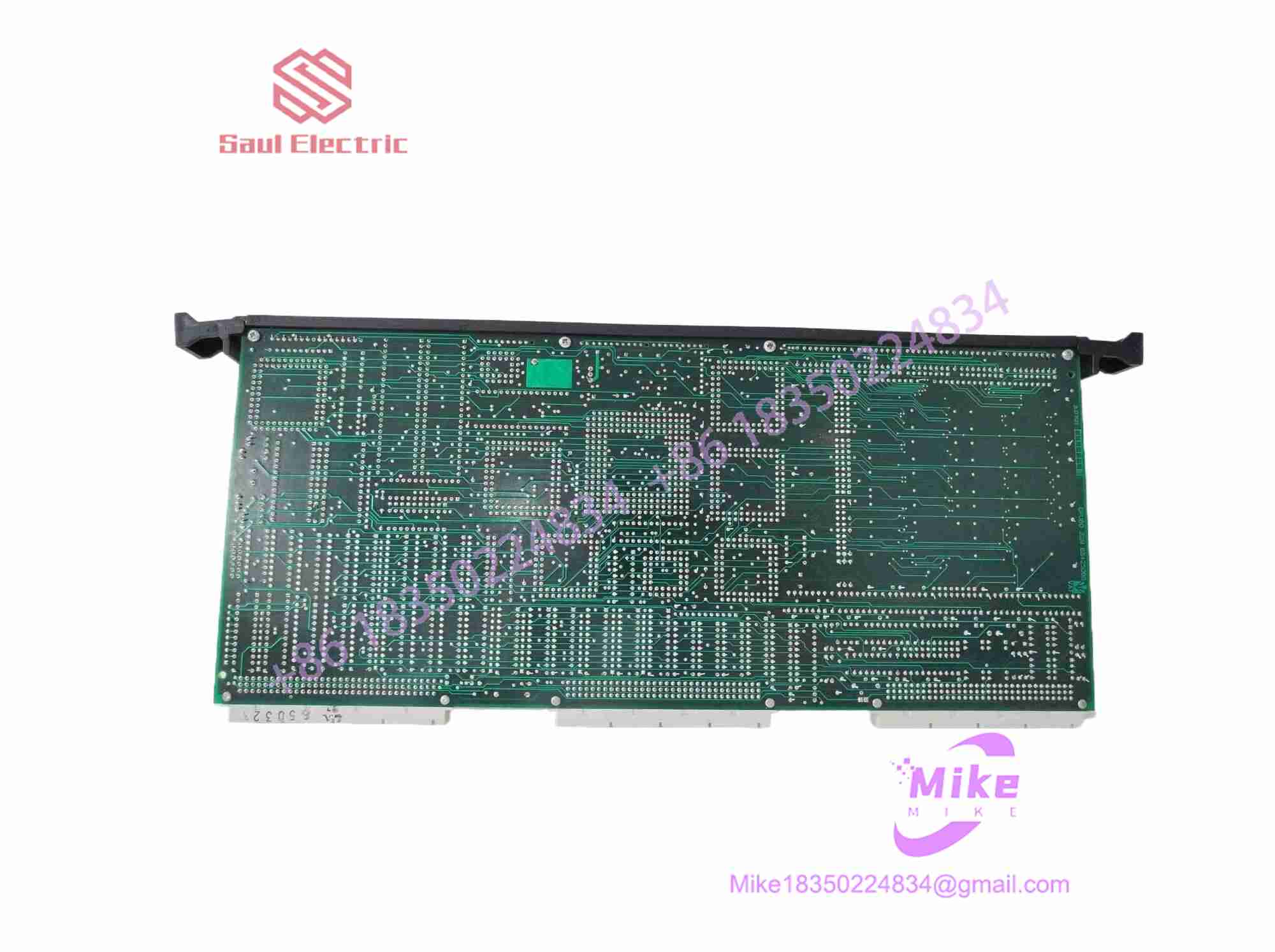
A413000
Key Technical Specifications
| Parameter | Specification Details |
| Module Classification | Central Processing Unit (CPU) / Control Board |
| System Compatibility | Valmet / Metso Automation process control architectures |
| Memory Capacity | 32M configuration |
| Hardware Revisions | Available in various iterations (e.g., Ver. 07, Ver. 09, Ver. 10) |
| Bus Interface | High-speed internal backplane communication link |
| Diagnostic Features | On-board status LEDs for processor health and communication polling |
| Operating Environment | Designed for heavy industrial temperature ranges |
| Mounting Format | Rack-mountable proprietary module card slot |
Global Sourcing & Live-Test SOP (Transparency Core)
Procuring legacy or surplus processor boards requires an uncompromising quality control pipeline to eliminate latent ESD damage or memory degradation. A single unstable trace on a vintage CPU card can compromise an entire node network.
- Inbound Verification: Incoming boards undergo meticulous visual and optical inspection, checking edge-connector pin integrity, surface-mount capacitor health, and laser-etched OEM serial markers against historical production logs.
- Live Simulation: Technicians mount the CPU module onto an authentic, powered Valmet backplane test rig to evaluate bus arbitration, slot recognition, and initial boot sequences without throwing communication faults.
- Diagnostics: We execute rigorous memory-read/write exercises and communication handshake validation loops using specialized diagnostic tools to verify stable clock cycles and data register reliability under simulated plant loads.
- Final Prep: Approved units are flashed to their stable target revisions, cleaned of micro-particulates, and sealed inside anti-static shielding bags to guarantee shelf-ready deployment.
The Field Engineer’s Pitfall Guide
❗ Firmware Revision Mismatches: Swapping a board running Revision 07 with a Revision 10 variant can cause system configuration files to reject the node during compilation. I’ve seen plant commissioning stall for hours because the engineering station software required a matching hardware definition profile before pushing down logic blocks.
❗ Battery & NVRAM Degradation: Neglecting to check the on-board backup energy storage cell on a surplus CPU module can result in total loss of retentive memory parameters upon initial power-down. Always verify voltage retention parameters before installation.
❗ Backplane Pin Alignment Stress: Force-seating an older module into a rack with warped guide rails can bend microscopic backplane interface pins, causing intermittent communication drops across the node bus that are notoriously difficult to troubleshoot.
Intent-Driven FAQ
Will swapping the A413000 CPU erase my plant’s control logic?
No. The core control strategy, configuration files, and application logic are stored in the system’s engineering database or non-volatile memory layers rather than residing solely on a volatile processor register. Once the replacement CPU is seated and communicates with the network, the configuration image is loaded or synchronized.
Are these replacement boards brand new or refurbished?
Given the vintage of these legacy platforms, inventory typically consists of factory-sealed surplus (never deployed, stored in climate-controlled environments) or fully tested, premium-grade pulls from decommissioned industrial nodes. Every unit undergoes strict test bench verification prior to inventory listing.
Can I upgrade from an older version (e.g., Ver. 07) to a newer version (e.g., Ver. 10) directly?
Direct hardware substitution depends heavily on the overarching system software version running on your engineering station. Always cross-reference the hardware catalog number and revision compatibility charts in your system documentation before finalizing a cross-revision swap.
What warranty covers this surplus CPU module?
All delivered processor boards are backed by an independent operational warranty (typically 12 months), covering functional performance, processing stability, and hardware integrity under standard industrial working conditions.
How do I verify that the CPU is communicating properly with the I/O rack upon insertion?
Observe the front-panel diagnostic LED indicators during boot-up. A healthy module will transition through standard self-test routines, clear internal watchdog flags, and establish steady network link polling with adjacent I/O cards without entering a fault loop.





