


Description
Toshiba EX404MCRD5 EX40 Plus PLC 24 Input 16 Relay
Product Introduction
Some PLC replacements are difficult because the hardware itself is obsolete; others are difficult because the machine program, field wiring, and operator expectations were built around that exact generation of controller. The Toshiba EX404MCRD5 falls squarely into the second category.
The Toshiba EX404MCRD5, also referenced as EX40-4MCRD5 and EX40*4MCRD5, belongs to Toshiba’s EX40 Plus programmable-controller family. Available industrial references identify the unit as an EX40 Plus PLC with 24 contact inputs and 16 relay outputs, giving a 40-point discrete I/O configuration.
This is a compact, legacy PLC architecture rather than a modern modular controller with Ethernet, USB, or integrated high-speed communications. The EX40 family was supported by dedicated programming hardware and PC-based tools, including the EX2040/ programming ecosystem. Legacy documentation also identifies the Plus as a programmable controller that could be accessed using Toshiba’s handheld programmer or PC-based programming software.
For maintenance teams, that distinction matters. The value of an EX404MCRD5 is often not new-system functionality; it is preserving an existing machine without forcing an unplanned PLC migration, field-wiring redesign, and program-conversion project.
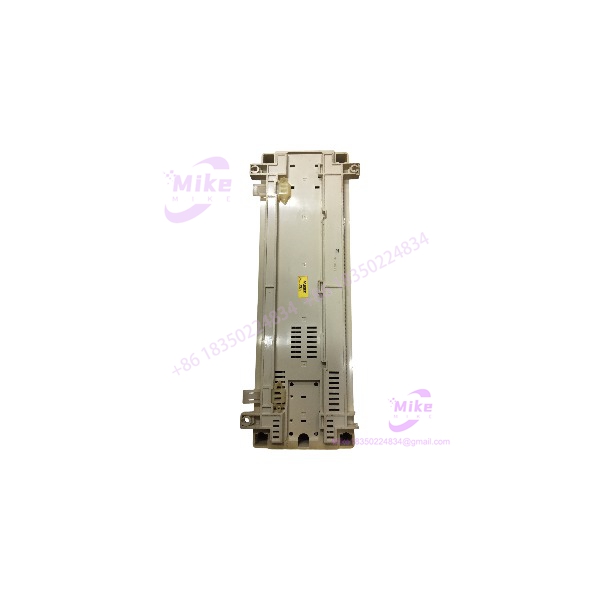
EX404MCRD5
Key Technical Specifications
- Manufacturer: Toshiba
- Exact model: EX404MCRD5
- Formatted model: -4MCRD5
- Family: Plus
- Controller type: Programmable logic controller
- Architecture: Fixed/brick-style PLC
- Total I/O: 40 points
- Digital inputs: 24
- Input type: Contact/dry-contact inputs
- Digital outputs: 16
- Output type: Relay
- Input addressing: Octal-based addressing is documented for the Plus input arrangement
- Input terminal range: 1–7, 10–17, and 20–27
- Programming method: Ladder logic
- Programming hardware: EX-series handheld programmer and compatible PC programming equipment
- PC programming: Toshiba EX-PDD software is documented for EX20/-family controllers
- Programming communication: Legacy serial interface architecture
- Expansion capability: Plus family supports expandable I/O architecture
- Memory: Model/configuration dependent; verify the installed memory/program module rather than assuming a single capacity
- Output technology: Electromechanical relay
- Application class: Machine automation / discrete control
- Series status: Legacy / discontinued
- Typical service role: Replacement, repair, backup, and maintenance of existing Plus installations
The 24-input/16-relay-output identification is supported by Toshiba/Cutler-Hammer cross-reference material, which maps the -MCRD5 family to the D100CR40A architecture and identifies 24 contact inputs with 16 relay outputs.
Important Power-Supply Note
Do not infer the exact EX404MCRD5 supply voltage solely from the suffix without checking the unit’s nameplate and terminal markings.
Several secondary databases correctly identify -4MCRD5 as an Plus programmable controller but do not provide a reliable exact-voltage specification. Other variants clearly exist with different power/input architectures, including 24 VDC and AC-powered versions.
For procurement, the physical nameplate is therefore the controlling reference.
Application Scenarios & Pain Points
1. Legacy Machine-Control Replacement
The is most relevant when an existing machine still depends on the Plus architecture and the original PLC has failed.
Replacing it with a matching controller can avoid a much larger engineering task involving I/O rewiring, PLC program conversion, HMI changes, commissioning, and production downtime.
2. Discrete Relay-Control Applications
With 24 contact inputs and 16 relay outputs, the -MCRD5 architecture fits machines dominated by discrete devices — limit switches, pushbuttons, contactors, interposing relays, solenoids, and other on/off field devices.
The relay output stage is particularly relevant when the existing control cabinet was designed around relay-switched loads.
3. Legacy Material-Handling Equipment
The Plus family has been used in older machine-control installations where long-term serviceability matters more than adding modern networking features. Maintaining the original PLC can be the shortest path to restoring production.
4. Machine Program Recovery and Backup
A replacement can also be valuable as a maintenance spare. Where the original controller is still operating, maintaining a tested spare reduces the risk associated with a single obsolete controller becoming the plant’s production bottleneck.
5. Controlled Migration Planning
Keeping a compatible Plus replacement available can provide engineering time to design a proper modernization project instead of attempting an emergency PLC conversion during a production failure.
That is a very different procurement strategy from simply buying a newer PLC.
QA & Live Testing SOP
For a used , visual inspection is only the first step.
Our recommended incoming inspection sequence:
- Verify the exact marking or -4MCRD5.
- Photograph the complete nameplate before applying power.
- Record any serial number, manufacturing date, revision marking, and memory-module identification.
- Inspect all input and output terminal screws for corrosion, stripped threads, or heat damage.
- Inspect the enclosure for cracks, deformation, contamination, or evidence of overheating.
- Check the programming connector and communication interface for physical damage.
- Verify the installed memory/program module if one is present.
- Confirm the controller’s power requirements directly from its nameplate.
- Apply power through a controlled test arrangement using the correct supply.
- Verify the PLC reaches its expected RUN/READY state.
- Check the controller’s diagnostic/status indicators.
- Test representative input channels using controlled dry-contact simulation.
- Test representative relay outputs without connecting uncontrolled machine loads.
- Cycle relay outputs repeatedly and monitor for contact instability.
- If the original program is present, verify that the program can be read/backed up using compatible programming equipment.
- Check retained program data before shipment if the unit is being sold specifically as a programmed replacement.
- Document any battery or memory-retention issue before the unit enters service.
Legacy Toshiba documentation identifies Plus controllers as programmable through dedicated programming hardware and PC software, while the EX-PDD documentation includes Plus among its supported PLC types.
Field Engineer’s Pitfall Guide
❗ Do not confuse with -MARD8. Both belong to the family, but the I/O architecture differs. The MCRD5 version is associated with contact inputs and relay outputs, while MARD8 is associated with AC input/relay-output configurations.
❗ Do not assume the power supply from the family name. Toshiba produced multiple variants with different electrical configurations. Verify the exact unit’s nameplate before energizing it.
❗ Do not assume a modern USB programming cable will communicate directly. The generation predates today’s standard PLC USB interfaces. Legacy documentation describes dedicated programming equipment and serial communication methods.
❗ Relay outputs need load verification. A PLC can execute its program correctly while an aged relay has degraded contacts. Test the actual output switching behavior rather than treating a RUN indication as proof that every output is healthy.
❗ Protect the existing program. With obsolete PLC hardware, the program can be more difficult to recover than the controller itself. Back up the logic before replacing a working whenever the appropriate programming equipment is available.
Intent-Driven FAQ
What is the Toshiba ?
The is an Plus programmable logic controller designed for discrete industrial machine control. It is also identified as -4MCRD5 and *4MCRD5 in service and replacement references.
How many I/O points does have?
The configuration is identified with 24 contact inputs and 16 relay outputs, for a total of 40 discrete I/O points.
Are the Toshiba outputs relay outputs?
Yes. The -MCRD5 family is identified as having 16 relay outputs.
Are the inputs dry-contact inputs?
Yes. References for the *4MCRD5 identify the input arrangement as contact/dry-contact type. The Plus input wiring uses a common C terminal with the field contacts connected to the numbered input terminals.
Is the Toshiba still a current PLC?
No. It is a legacy/discontinued controller. Current industrial automation suppliers list the -MCRD5 as discontinued while continuing to offer surplus, repair, and replacement services.
Can the still be programmed?
Yes, provided the appropriate legacy programming hardware/software is available. Toshiba’s EX-PDD documentation lists and Plus among the supported PLC types, and the family was also supported by dedicated handheld programming equipment.
What should I verify before buying an ?
Verify the exact model marking, power-supply requirement, I/O configuration, memory/program module, physical terminal condition, and programming interface. For a replacement PLC, also confirm that the existing machine program can be transferred or restored to the replacement unit.
Procurement Note
The correct procurement identifier is Toshiba / -4MCRD5. Search results also use the notation *4MCRD5, so all three forms are useful when looking for obsolete inventory or repair references.
The strongest technical match is:
Toshiba Plus → -MCRD5 family → 24 contact inputs + 16 relay outputs.
One point should remain explicit in the listing: do not publish a specific supply voltage unless it has been confirmed from the actual unit’s nameplate. The family contains multiple power/input variants, and incorrectly applying the specification from an adjacent model is exactly the kind of mistake that can turn a replacement PLC into a cabinet-damage event.
For a used , I would also recommend documenting whether the original program is present, whether the memory module is included, and whether all 16 relay outputs have been function-tested.





