


Description
TMEIC EPCDFBA | Embedded Power Control Circuit Board
Product Introduction
Some industrial control boards are difficult to replace because their value is not defined by a simple I/O count. They are embedded inside a larger power-control architecture, where board revision, firmware, connector assignment, and system configuration can determine whether a replacement actually works.
The TMEIC EPCDFBA falls into that category. Available industrial automation inventory documentation specifically identifies EPCDFBA as an Embedded Power Control circuit board associated with TMEIC. The same documentation lists related Embedded Power Control boards, including EPCAPVA, EPCCIBA, and EPCHVBB, indicating that EPCDFBA belongs to a broader embedded control hardware family.
For legacy equipment, this distinction is important. The EPCDFBA should be treated as a system-specific circuit board, not as a generic PLC module that can be substituted based only on physical dimensions or connector appearance.
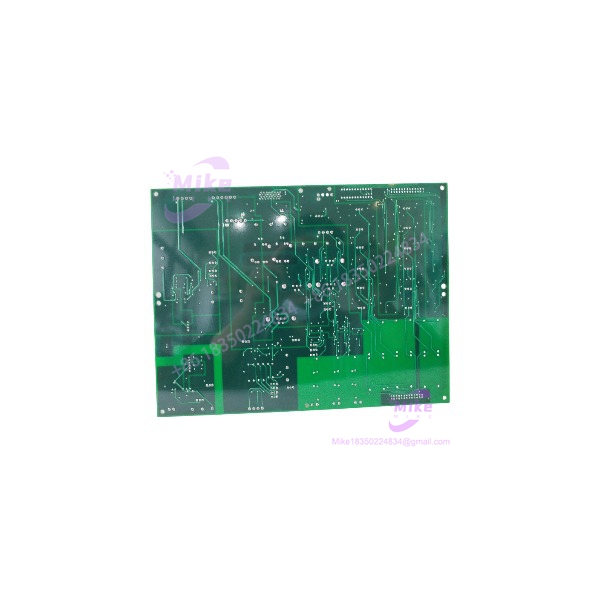
EPCDFBA
Key Technical Specifications
- Manufacturer: TMEIC
- Model: EPCDFBA
- Product Type: Embedded Power Control circuit board
- Primary Classification: Industrial control/power electronics
- Installation: Embedded within compatible industrial equipment
- Application: TMEIC industrial power-control architecture
- Board Family: Embedded Power Control
- System Dependency: Hardware and configuration dependent
- Firmware Dependency: Must be verified against the host equipment
- Revision Matching: Recommended before replacement
- Electrical Specifications: Not independently verified
- I/O Configuration: Not independently verified
- Communication Interfaces: Not independently verified
- Operating Temperature: Not independently verified
- Power Requirements: Not independently verified
Technical caution: Do not use unverified online specifications for procurement approval. Several secondary listings incorrectly expand EPCDFBA into unrelated embedded-computing descriptions, including ARM processors, Wi-Fi, Bluetooth, and generic IoT functions. Those claims do not establish the specifications of the TMEIC EPCDFBA board.
Application Scenarios & Pain Points
Legacy TMEIC Equipment Repair
A failed embedded control board can stop an otherwise serviceable industrial system. When the surrounding power electronics, wiring, and mechanical equipment remain viable, replacing the board can be substantially less disruptive than rebuilding the control architecture.
Power-Control System Maintenance
The EPCDFBA is relevant to maintenance programs where embedded control hardware forms part of a larger industrial power-control assembly. Exact system identification is essential before installation.
Brownfield Automation
Older industrial installations frequently remain productive long after the original electronic components become difficult to source. An exact replacement board can help maintain the existing architecture while a longer-term modernization project is planned.
Critical Spare Inventory
For plants operating equipment containing the EPCDFBA, maintaining a tested spare can reduce troubleshooting time and limit downtime caused by a single-board failure.
QA & Live Testing SOP
For a board such as the EPCDFBA, visual inspection alone is not an adequate acceptance test.
1. Identity Verification
- Confirm the board marking reads EPCDFBA.
- Record all PCB part numbers, revision codes, serial numbers, and barcode information.
- Photograph both sides of the board.
- Document every connector and terminal position.
2. Physical Inspection
- Inspect for corrosion, contamination, cracked solder joints, damaged traces, and overheated components.
- Check connectors for bent, oxidized, or recessed contacts.
- Inspect mounting hardware and PCB supports.
3. Component Inspection
- Check electrolytic capacitors for leakage or deformation.
- Inspect power components for thermal damage.
- Look for evidence of previous component-level repair.
4. Controlled Power Test
- Use an approved test fixture or compatible host system.
- Apply only the documented supply voltage for the specific revision.
- Monitor current draw during startup.
- Check for abnormal heating or fault indications.
5. Functional Test
- Where the correct host equipment or test fixture is available, verify board initialization.
- Test applicable control, feedback, and communication functions.
- Compare measured behavior with the known-good reference board where possible.
6. Documentation
- Record board revision, test conditions, measured values, and observed faults.
- Package using ESD-safe materials.
- Protect connectors and exposed components against mechanical damage.
Field Engineer’s Pitfall Guide
❗ Do not confuse EPCDFBA with a generic embedded controller. The available evidence identifies it specifically as an Embedded Power Control circuit board associated with TMEIC.
❗ Do not approve a replacement based solely on the EPCDFBA marking. Record the complete PCB revision and any secondary identification numbers. Two visually similar boards can have different hardware configurations.
❗ Do not trust generic online specifications. Claims describing EPCDFBA as an ARM/Wi-Fi/Bluetooth IoT module are associated with similarly named third-party listings and are not sufficient evidence for this TMEIC board.
❗ Do not energize an unknown board in production equipment. Confirm the host-system interface and supply requirements first. A wrong board can create secondary damage rather than simply failing to initialize.
❗ Preserve the original board configuration. Before removal, document connectors, jumpers, switch positions, revision markings, and installation orientation. Those details can be critical during legacy-system troubleshooting.
Intent-Driven FAQ
What is the TMEIC EPCDFBA?
The EPCDFBA is an Embedded Power Control circuit board associated with TMEIC. Available industrial automation documentation explicitly lists it under Embedded Power Control and identifies it as a TMEIC circuit board.
Is EPCDFBA a PLC module?
Not based on the available evidence. It is better classified as an embedded power/control circuit board rather than a general-purpose PLC CPU or I/O module.
What equipment uses EPCDFBA?
The available documentation establishes its TMEIC Embedded Power Control association, but it does not provide enough authoritative information to identify every compatible host system. The host equipment and original board documentation should therefore be confirmed before procurement.
What are the EPCDFBA input and output specifications?
I would not publish specific voltage, current, I/O, or communication values without the original technical documentation. Online secondary listings provide conflicting specifications, so presenting those numbers as fact would create an unnecessary procurement risk.
Is EPCDFBA interchangeable with other Embedded Power Control boards?
No assumption should be made. Related boards such as EPCAPVA, EPCCIBA, and EPCHVBB are separately identified in the same inventory documentation. Similar naming does not establish functional interchangeability.
What should I verify before purchasing EPCDFBA?
Verify the complete board marking, PCB revision, serial information, connector layout, host-equipment model, and original board photographs. For a production-critical replacement, request a documented functional test.
Is this a suitable legacy replacement?
Potentially, yes — provided the board is confirmed against the customer’s existing TMEIC equipment and revision. For this particular model, exact identification is more important than a generic specification match.





