


Description
TERASAKI ESM-103 B Starter Module PCB Card
Product Introduction
A control-board replacement becomes difficult when the equipment is still operational but the original PCB is no longer readily available. That is where the TERASAKI ESM-103 B becomes relevant: it is identified as a starter-module PCB card intended for Terasaki equipment, rather than a generic PLC I/O module that can be substituted by electrical ratings alone.
The commonly associated designation K/87Z/4/001B is important for procurement and compatibility checks. Multiple market records identify ESM-103 B with this designation, while other ESM-103 B listings use suffixes such as K/87Z/4-001C and K/87Z/4-001D. That means the complete board marking, connector arrangement, revision, and host-equipment application should be checked before treating another ESM-103 variant as a replacement.
Do not order this board simply because an ESM-103 number appears on a cross-reference list.
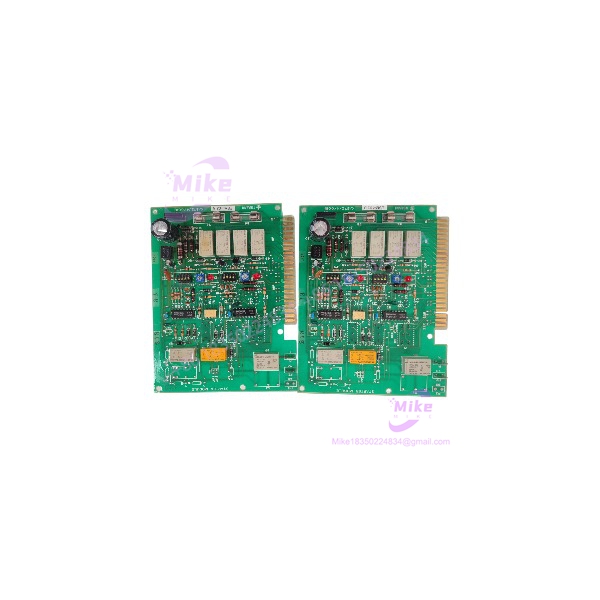
ESM-103 B
Key Technical Specifications
- Manufacturer: Terasaki
- Model: B
- Common Part/Platform Reference: K/87Z/4/001B
- Product Category: Starter module
- Hardware Type: PCB card / electronic control board
- Installation Style: Equipment-mounted or system-integrated PCB
- Control Function: Starter-module control/interface function
- Application Domain: Marine and industrial equipment
- System Integration: Intended to operate as part of the original Terasaki control architecture
- Board-Level Replacement: Yes — subject to exact revision and connector verification
- Electrical Supply: Not published reliably enough to specify without the exact equipment documentation
- Input/Output Count: Not specified from sufficiently authoritative documentation
- Communication Protocol: Not established from reliable documentation
- Firmware Requirement: Not established; verify board revision and host-system compatibility
- Associated Designation: K/87Z/4/001B
- Physical Compatibility: Must be confirmed against the original PCB, connectors, mounting arrangement, and revision marking
The available technical evidence supports the starter-module identification, but it does not support inventing voltage, current, I/O, communication, or timing specifications. Some third-party pages incorrectly classify B as an earth-leakage or motor-protection relay and publish detailed electrical values; those claims conflict with the more consistent starter-module identification and should not be used as procurement specifications.
Application Scenarios & Engineering Pain Points
Marine Equipment Maintenance
Legacy marine control systems often remain in service long after the original automation hardware has become difficult to source. An B board can therefore be valuable as a direct service replacement when the installed equipment has been positively identified.
Starter-System PCB Replacement
If the original starter-module PCB has failed because of component aging, corrosion, thermal stress, or electrical damage, replacing the board can be considerably more practical than redesigning the surrounding control system.
Shipboard Automation Refurbishment
During vessel refurbishment, the objective is often to preserve an existing control architecture rather than introduce a completely new PLC platform. Keeping the correct Terasaki module maintains the original interface philosophy and reduces unnecessary engineering changes.
Legacy Spare-Part Strategy
For plants and vessels with multiple similar Terasaki systems, maintaining one tested spare can reduce troubleshooting time when a board-level failure occurs.
The key issue is identity control. B is not enough by itself when several suffix/platform combinations exist.
QA & Live Testing SOP
For an B intended for industrial or marine service, our inspection process should begin with the board itself — not the seller’s description.
- Part-number verification: Confirm
Bagainst the PCB label and secondary identification markings. - Platform verification: Check for K/87Z/4/001B where that configuration is required.
- Revision inspection: Record all revision, serial, and board-code markings before testing.
- PCB inspection: Check connectors, terminal areas, solder joints, relays, transformers, IC packages, and exposed copper for corrosion or heat damage.
- Component condition: Look for cracked components, discoloration, lifted pads, damaged tracks, and evidence of previous repair.
- Connector inspection: Verify pin condition and mechanical integrity — bent or oxidized contacts can create faults that look like board failures.
- Powered testing: Apply power only with the correct Terasaki test arrangement and documented supply conditions.
- Functional testing: Where the original system or a suitable test rack is available, verify the board under representative operating conditions.
- Documentation: Record the board identification, revision, test conditions, observed behavior, and final disposition.
- ESD packaging: Store and ship the PCB in ESD-safe packaging with adequate mechanical protection.
For a used board, “powers on” is not the same thing as “field ready.” A starter-module PCB can pass a basic electrical check while still having intermittent connectors, degraded components, or configuration-specific compatibility problems.
Field Engineer’s Pitfall Guide
❗ Do not confuse B with other suffixes. Market records show B associated with K/87Z/4/001B, while other listings identify B with K/87Z/4-001C and K/87Z/4-001D. These should not automatically be treated as electrically interchangeable.
❗ Do not use generic electrical specifications from unrelated listings. One third-party source describes ESM-103B as an earth-leakage/motor-protection relay and gives detailed voltage, current, and contact ratings, while the stronger recurring identification is a starter-module PCB. Until an OEM document confirms those electrical values, they should not appear on a purchase specification.
❗ Verify the actual board before installation. Connector layout, PCB revision, component population, and host-equipment configuration can matter more than the broad family number.
Intent-Driven FAQ
What is the TERASAKI B?
The TERASAKI B is identified as a starter-module PCB card used within Terasaki marine and industrial equipment.
What is the associated part number for B?
A commonly documented association is K/87Z/4/001B. This designation should be checked against the physical board before ordering.
Is B a PLC processor?
It should not be automatically classified as a conventional PLC CPU. Available records consistently identify it as a starter module PCB/card.
Can K/87Z/4-001C replace K/87Z/4/001B?
Do not assume so. Both designations have been associated with B in market records, but the existence of multiple suffixes is precisely why the installed board and host equipment should be matched before substitution.
What voltage does the B require?
A reliable OEM-level source confirming the operating voltage was not located. Do not use an unverified marketplace specification as the installation voltage. Confirm the original equipment documentation or board-level documentation first.
Is the TERASAKI B suitable as a legacy replacement?
Potentially, yes — provided the board number, revision, connector configuration, and host Terasaki system match the failed unit. This is a replacement-board application, not a generic universal controller.
What should I verify before purchasing B?
At minimum, verify , the complete K/87Z/4/001-series designation, PCB revision, connector layout, physical board condition, and the exact Terasaki equipment in which the original module is installed.
Procurement Note
TERASAKI B should be purchased by exact board identity, not by model-family similarity. The strongest available evidence identifies it as a starter-module PCB, with K/87Z/4/001B as a common associated designation.
For a mission-critical marine control system, send the supplier clear photographs of the front and rear PCB, nameplate, connector area, and every visible part-number/revision marking before accepting a claimed substitute.





