

Description
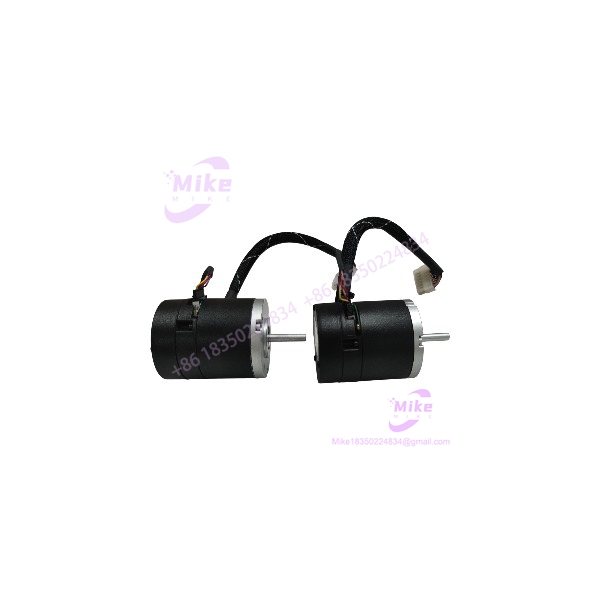
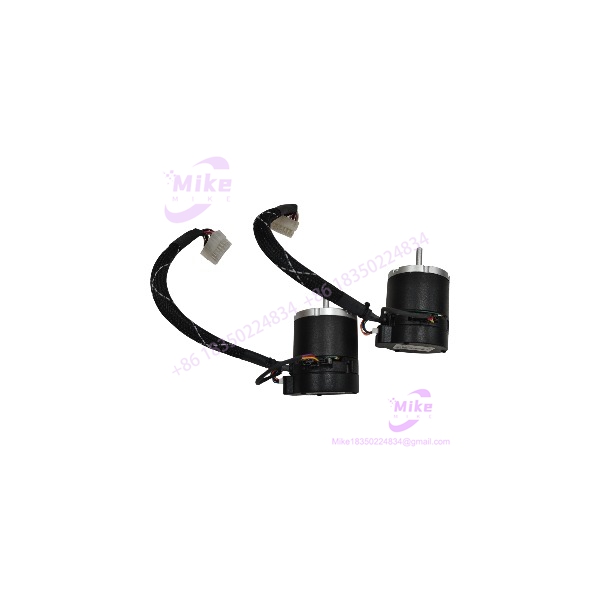
Teknic M-2330-109/H1 | Brushless Servo Motor
Dynamic Product Introduction
A servo motor can look mechanically sound and still be the wrong replacement. Encoder resolution, winding characteristics, shaft geometry, and drive compatibility all affect whether the machine returns to its original positioning behavior.
The Teknic M-2330-109/H1 belongs to the M-2330 brushless rotary servo motor family. The M-2330 platform is designed for light- to medium-duty motion-control applications, with encoder feedback supporting closed-loop position and velocity control when paired with a compatible servo drive. For the M-2330 family, Teknic documents a 20–90 VDC input range and up to 160 oz-in peak torque under specified drive conditions. These are family-level ratings—not a blanket guarantee for every configuration or duty cycle.
For maintenance teams keeping older automation equipment operational, the M-2330-109/H1 may provide a practical replacement route without redesigning the entire motion axis. The key is confirming the exact encoder, mounting arrangement, and drive pairing before installation. A motor swap is not a performance upgrade unless the complete motion system has been evaluated.
M-2330-109/H1
Key Technical Specifications
The following values are documented for the Teknic M-2330 motor family unless otherwise noted. Confirm the exact M-2330-109/H1 configuration before using them as acceptance limits.
- Manufacturer: Teknic, Inc.
- Model: M-2330-109/H1
- Motor Type: Brushless, rotary, rare-earth permanent magnet
- Motor Family: M-2330
- Input Voltage: 20–90 VDC
- Input Current: 7.6 A RMS; 30 A peak, family-level rating
- Peak Torque: 160 oz-in with specified SSt-1500 servo drive
- Continuous Torque: 60 oz-in, typical family rating without heat sink; application-dependent
- Encoder: 8000 quadrature counts/rev reported for M-2330-109; verify exact H1 configuration
- Mounting: NEMA 23 flange or applicable round-pilot configuration, depending on motor variant
- Operating Temperature: 0–60°C family specification; ambient temperatures above 40°C may reduce RMS capability
- Feedback / Drive Compatibility: Confirm encoder wiring, feedback format, and drive support before commissioning
Source: Teknic M-2330 family specifications and available M-2330-109 product identification.
Global Sourcing & Live-Test SOP (Transparency Core)
A surplus servo motor should not be sold as installation-ready based on a shaft-spin check. For the Teknic M-2330-109/H1, inspection must establish both mechanical condition and electrical/feedback functionality.
The following is a recommended supplier QC procedure—not a claim that the specific listed motor has passed these tests.
Inbound Verification
- Match the complete M-2330-109/H1 designation against the purchase order.
- Photograph the nameplate, serial number, encoder housing, shaft, and connectors.
- Inspect the shaft for scoring, corrosion, abnormal play, and impact damage.
- Check the motor leads and connector pins for bending, discoloration, or prior repair.
- Review available OEM documentation and supplier traceability records.
- Record any discrepancy between the nameplate and sales description before acceptance.
Live Simulation
Test the motor using a compatible Teknic servo drive and the correct feedback interface. Do not apply power until the motor wiring and drive compatibility have been verified.
Recommended checks include:
- Confirming motor phase wiring and encoder connections.
- Verifying encoder feedback and direction.
- Performing a controlled low-speed rotation test.
- Checking for abnormal noise, vibration, or friction.
- Evaluating drive faults and feedback stability during acceleration and deceleration.
Where compatible equipment is available, document the drive model, configuration, and test conditions. Do not claim an authentic Teknic SSt-1500 test unless that drive was actually used.
Diagnostics and Heat Run
A qualified test record should include the test duration, drive configuration, and observed results.
For the M-2330-109/H1, the procedure may include:
- Encoder feedback consistency checks.
- Phase and winding resistance checks against applicable OEM limits.
- Controlled speed and direction tests.
- Monitoring motor temperature and abnormal vibration.
- A sustained operating test under a defined load.
A 24-hour heat run should only be claimed if performed. It is not a substitute for a documented torque, encoder, or insulation assessment.
Final Preparation
Before shipment:
- Record the exact model, serial number, and visible revision.
- Document test results and any unverified functions.
- Photograph the motor and included accessories.
- Apply ESD-safe packaging to encoder electronics and connectors.
- Protect the shaft and motor leads against transit damage.
- Provide written warranty, return, and condition terms.
For cross-border shipments, confirm the declared condition, shipping origin, and return-freight responsibility before dispatch.
The Field Engineer’s Pitfall Guide
❗ Warning 1: Encoder Resolution and Feedback Compatibility
The M-2330-109 is associated with an 8000-count/revolution encoder configuration, but confirm the H1 unit’s exact feedback specification. A mismatch between the replacement motor and the servo drive’s feedback setup can cause position errors, initialization faults, or unexpected motion.
I’ve seen a motor replacement turn into a full shift of commissioning work because the encoder configuration was assumed rather than checked. Verify feedback scaling and direction before enabling the axis.
❗ Warning 2: Drive Current and Motor Tuning
The M-2330 family has documented current and torque limits that depend on the drive and operating conditions. Do not assume that a drive configured for another motor can be reused without checking current limits, commutation, and tuning parameters.
Incorrect settings can produce excessive motor heating, unstable motion, or drive trips. Confirm the compatible drive configuration and applicable motor data before running the axis.
❗ Warning 3: Mounting and Shaft Dimensions
A similar NEMA 23 footprint does not guarantee identical shaft length, pilot geometry, connector clearance, or mounting depth. Verify the actual M-2330-109/H1 dimensions against the removed motor.
Pay particular attention to coupling alignment and axial loading. Forcing a coupling onto a mismatched shaft can damage bearings and create vibration that persists long after commissioning.
Intent-Driven FAQ
Q1: What is the Teknic M-2330-109/H1 used for?
The Teknic M-2330-109/H1 is identified as a brushless rotary servo motor in the M-2330 family. It is intended for controlled rotary motion in applications such as positioning, indexing, and automated machinery when paired with a compatible servo drive.
Q2: Is the M-2330-109/H1 a direct replacement for the M-2330-109?
Not automatically. The H1 suffix should be verified against the original motor’s configuration. Compare encoder resolution, mounting dimensions, shaft geometry, wiring, and applicable OEM documentation before treating the two as interchangeable.
Q3: What voltage does the Teknic M-2330-109/H1 require?
The M-2330 family documentation specifies a 20–90 VDC input range. The correct drive, current limits, and operating conditions must still be confirmed for the specific motor configuration. Do not connect it directly to an unverified power source.
Q4: Can I use the M-2330-109/H1 with a Teknic SSt-1500 servo drive?
The M-2330 family documentation provides torque ratings with the SSt-1500 drive. However, confirm the exact motor configuration, feedback compatibility, and drive setup before commissioning. Family-level compatibility should not be treated as approval for every revision.
Q5: Will replacing this motor erase my machine’s logic program?
A motor-only replacement does not ordinarily erase a PLC’s stored logic. However, servo-drive parameters, motor tuning, feedback scaling, and homing offsets may require verification or restoration. Back up relevant motion parameters before removing the original motor, particularly if the drive stores motor-specific configuration data.
Q6: Can the M-2330-109/H1 be hot-swapped?
Do not assume so. Isolate the servo drive and follow the machine’s approved lockout procedure before disconnecting motor or encoder wiring. Stored DC bus energy may remain after power is removed, so observe the drive manufacturer’s discharge requirements.
Q7: What warranty should I expect when buying a surplus M-2330-109/H1?
Warranty coverage depends on the seller and the inventory condition. Obtain written confirmation of the warranty period, DOA coverage, return authorization procedure, and responsibility for international return shipping. A used motor should not be assumed to carry the original OEM warranty.
Procurement Conclusion
The Teknic M-2330-109/H1 is a candidate replacement for legacy motion-control equipment using a compatible M-2330-series servo motor configuration.
Before purchasing, verify the complete model designation, encoder specification, mounting dimensions, and servo-drive compatibility. For surplus inventory, request actual-unit photographs and documented functional test results.
Recommended listing position: Teknic M-2330-109/H1 Brushless Rotary Servo Motor — M-2330 Series, Encoder Feedback, Industrial Motion-Control Replacement.
Clearly disclose the unit’s condition, verified specifications, included accessories, test status, and warranty terms. Avoid advertising unverified performance improvements or guaranteed interchangeability.





