

Description
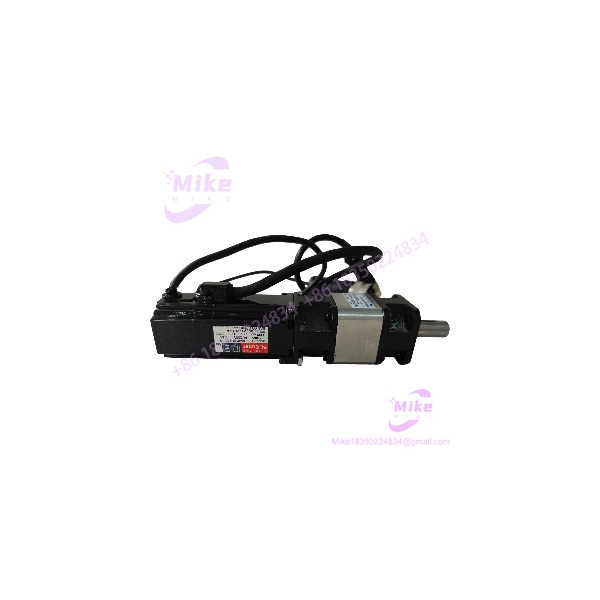
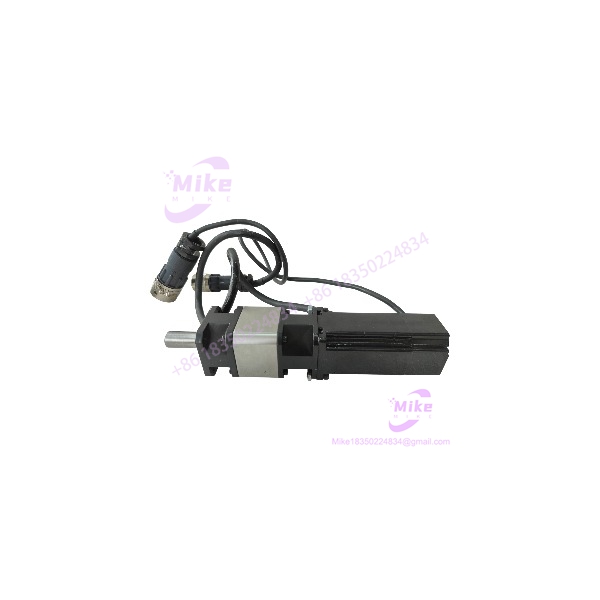
SANYO DENKI P30B04010DXS8FM 100W AC Servo Motor
Product Introduction
Small servo motors often sit on axes where repeatability matters more than raw power. The P30B04010DXS8FM is intended for compact motion-control applications that need controlled rotation, encoder feedback, and frequent acceleration and deceleration. Its brushless design supports closed-loop motion when paired with a compatible servo amplifier and correctly configured control system.
Typical application areas include compact indexing mechanisms, small automated assembly machines, inspection equipment, and other precision positioning systems. These are potential application categories, not confirmation of a specific original-equipment installation.
Replacement warning: Online supplier records do not agree on every mechanical and encoder detail. Use the motor nameplate and the original Sanyo Denki documentation as the final authority rather than assuming all P30-series motors share the same interfaces.
P30B04010DXS8FM
Key Technical Specifications
| Parameter | Published information |
|---|---|
| Manufacturer | SANYO DENKI |
| Model | P30B04010DXS8FM |
| Product family | P3 Super BL servo motors |
| Motor type | Brushless servo motor |
| Rated output | 100 W |
| Supply class | 200 V |
| Rated speed | 3,000 RPM |
| Maximum speed | 4,500 RPM, as reported by supplier data |
| Rated current | 1.1 A |
| Rated torque | Approximately 0.32 N·m |
| Encoder | Incremental encoder; resolution must be confirmed |
| Holding brake | Listed as not equipped by one supplier |
| Shaft diameter | 8 mm reported by supplier listings |
| Motor mass | Approximately 0.5 kg reported |
| Compatible drive | Verify exact Sanyo Denki amplifier and feedback interface |
| Mounting dimensions | Verify against the original motor drawing |
Sources: supplier specifications for the exact part number.
Specification discrepancy to resolve before ordering: Supplier listings differ on encoder resolution and some dimensional descriptions. Do not treat a reported encoder pulse count or flange measurement as definitive without checking the motor’s nameplate and original technical documentation.
Application Scenarios & Pain Points
- Precision positioning: Closed-loop motor control for small rotary axes and indexing mechanisms.
- Compact automation: Servo-driven movement in equipment with limited installation space.
- Frequent start-stop operation: Brushless motion systems that repeatedly accelerate, decelerate, and reverse direction.
- Legacy equipment maintenance: Replacement of an existing P3-series motor where the original amplifier and feedback wiring are still in service.
- Repair and refurbishment: Evaluation of encoder, winding, bearing, and shaft condition before returning a motor to production.
Common failure symptoms include position drift, encoder feedback errors, excessive vibration, abnormal noise, and servo-drive overcurrent alarms. These symptoms do not automatically indicate a failed motor; cable damage, incorrect tuning, mechanical binding, drive faults, and poor grounding can produce similar behavior.
QA & Live Testing SOP
- Verify the exact model. Record the complete
P30B04010DXS8FMdesignation, serial number, and nameplate ratings. - Inspect the motor mechanically. Check the shaft, mounting face, connectors, and housing for impact damage, corrosion, or unauthorized repairs.
- Confirm the feedback system. Verify encoder type, resolution, connector pinout, and compatibility with the intended amplifier.
- Check the drive pairing. Confirm supply class, motor parameters, feedback support, and the manufacturer’s approved amplifier combination.
- Perform electrical checks. Qualified personnel should check winding integrity and insulation using methods and test limits approved for the motor. Do not apply a high-voltage insulation test to encoder electronics.
- Test at low speed. With a compatible drive and a safe test setup, verify rotation direction, feedback counts, and smooth operation before increasing speed.
- Assess mechanical condition. Listen for bearing noise and check vibration, temperature rise, and shaft behavior under appropriate test conditions.
- Document results. Record the drive used, test settings, observed faults, and whether the encoder and motor were tested together.
For used or refurbished stock, request test evidence rather than relying solely on a seller’s “tested” description.
Field Engineer’s Pitfall Guide
- Do not match by wattage alone. A 100 W motor from another series may use a different encoder, winding, shaft, or mounting arrangement.
- Verify encoder resolution. Conflicting supplier data makes this a mandatory check before configuring the drive.
- Check the exact suffix. Similar P30-series part numbers can identify different motor configurations.
- Confirm brake requirements. One supplier lists this model without a holding brake. If the application requires a brake to hold a vertical or gravity-loaded axis, verify the actual motor configuration before installation.
- Inspect cable and connector compatibility. Similar connectors do not guarantee identical pin assignments or feedback signals.
- Check mechanical loads. Excessive radial or axial loading can shorten bearing life and cause positioning errors.
- Investigate the complete servo system. Encoder alarms, overcurrent faults, and unstable motion may originate in the drive, cable, tuning, or machine mechanics rather than the motor itself.
Intent-Driven FAQ
Q1: What is the SANYO DENKI P30B04010DXS8FM?
It is a brushless servo motor in the Sanyo Denki P3 Super BL series, listed with 100 W rated output and a 3,000 RPM rated speed.
Q2: What is its rated voltage?
Supplier listings identify it as a 200 V-class motor. Confirm the exact supply and amplifier requirements from the original documentation before connecting it.
Q3: What is the rated torque?
Supplier specifications report approximately 0.32 N·m. Check the manufacturer’s performance data for the exact operating conditions and torque-speed characteristics.
Q4: Which encoder does it use?
It is listed with an incremental encoder, but published supplier data conflicts on resolution. Verify the encoder specification from the nameplate or manufacturer documentation before commissioning.
Q5: Does this motor include a holding brake?
One supplier lists the model as having no holding brake. Confirm the physical unit and official documentation, especially for vertical-axis applications.
Q6: Can it replace another 100 W servo motor?
Not automatically. Confirm voltage class, amplifier compatibility, encoder feedback, shaft dimensions, mounting, and mechanical load requirements.
Q7: What should buyers check when purchasing used stock?
Request clear nameplate photographs, connector and shaft images, condition details, encoder test results, and any available functional-test report. Confirm return terms and warranty coverage.
Q8: What information is needed for a reliable replacement quotation?
Provide the full part number, required quantity, desired condition, destination country, and the model of the existing servo amplifier. Photos of the motor label and connectors can help resolve configuration differences before shipment.





