

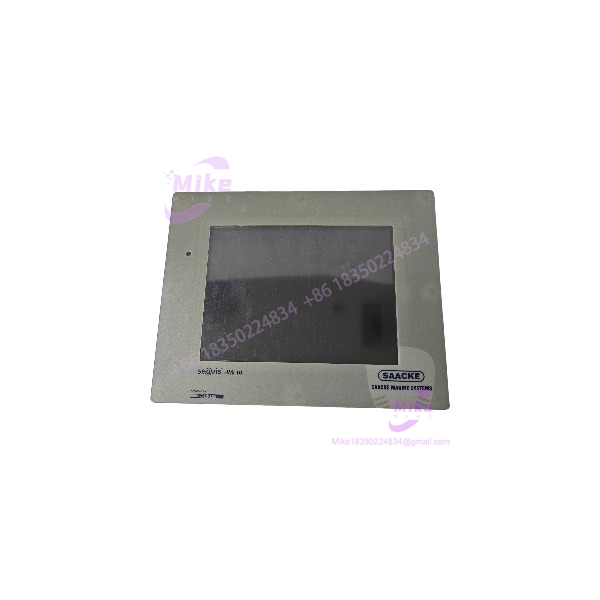
Description
SAACKE HMI10-M | SeAvis 10-Inch Burner HMI
Dynamic Product Introduction
The SAACKE HMI10-M is an application-specific operator interface for SAACKE combustion-management systems. It belongs to the Se@vis HMI architecture, where the panel provides visualization and operator access while the dedicated burner-management controller handles the underlying control and safety functions. SAACKE documentation defines the HMI as a control and monitoring device with touchscreen and interfaces.
That distinction is important during replacement. The HMI10-M should not be treated as a generic 10-inch touchscreen that can simply be swapped for another industrial HMI. The installed Se@vis application, communication arrangement, user-level permissions and hardware revision all matter. SAACKE documentation specifically describes protected HMI user levels, including operator access and higher-level service/data-restore access.
The broader Se@vis system combines burner automation, electronic compound control and plant visualization. Earlier SAACKE system documentation describes the HMI as the interface for burner and boiler operation, including a VGA touchscreen and parameter definition.
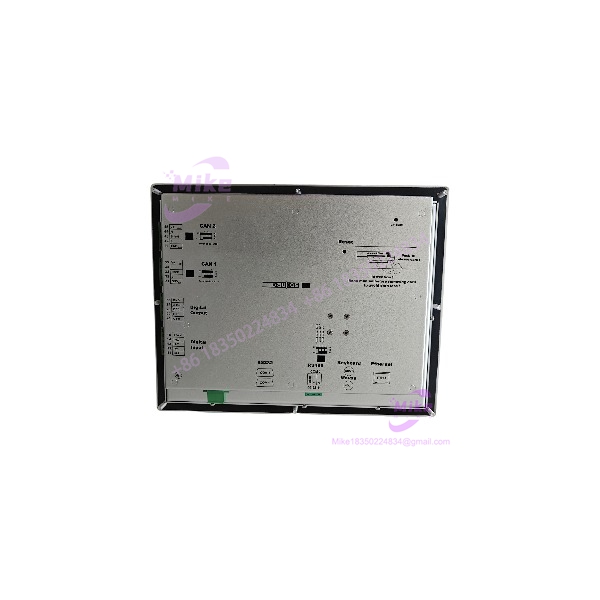
HMI10-M
Key Technical Specifications
- Manufacturer: SAACKE GmbH
- Model: HMI10-M
- Product Type: Industrial HMI / operator terminal
- System: SAACKE Se@vis
- Primary Function: Burner and boiler control/monitoring interface
- Operator Interface: Touchscreen
- Application: Combustion management, burner automation and boiler visualization
- System Functions: Process visualization, operator commands, parameter access and alarm information
- Associated Control System: SAACKE Se@vis burner-management architecture
- Safety Architecture: HMI is an operator interface; safety/control functions are handled by the associated Se@vis controller and I/O architecture
- Known Hardware Revisions: REV203 and REV215 are documented in secondary industrial inventory records
- Display Size: Commonly identified as a 10-inch class HMI; verify the actual nameplate/revision before publishing an exact panel specification
- Display Resolution: Revision-dependent / not sufficiently verified as a universal HMI10-M specification
- Supply Voltage: Not sufficiently verified for every HMI10-M revision
- Power Consumption: Not sufficiently verified for every revision
- Communication Ports: Revision/system dependent; do not assume a specific connector arrangement without inspecting the unit
- Firmware/Application: System-specific; verify installed version before replacement
- Mounting: Panel-mounted industrial operator interface
- Environmental Rating: Verify against the exact revision and installation documentation
A secondary technical listing identifies one version as 800 × 480 pixels, resistive touchscreen, 12–24 VDC, RS-232/RS-485 and -10°C to +50°C, but these specifications are not sufficiently corroborated by primary SAACKE documentation to treat them as universal specifications.
Se@vis System Context
The makes more sense when viewed as one component of the larger Se@vis architecture.
SAACKE’s system documentation describes:
- HMI — operator visualization and control
- FSC — fail-safe controller
- FSC-IO — fail-safe input/output assemblies
- IO modules — non-safe and specialized I/O
- FSM — fail-safe motors connected through the system communication architecture
The HMI therefore sits at the operator layer rather than replacing the fail-safe control layer.
For a migration strategy, this means that replacing the HMI alone does not constitute a burner-control-system migration. The controller firmware, application configuration, I/O architecture and safety-related configuration must remain compatible.
Global Sourcing & Live-Test SOP
1. Inbound Verification
For a used , identity verification should begin with the rear label rather than the seller’s generic product title.
- Photograph the front and rear.
- Record exactly as printed.
- Record hardware revision, such as REV203 or REV215, if present.
- Record serial number and manufacturing information.
- Photograph every communication and power connector.
- Inspect the touchscreen for cracks, delamination and dead areas.
- Check the bezel and mounting hardware for damage.
- Inspect for moisture ingress, corrosion or evidence of previous repair.
Do not merge different revisions into one inventory specification.
2. Display and Touchscreen Test
Power the panel using the documented supply arrangement for the exact revision.
Check:
- Boot sequence
- Display uniformity
- Backlight operation
- Touch response across the entire screen
- Dead zones
- False touch events
- Screen calibration
- Alarm and status pages
- Operator navigation
A panel that lights up is not necessarily an application-ready replacement.
3. Se@vis Communication Test
Where the appropriate Se@vis controller is available:
- Establish communication with the HMI.
- Confirm live process values.
- Check burner status information.
- Verify alarm/event reporting.
- Test permitted operator commands.
- Confirm parameter display.
- Check communication stability during an extended run.
Do not perform burner start/stop testing on an operating plant merely to validate an HMI. Use an approved commissioning or simulation procedure.
4. Application and Access Verification
SAACKE documentation describes multiple HMI authorization levels. Operator access is separate from higher-level service and data-restore functions.
Therefore, verify:
- Operator login
- Service access behavior
- Alarm acknowledgement
- Parameter access
- Data restoration capability where applicable
- Application/project version
- Retained configuration
Do not reset passwords or overwrite application data simply to make a used HMI appear operational.
5. Extended Test
For a used unit intended for critical service:
- Run the HMI continuously for 24 hours where practical.
- Monitor touchscreen stability.
- Check for unexpected restarts.
- Monitor communication faults.
- Exercise multiple screen pages.
- Record firmware/application information.
- Record the exact hardware revision.
Package the touchscreen face against impact and protect the connectors during shipment.
Field Engineer’s Pitfall Guide
❗ Is Not the Burner Safety Controller
The HMI is the operator and visualization layer. SAACKE’s Se@vis architecture separately identifies the FSC fail-safe controller and I/O hardware. Replacing a failed HMI does not replace the underlying burner safety logic.
❗ Revision Matters
Listings for and exist. Do not assume that a REV203 unit and a REV215 unit have identical firmware, communication interfaces, memory, display hardware or application compatibility.
This is particularly important when buying surplus equipment: the model number may look correct while the hardware revision is different.
❗ Do Not Copy Generic HMI Specifications Into the Listing
One secondary source gives 12–24 VDC, 800 × 480 resolution, RS-232/RS-485 and resistive touch for an listing, but those values are not adequately established as universal specifications for every revision.
For procurement, the actual nameplate and revision code should take precedence.
Intent-Driven FAQ
What is the SAACKE ?
The is an industrial operator and monitoring HMI associated with the SAACKE Se@vis burner-management platform. It provides touchscreen-based visualization and operator access to the combustion system.
Is a PLC?
No. It is an HMI/operator interface, not the main fail-safe controller. The Se@vis architecture separately uses FSC control and I/O hardware.
Is the used for boiler burners?
Yes. Secondary records specifically describe the as a display and operation panel for industrial combustion systems and boiler burners, while SAACKE’s Se@vis documentation describes burner and boiler visualization and operation.
What screen resolution does use?
An 800 × 480 specification is published by one secondary supplier, but I would not treat that as a universal specification without confirming the hardware revision. Different revisions are present in the market.
Does use 12–24 VDC?
One secondary listing specifies 12–24 VDC, but the available primary Se@vis documentation does not establish that value for every revision. Verify the actual unit’s label and technical documentation before applying power.





