

Description
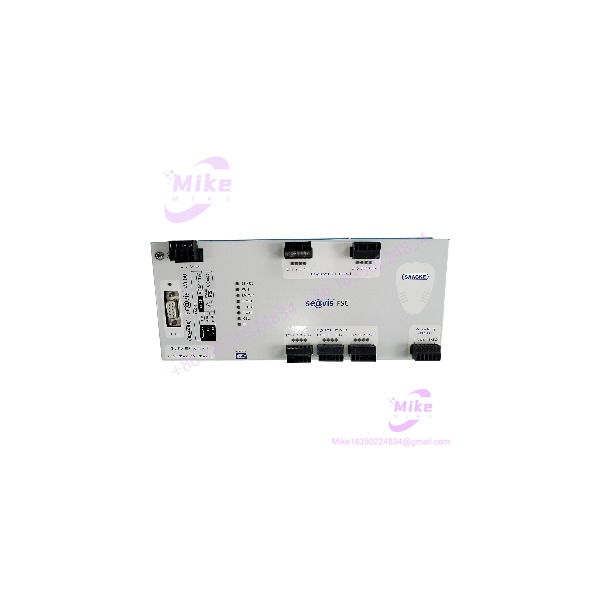
SAACKE FSC-01 | Burner Management & Firing Sequence Controller
Dynamic Product Introduction
The SAACKE FSC-01 is not the sort of controller that should be evaluated like an ordinary PLC I/O card. Its job sits much closer to the safety boundary of a combustion system: burner sequencing, flame supervision, permissives, and controlled response to abnormal firing conditions. SAACKE describes its industrial control portfolio as covering automatic burners through the modular Se@vis system and PLC-based multi-burner control, with precise fuel-air control and high plant-safety requirements.
The FSC-01 is identified in industry documentation as a Se@vis automatic firing sequence controller. That same directory reference associates the FSC-01 with a flame detector/amplifier and flame sensor, which is consistent with its role inside a burner management architecture rather than as a standalone process PLC.
This distinction matters during replacement.
A standard PLC can execute logic, but that does not automatically make it an acceptable substitute for a burner-management controller. Combustion equipment has defined startup, ignition, flame-proving, shutdown, and fault-handling sequences. The controller must interact correctly with the burner hardware and the associated safety chain.
SAACKE’s current control-system information also notes that its industrial burner-control solutions can be configured for complete combustion plants and may support safety requirements up to SIL 3 according to IEC 61508, depending on the system configuration. That should not be interpreted as a claim that every individual FSC-01 unit is SIL 3 by itself.
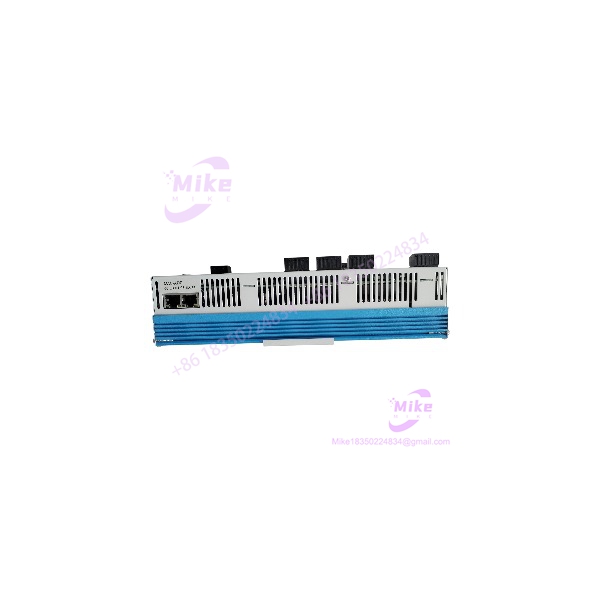
FSC-01
Key Technical Specifications
- Manufacturer: SAACKE GmbH
- Model: FSC-01
- Product Family: Se@vis
- Product Type: Automatic firing sequence controller / burner management controller
- Primary Application: Industrial burner and combustion-system control
- System Function: Automatic firing sequence supervision and burner management
- Flame Supervision: Used within a burner-control arrangement incorporating flame detector/amplifier and flame-sensor equipment.
- Application Environment: Industrial combustion plants, including burner and boiler systems
- System Architecture: Designed as part of a SAACKE combustion-control solution rather than as a general-purpose standalone PLC.
- Known Associated Ordering Reference: 982200419 is associated with Se@vis in industrial sourcing records; verify against the actual nameplate before procurement.
- Version Evidence: Industry documentation identifies software version 2.03 in a Se@vis listing, while later market records also show hardware/software variants. Treat firmware/version identification as part of incoming inspection.
- Replacement Status: Confirm current OEM availability and exact revision compatibility before specifying an alternate.
Specification caution: Publicly indexed material is inconsistent about the ‘s exact electrical ratings, enclosure rating, dimensions, and I/O configuration. Several reseller pages publish figures such as 24 VDC, 20 W, IP65, and approximately 200 × 150 × 80 mm, but those figures are not sufficiently supported by primary SAACKE documentation to present them as definitive specifications.
For procurement, the nameplate, hardware revision, software version, and complete system documentation should override generic reseller specifications.
Global Sourcing & Live-Test SOP
Inbound Verification
Treat the as a combustion-safety component.
At receiving inspection, record:
- Exact marking
- SAACKE identification label
- Part/order number
- Serial number
- Hardware revision
- Software or firmware version where accessible
- Connector arrangement
- Terminal condition
- Evidence of previous repair
- Physical condition of the enclosure
If the unit is marked 982200419, photograph that number rather than relying on a supplier’s typed description. The same number has been associated with Se@vis in industrial sourcing records.
Live Simulation
Do not approve an merely because it powers up.
A meaningful test should use an appropriate SAACKE test arrangement or an authorized engineering fixture capable of validating the controller’s actual burner-management functions.
Where technically and safely possible, verify:
- Controller startup behavior.
- Diagnostic indicators.
- Permissive/interlock inputs.
- Flame-detection interface.
- Firing-sequence progression.
- Ignition-stage response.
- Flame-proving behavior.
- Fault and shutdown response.
- Reset behavior.
- Communication with the associated SAACKE control architecture.
Do not defeat safety interlocks simply to force a test sequence. Burner-management equipment should be tested according to the applicable OEM procedure and site safety requirements.
Diagnostics
For a serious incoming QC report, capture:
- Hardware identification
- Firmware/software revision
- Diagnostic state
- Input status
- Output status
- Flame-signal behavior
- Start/stop sequence
- Fault response
- Reset operation
- Communication status
- Abnormal-temperature observations
A generic multimeter can help verify supply and wiring conditions, but it is not enough to prove correct burner-management operation.
Final Preparation
Before shipment:
- Record all visible identification data.
- Photograph the front and connector sides.
- Document the test configuration.
- Record firmware/software information.
- Protect terminals and connectors.
- Package in ESD-safe material.
- Include a clear tested/untested status.
For a safety-related combustion controller, traceability is worth more than a vague “tested OK” sticker.
Field Engineer’s Pitfall Guide
❗ Do not treat as a generic PLC
The is associated with automatic firing-sequence and burner-management functions. Replacing it with an arbitrary PLC changes the safety architecture, sequencing logic, diagnostics, and potentially the certification basis.
If a plant engineer says, “It only has to switch the same outputs,” stop there.
The sequence and safety behavior are part of the function.
❗ Verify the software and hardware revision
The appears in multiple revision/version references in available documentation. One industry directory specifically records a Se@vis Pro with software version 2.03.
Do not assume that two units are automatically interchangeable because the front label carries the same basic model number.
Record the complete identification before removal of the original controller.
❗ Never bypass flame-safety logic during commissioning
Flame supervision is not an optional diagnostic convenience.
The operates within a burner-management chain where abnormal flame conditions must produce the correct system response. SAACKE’s current industrial controls documentation emphasizes fuel-air control and plant safety as core functions of its combustion-control systems.
A field workaround that defeats a flame interlock may make the burner appear operational while creating an unacceptable safety condition.
Intent-Driven FAQ
What is the SAACKE ?
The is a Se@vis automatic firing sequence controller used in burner-management and combustion-control applications. Industry documentation identifies it specifically as an automatic firing sequence controller associated with flame detection and flame-sensing equipment.
Is a PLC?
Not in the normal general-purpose PLC sense.
It performs a specialized control role within a combustion system. Its evaluation should focus on burner sequence control, flame supervision, permissives, interlocks, diagnostics, and compatibility with the installed SAACKE system.
What applications use ?
The is associated with industrial combustion and burner systems. SAACKE’s broader control portfolio covers industrial firing systems, automatic burners, modular Se@vis installations, and PLC-based multi-burner control.
Depending on the specific installation, this can include boiler and process-heating equipment as well as other industrial combustion plants.





