


Description
Reliance Electric DSA-MTR12A2 | AC Servo Motor Module, In Stock
Architect’s Product Breakdown
The Reliance Electric DSA-MTR12A2 operates as a specialized motion control and motor interface module within the legacy Automax distributed control architecture. Its core responsibility involves processing high-resolution encoder feedback, executing motion profiles, and outputting precise reference commands to high-performance AC servo drives. By handling closed-loop position and velocity regulation directly at the rack level, the module offloads intensive kinematic calculations from the main system processor, ensuring deterministic control loops for demanding web-handling, metal-forming, and converting lines.
Because Reliance Electric (later integrated into Rockwell Automation’s legacy ecosystem) phased out the Automax platform decades ago, sourcing a direct drop-in replacement requires rigorous verification of hardware revision suffixes and firmware versions. Minor discrepancies in module population or backplane communication speeds can trigger fault trips or synchronization loss across multi-axis coordinated drives. Engineers swapping this unit must inspect backplane connector pins and match existing rack configuration parameters to prevent costly downtime during commissioning.
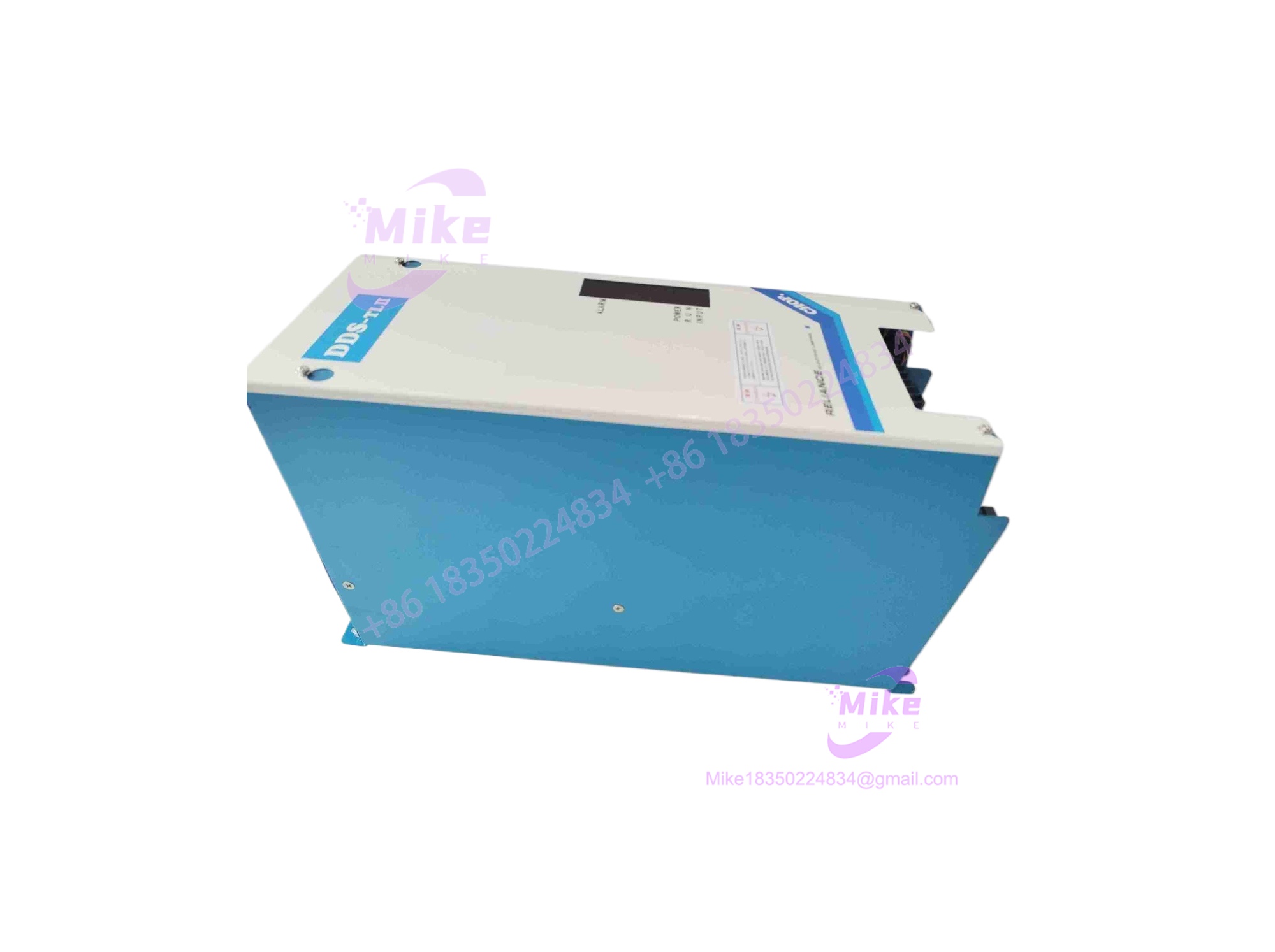
DSA-MTR12A2
Key Technical Specifications
| Parameter | Specification |
| Series | Reliance Electric Automax System |
| Module Type | AC Servo Motor Interface / Motion Control Card |
| Bus Interface | Automax rack backplane parallel bus |
| Feedback Inputs | Quadrature encoder / resolver feedback channels |
| Control Architecture | Closed-loop position, velocity, and torque regulation |
| Mounting | Standard Automax sub-rack chassis slot |
| Operating Temperature | 0°C to +55°C |
| Environmental Protection | Industrial conformal coating against dust and moisture |
Field Engineer’s Pitfall Guide
- WARNING: Backplane Bus Pin Damage. Forcing the DSA-MTR12A2 module into a sub-rack slot at an angle will bend fragile backplane connector pins, causing intermittent communication dropouts or complete rack failure.
- WARNING: Unmatched Firmware Revisions. Replacing an older hardware revision card with a later Suffix variant without verifying the Automax configuration software version can lead to axis initialization faults and drive lockout.
- WARNING: Encoder Signal Ground Loops. Failing to properly terminate and ground encoder cable shields at the cabinet grounding bar introduces high-frequency electrical noise, resulting in erratic velocity jumps.
- Field Anecdote: I watched a continuous-web converting line suffer a catastrophic alignment crash because a technician swapped a failed motion module without verifying the axis scaling jumpers, sending an unscaled position command that instantly over-traveled the mechanical limits.
QA & Testing SOP
- Visual & Origin Verification: Inspect the printed circuit board under magnification for trace micro-fractures, component degradation, and verify original Reliance Electric manufacturing labels and serial numbers.
- Live Test Bench Environment: Mount the card onto a certified Automax test rack powered by isolated, regulated DC power rails.
- Diagnostics & Loop Testing: Inject simulated encoder signals into the feedback inputs, verify closed-loop response curves, and check backplane communication handshakes.
- Anti-Static Packaging: Wrap the tested hardware in high-shielding anti-static material and enclose it in structured high-density foam to protect edge connectors during transit.
Technical FAQ
Can I use the DSA-MTR12A2 as a direct replacement in Rockwell ControlLogix systems?
No. The DSA-MTR12A2 is strictly designed for the legacy Reliance Electric Automax architecture and uses proprietary backplane protocols incompatible with modern ControlLogix hardware.
Does this module store configuration parameters locally?
No. Configuration files, motion profiles, and axis parameters are stored in the central Automax controller or downloaded via programming software upon system boot.
What causes erratic motor jitter when this module is active?
Motor jitter typically stems from loose encoder feedback wiring, ungrounded cable shields, or PID tuning loops requiring re-calibration due to mechanical wear in the drive train.
Is this module hot-swappable while the machine is powered on?
No. Inserting or removing the DSA-MTR12A2 while rack power is energized risks severe electrical arcing, backplane bus corruption, and permanent damage to internal integrated circuits.





