


Description
Reliance Electric 57C416 | AutoMax BASIC Programming Module
Dynamic Product Introduction
String manipulation and complex mathematical computations on legacy AutoMax architectures often overwhelm standard ladder logic processors, slowing down total scan cycles. When an older automation cell starts dropping serial string packets or lagging during recipe calculations, optimizing the main task loop rarely solves the underlying processing bottleneck. Deploying the Reliance Electric 57C416 resolves this limitation directly, offloading ASCII parsing and advanced calculations to a dedicated coprocessor board.
In heavy industrial retrofits, integrating this BASIC module streamlines data formatting for barcode scanners, printers, and operator interfaces without rewriting the core control program. (Though checking onboard memory battery status prior to program loading is essential.) It handles intense computational routines cleanly, keeping system scan times deterministic across demanding manufacturing environments.
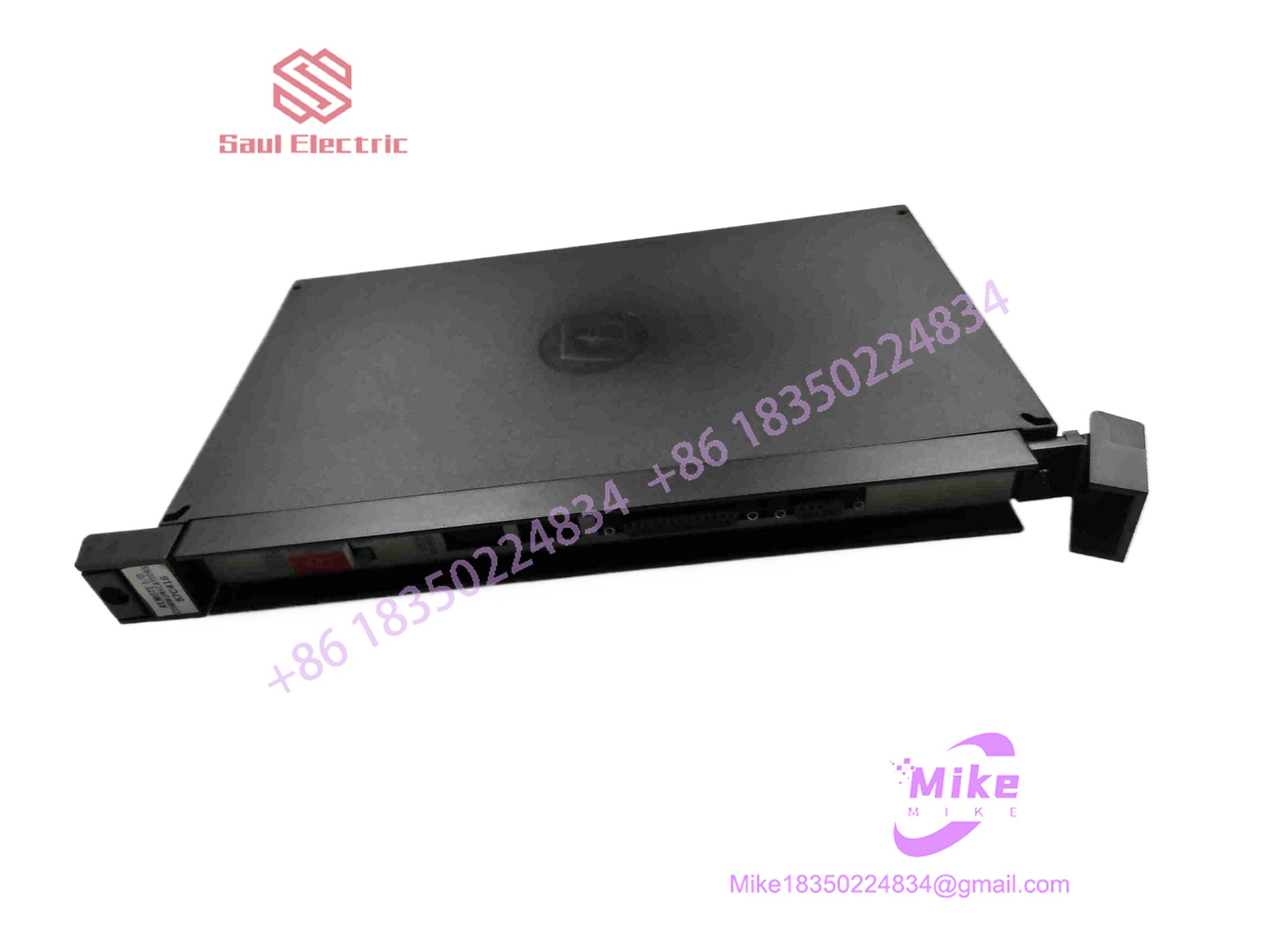
57C416
Key Technical Specifications
| Technical Parameter | Specification Detail |
| Device Category | BASIC Programming / Coprocessor Module |
| Series Compatibility | Reliance Electric AutoMax Distributed Control Platform |
| Processor Architecture | Dedicated onboard microprocessor core |
| Communication Ports | Dual independent serial communication ports (RS-232/RS-422 configurable) |
| Memory Configuration | Battery-backed RAM for program and variable storage |
| Backplane Power Requirement | Standard rack slot DC bus loading |
| Ambient Operating Temp | 0^\circC to 60^\circC |
| Diagnostic Indicators | Onboard status and error LED array |
Global Sourcing & Live-Test SOP (Transparency Core)
Sourcing legacy programming coprocessors requires meticulous validation of memory battery health, serial port transceivers, and backplane slot handshakes.
- Inbound Verification: Incoming modules undergo comprehensive serial tracking, manufacturer watermark checks, and anti-counterfeit batch inspections against historic Reliance ledgers.
- Live Simulation: Qualified cards are mounted into an active AutoMax backplane test rig powered by a monitored DC supply to evaluate port communication and memory execution.
- Diagnostics: Technicians execute serial loopback sweeps, RAM retention checks, and power-fail battery voltage drop tests to guarantee reliable program storage.
- Final Prep: Connector fingers are cleaned to remove surface oxidation, and the unit is sealed inside multi-layer anti-static packaging with fresh isolation protection.
The Field Engineer’s Pitfall Guide
❗ Lithium Battery Discharge and Program Loss: Installing a surplus BASIC module without checking the onboard memory battery will result in sudden program loss the moment cabinet power drops. I once watched a plant lose an entire morning of recipe management because an untested module wiped its memory on a routine shutdown. Always replace or test the backup battery before deploying.
❗ Serial Port Configuration Mismatch: Assuming default port baud rates, parity, or RS-232/RS-422 strapping will cause immediate communication lockouts with external peripheral devices. Always verify physical jumper settings against your legacy wiring schematic.
❗ Hot-Swapping Under Power: Sliding a complex coprocessor module into an energized AutoMax backplane risks severe edge-connector arcing and logic corruption. Always drop rack power completely and confirm zero voltage state prior to insertion.
Intent-Driven FAQ
Will this BASIC module retain my custom code if the AutoMax rack loses main power?
Yes, provided the onboard lithium backup battery is healthy and active, the module’s RAM will retain your programmed routines and variable tables during a power interruption.
Are these legacy coprocessor modules factory sealed or certified surplus stock?
We maintain strict inventories of both factory-sealed surplus hardware and fully recertified, bench-tested units. Each listing explicitly details the precise condition tier to match your facility rules.
Can this module communicate directly with third-party operator interfaces or printers?
Yes, the dual onboard serial ports are designed specifically to handle ASCII communication strings, making it ideal for interfacing with legacy printers, barcode readers, and text displays.
What kind of warranty coverage is included with this replacement part?
Every unit is backed by our comprehensive operational warranty, covering electrical component health, serial port functionality, and memory retention integrity from day one.
Do I need specialized software to load programs onto this card?
Yes, programming and debugging typically require the appropriate Reliance AutoMax development software and a proper serial communication cable connected directly to the module’s front port.





