


Description
Reliance Electric 57C413B | DCS 5000 Bus Arbiter & RAM Card
Dynamic Product Introduction
Memory allocation bottlenecks on multi-processor distributed control racks usually stem from unmanaged bus contention rather than raw processor clock limits. When an aging AutoMax chassis running parallel control tasks starts dropping cross-node telegrams, tweaking execution task rates rarely solves the core hardware bottleneck. Deploying the Reliance Electric 57C413B resolves this limitation directly, serving as a dedicated memory repository and bus arbiter that streamlines communication across dual or triple processor setups.
In complex industrial retrofits, integrating this module unburdens local processor RAM by offloading shared configuration maps and physical I/O definitions. (Though verifying lithium backup battery health prior to initial system boot remains critical.) It maintains strict deterministic timing across legacy bus structures, preventing data collisions in continuous-process applications.
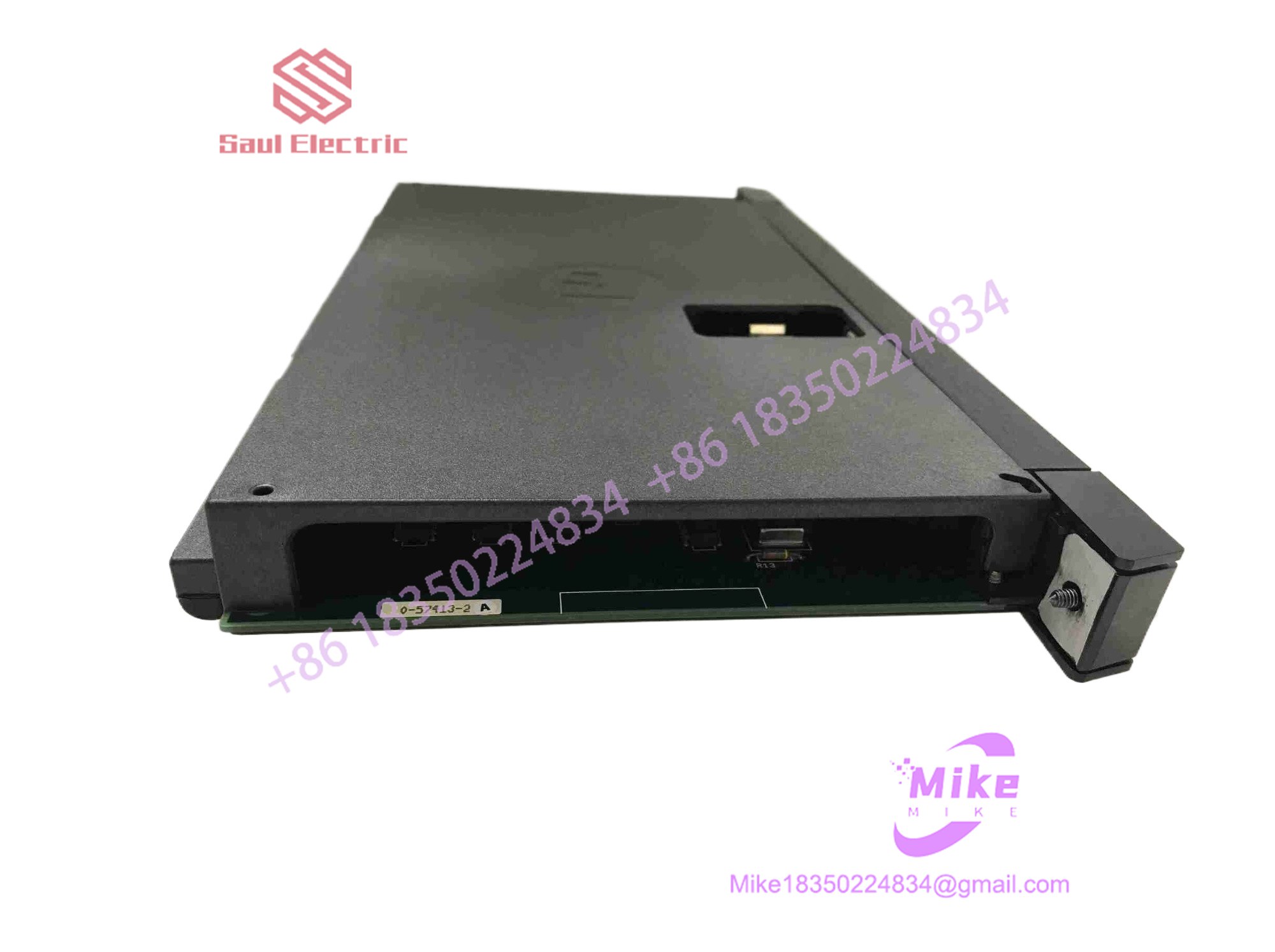
57C413B
4. Key Technical Specifications
| Technical Parameter | Specification Detail |
| Device Category | Common Memory / Bus Arbiter Module |
| Series Compatibility | Reliance Electric AutoMax / DCS 5000 Platform |
| Memory Size | 64K words capacity |
| Backplane Slot Assignment | Slot 0 (Multi-processor or single-processor setups) |
| System Power Requirement | +5VDC (approx. 1050mA draw) |
| Data Retention Backup | Lithium 3.6V battery / supercapacitor support |
| Ambient Operating Temp | 0^\circC to 60^\circC |
| Diagnostic Indicators | System Watchdog LED status array |
Global Sourcing & Live-Test SOP (Transparency Core)
Procuring legacy memory hardware requires absolute vigilance regarding battery longevity, static protection, and backplane handshake reliability.
- Inbound Verification: Incoming modules undergo rigorous serial tracking, manufacturer watermark checks, and anti-counterfeit batch inspections against historical Reliance ledgers.
- Live Simulation: Qualified cards are mounted into an active AutoMax Slot 0 backplane test rig powered by a monitored DC supply to evaluate bus arbitration logic.
- Diagnostics: Technicians execute read/write memory integrity sweeps, battery voltage drop tests, and power-fail retention verification to guarantee data persistence.
- Final Prep: Connector fingers are cleaned to remove oxidation, and the unit is sealed inside multi-layer anti-static packaging with fresh isolation protection.
The Field Engineer’s Pitfall Guide
❗ Slot Placement Violations in Multi-Processor Racks: Dropping a common memory module into any random chassis slot instead of designated Slot 0 will instantly halt rack initialization. I once watched a commissioning team waste an entire afternoon troubleshooting a “fatal bus error” because a multi-processor rack lacked its primary arbiter in Slot 0. Always adhere to strict slot topology rules.
❗ Neglected Backup Battery Aging: Relying on a surplus module without auditing its onboard lithium battery age invites catastrophic configuration loss during a plant power outage. Always verify battery voltage or install a fresh cell before placing the module into active service.
❗ Hot-Swapping Under Power: Forcing a memory module into an energized AutoMax backplane risks severe edge-connector arcing and memory register corruption. Always drop rack power completely and confirm zero voltage state prior to insertion.
Intent-Driven FAQ
Is this common memory module mandatory if my AutoMax rack runs only a single processor?
While not strictly required for every single-processor configuration, placing the 57C413B in Slot 0 allows you to offload configuration data cleanly, and it is strictly mandatory whenever a rack utilizes two or more processor modules.
Are these legacy modules factory sealed or certified surplus stock?
We maintain strict inventories of both factory-sealed surplus hardware and fully recertified, bench-tested units. Each listing explicitly details the precise condition tier to match your facility rules.
How long will the onboard battery retain memory data during a power loss?
When a healthy lithium battery is active, the module retains RAM contents for an extended period (typically 600 to 2,000 days depending on environmental factors). Without a battery, the onboard capacitor provides short-term retention.
What kind of warranty coverage is included with this replacement part?
Every unit is backed by our comprehensive operational warranty, covering electrical component health, memory retention integrity, and backplane communication functionality from day one.
Can I use this module for user-definable data storage outside of Slot 0?
Yes, when placed in an even slot other than Slot 0, it can function for specific user-definable data storage requirements, though it cannot define standard arrays in that mode.





