

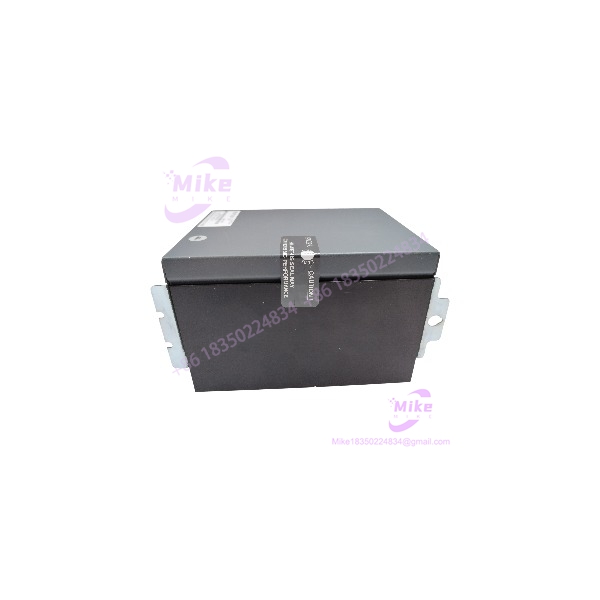
Description
Parker GV6K-U6E | 120/240VAC 6A Encoder Servo Drive
Product Introduction
A GV6K-U6E is more than a servo amplifier. It combines the Gemini drive stage with Parker’s 6K motion-controller functionality, giving a legacy machine a single-axis motion-control platform capable of executing positioning and sequencing functions without requiring a separate controller for the same axis. Parker documentation identifies the U6E as the 120/240 VAC, 6 Apk continuous and 15 Apk maximum current member of the GV6K family, with encoder feedback.
That architecture matters when maintaining older Parker/Compumotor equipment. Replacing the unit with a modern servo drive is not necessarily a drop-in migration: the original application may depend on 6K programming, motion profiles, I/O behavior, communications, and stored configuration. Parker states that the GV6K family was discontinued effective January 15, 2022, and that newer Parker platforms do not provide a direct replacement using the same 6K programming language.
For a machine that is already commissioned around the GV6K-U6E, an accurately identified replacement can therefore be considerably less disruptive than redesigning the complete motion-control architecture.
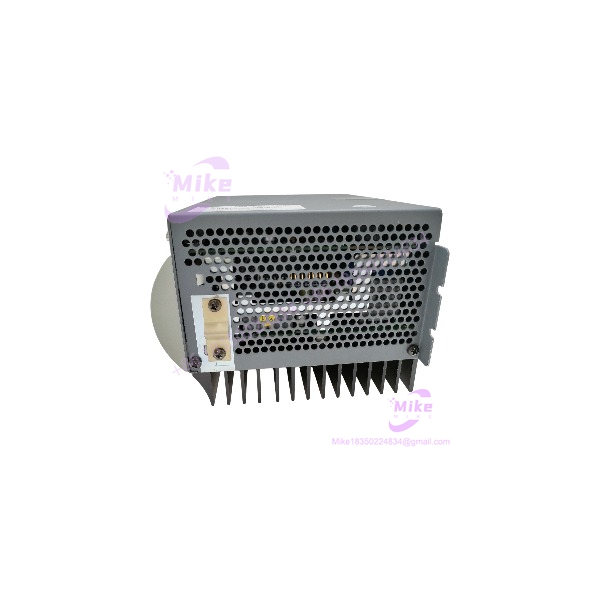
GV6K-U6E
Key Technical Specifications
- Model: Parker GV6K-U6E
- Series: Gemini
- Function: Standalone digital servo drive/controller
- Control level: Full-feature 6K controller
- Input voltage: 120/240 VAC, 1-phase
- Motor bus voltage: 170 VDC at the 120 VAC configuration; 340 VDC at the 240 VAC configuration
- Continuous output current: 6 Apk
- Maximum output current: 15 Apk
- Feedback: Encoder
- PWM frequencies: 8, 16, or 20 kHz are documented for the platform
- Serial communications: RS-232/RS-485 and RS-232 interfaces
- Programming: Parker 6K motion-control language through the Motion Planner environment
- Motion functions: Position-based following, electronic cam profiling, motion sequencing, and programmable control functions
- Protection functions: Phase-to-phase and phase-to-ground short-circuit protection, inrush protection, overvoltage, undervoltage/brownout, drive and motor over-temperature, current foldback, and regeneration protection
- Environmental reference: Approximately 45°C still-air / 50°C moving-air limits are reported for the -U6E
- Humidity: 0–95% relative humidity, non-condensing
- Lifecycle: Discontinued by Parker
The 6 Apk rating deserves particular attention. Parker’s current technical guidance explains that the older Gemini current figures are expressed as peak-of-sine current; 6 Apk corresponds to approximately 4.2 Arms when multiplied by 0.707. Motor continuous and peak current ratings still have to be checked independently before commissioning.
Global Sourcing & Live-Test SOP
For a legacy servo controller such as the GV6K-U6E, visual condition alone is not enough. Treat the unit as an electronic motion-control assembly requiring configuration verification.
1. Inbound Verification
- Photograph the complete front, rear, terminals, labels, connectors, cooling surfaces, and serial/nameplate markings.
- Confirm rather than GV6-U6E, GV6-U6R, -U6R, or another power class.
- Record serial number and hardware revision.
- Check the Parker/Compumotor nameplate against purchasing documentation.
- Inspect for repaired solder joints, damaged terminal blocks, corrosion, contamination, or evidence of excessive thermal exposure.
- If imported internationally, retain the commercial invoice, customs paperwork, country-of-origin information, and chain-of-custody records.
- Verify whether the unit includes any memory/configuration accessory required by the original machine.
2. Electrical Inspection
Before applying power:
- Check the input terminals for mechanical damage.
- Inspect DC-bus and motor-output terminals.
- Test for abnormal resistance or short circuits between relevant power terminals.
- Inspect encoder and control connectors.
- Verify cooling fan/airflow path where applicable.
- Use an ESD-safe bench and appropriate isolation procedures.
Do not connect an unknown motor simply because its connector physically fits. The motor’s continuous current, peak current, feedback type, voltage requirements, and cabling must correspond to the drive configuration.
3. Live Simulation
A controlled bench test should include:
- Correct AC input configuration.
- Known-good compatible motor or appropriate test load.
- Encoder feedback verification.
- Enable/disable operation.
- Fault-reset behavior.
- Direction and low-speed jog verification.
- Acceleration/deceleration test.
- Positioning accuracy check.
- Serial communication test.
- Diagnostic/status indication verification.
For a production replacement, preserve the original 6K program and configuration before changing the controller. Parker specifically notes that the legacy platform uses the 6K text-based programming environment, while newer Parker ACR platforms use a different programming architecture.
4. Extended Heat Run
Where practical, operate the controller under a representative motor load for an extended test period.
Monitor:
- Motor current
- Drive temperature
- DC-bus behavior
- Encoder stability
- Fault history
- Communication stability
- Cooling airflow
- Unexpected regeneration events
A 24-hour heat run is preferable for high-value replacement inventory, particularly when the controller is being purchased as a critical spare.
5. Final Preparation
Record:
- Model number
- Serial number
- Hardware revision
- Firmware revision
- Existing configuration
- Tested input voltage
- Motor used during testing
- Encoder type
- Fault results
- Test date
- Technician/test-bench identification
Package in ESD-safe material with protection around connectors and terminal hardware.
Field Engineer’s Pitfall Guide
❗ Firmware and Program Compatibility
Do not assumet a with the correct model number automatically contains the correct machine application. The controller hardware can be correct while the stored program, parameters, firmware revision, or application configuration is wrong.
For a replacement project, back up the original 6K program and record the existing operating parameters before removing the failed controller.
❗ U6E vs. U6R Is Not a Cosmetic Difference
The is the encoder-feedback version. The ordering nomenclature identifies E = Encoder and R = Resolver. Do not substitute a U6R simply because the power rating appears similar.
This is one of those mistakes that can survive the purchasing department and only become obvious when the commissioning engineer reaches the feedback circuit.
❗ Do Not Size the Drive From Peak Current Alone
The is rated at 6 Apk continuous and 15 Apk maximum. Parker’s documentation also specifies the Gemini ratings in peak-of-sine terms. The motor’s own continuous and peak current requirements must be checked against the drive, especially during acceleration, high-load positioning, and regeneration.
Also verify the actual machine input voltage. The U6 family supports the 120/240 VAC range, but the associated DC-bus voltage changes with the input configuration.
Intent-Driven FAQ
Is theker a servo drive or a motion controller?
It is boThe is a full-feature standalone servo drive/controller in Parker’s Gemini family. It combines the power stage with 6K motion-control functionality, rather than acting solely as a conventional amplifier.
the still manufactured by Parker?
No. Parker states that the Gemini servo drive/controller family was discontinued effective January 15, 20The is therefore a legacy/obsolete component and should be sourced with particular attention to condition, firmware, configuration retention, and test evidence.
Can I ree a with a newer Parker servo drive?
Not as a simple model-for-model substitution. Parker states that its newer ACR7000 and IPA platforms do not provide a direct replacement using the same 6K programming language. A migration strategy should review the motion program, I/O, communications, HMI/PC interface, feedback device, and machine sequence before selecting a replacement platform.





