

Description
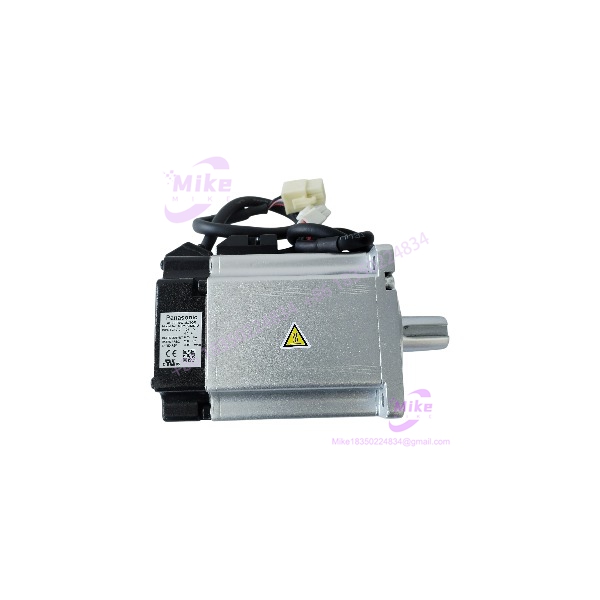
Panasonic MSMD082S1U | AC Servo Motor, 750W Low Inertia
Architect’s Product Breakdown
The Panasonic MSMD082S1U occupies a critical niche in high-speed packaging, electronic assembly, and material handling systems where rapid settling times dictate overall line throughput. As a low-inertia AC servo motor, this specific model is engineered for applications demanding aggressive acceleration and deceleration profiles without inducing excessive mechanical resonance on the drivetrain.
Integrating this hardware into an existing machine architecture requires careful attention to feedback wiring and amplifier matching. The motor relies on a high-resolution encoder interface that communicates directly with the servo drive, meaning shielded cabling and proper grounding are non-negotiable to prevent electromagnetic interference in noisy factory environments. When replacing older revisions or failing units in the field, verify that the mechanical flange and shaft dimensions align with your existing gearbox or coupling to avoid costly alignment delays during commissioning.
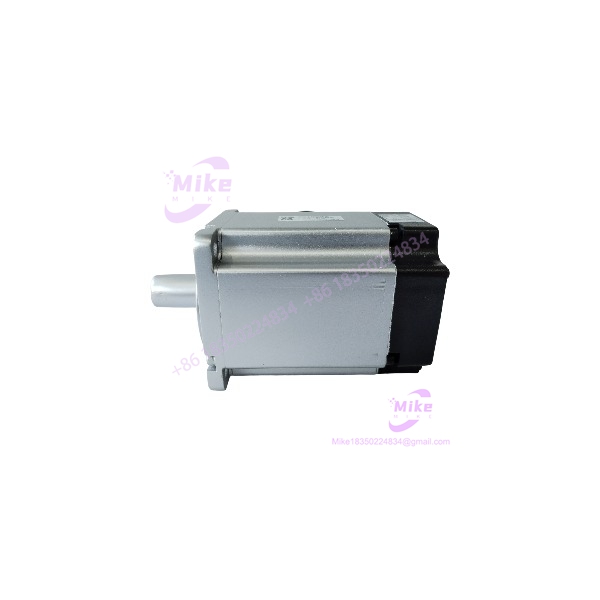
MSMD082S1U
Key Technical Specifications
| Parameter | Specification |
| Rated Output Power | 750 W (0.75 kW) |
| Rated Voltage | 200 V AC |
| Inertia Characteristic | Low Inertia |
| Rated Speed | 3,000 r/min |
| Max Speed | 5,000 r/min |
| Encoder Type | Incremental / Absolute (Series dependent) |
| Flange Size | 80 mm x 80 mm |
| Protection Rating | IP65 (excluding shaft pass-through) |
| Ambient Temperature | 0°C to 40°C |
| Insulation Class | Class B |
Field Engineer’s Pitfall Guide
- WARNING: Encoder Cable Shielding Failures. Never leave the encoder cable shield ungrounded at the connector housing. I have spent entire night shifts troubleshooting intermittent position errors caused by stray VFD noise coupling directly into the feedback lines of this model.
- WARNING: Brake Power Supply Mismatch. If your unit includes a holding brake, verify the 24V DC supply voltage at the motor plug under load. Voltage drop over long cable runs will prevent the mechanical brake from fully releasing, leading to immediate thermal overload and charred windings within minutes of startup.
- WARNING: Shaft Loading Limits. Do not exceed the radial and axial load ratings specified for this frame size when mounting timing pulleys or direct gearboxes. Excessive belt tension will destroy the front radial bearing prematurely.
QA & Testing SOP
- Visual & Origin Verification: Inspect the outer housing for casting defects, verify OEM laser-etched nameplate data against factory build sheets, and check connector pins for oxidation or bending.
- Electrical Isolation Testing: Perform a megohm test (insulation resistance test) between the motor windings and the frame ground using a 500V DC megohmmeter to ensure zero breakdown.
- Winding Resistance Check: Measure phase-to-phase resistance with a milliohmmeter to confirm balanced coils across all three power terminals.
- Dynamic Bench Test: Couple the unit to a known-good matching servo amplifier on a dynamometer test bench to verify smooth rotation, encoder signal integrity, and correct phase commutation across the entire speed range.
- Packaging: Seal in anti-static moisture-barrier bags with desiccant packs before crating for shipment.
Technical FAQ
Can I drive this motor with a different manufacturer’s servo amplifier? No. The proprietary encoder communication protocol requires a native Panasonic controller or an explicitly compatible multi-protocol drive that supports the specific feedback handshake.
What is the correct torque-to-inertia ratio consideration when sizing this unit? Keep the load-to-motor inertia ratio below 10:1 for standard positioning tasks, or below 5:1 for high-bandwidth dynamic motion profiles to prevent tuning instability.
Is this specific model unit safe for washdown environments? While it carries an IP65 rating against dust and low-pressure water jets, it is not designed for high-pressure chemical washdowns found in food processing unless enclosed in an auxiliary purged housing.
Does the internal encoder retain absolute position during a complete power loss? It depends on whether you are using the incremental or absolute encoder variant specified by the exact suffix configuration; incremental versions require a homing routine after every power cycle.





