


Description
Pacific Scientific 33VM52-000-4 | Low Inertia PMDC Servomotor
Dynamic Product Introduction
Replacing precision motion hardware on legacy automation lines often exposes maintenance teams to high risks of mechanical mismatch. Integrating unverified third-party servo motors can introduce excessive cogging torque or fail to match the original acceleration profiles demanded by high-speed positioning loops.
The Pacific Scientific 33VM52-000-4 drops directly into legacy motion frameworks, supplying the exact dynamic response and low-inertia characteristics specified for vintage closed-loop systems. Engineered with optimal permanent-magnet topologies, this motor delivers crisp, highly repeatable motion control without forcing costly controller rewrites or mechanical bracket modifications.
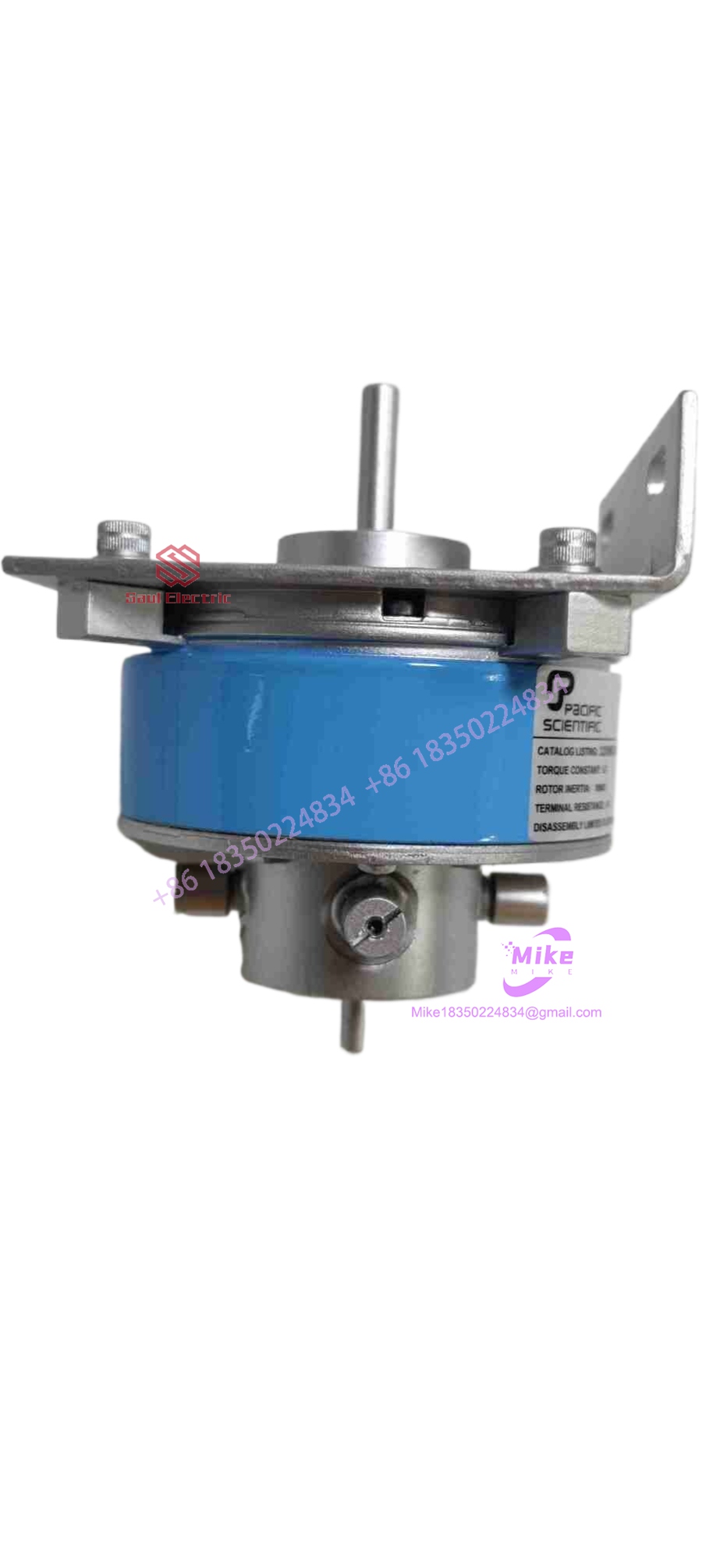
33VM52-000-4
Key Technical Specifications
| Parameter | Technical Specification |
| Manufacturer | Pacific Scientific |
| Series / Family | VM Series Low-Inertia Servomotors |
| Motor Type | Permanent Magnet Direct Current (PMDC) Servo |
| Inertia Profile | Ultra-low rotor inertia for rapid acceleration |
| Continuous Current Rating | ~3.1 to 5.7 A range (application-dependent) |
| Operating Voltage Envelope | Standard low-to-medium DC bus architecture |
| Feedback Integration | Compatible with standard tachometer / encoder options |
| Enclosure Design | Industrial totally enclosed non-ventilated (TENV) |
| Operating Temperature | 0°C to 40°C ambient standard envelope |
| Mounting Standard | NEMA / Metric industrial face and pilot mount |
Global Sourcing & Live-Test SOP (Transparency Core)
Acquiring obsolete motion components from secondary markets demands rigorous mechanical and electrical validation to eliminate latent brush wear and bearing fatigue.
- Inbound Verification: Every unit is audited against original Pacific Scientific engineering blueprints. We inspect physical shaft tolerances, check commutator concentricity, and evaluate brush-rigging integrity under magnification.
- Live Simulation: Motors are mounted to a dynamic test stand coupled with a matching servo amplifier to verify smooth rotational performance across full velocity ranges.
- Diagnostics: Units undergo a 2-hour continuous thermal run while monitoring back-EMF constants, ripple voltage, and bearing acoustic noise using calibrated digital storage scopes and vibration meters.
- Final Prep: Cleared motors receive protective shaft sleeves, sealed terminal protection, and are packaged inside anti-static cushioning and heavy-duty moisture-barrier containment.
The Field Engineer’s Pitfall Guide
❗ Overlooking Commutator Brush Seating: Installing a surplus or shelved DC servo motor without inspecting the internal carbon brushes can lead to excessive arcing under load. I’ve seen maintenance crews score a commutator ring instantly simply because they rushed an archival motor into service without verifying brush freedom inside the holder.
❗ Ignoring Radial Shaft Load Limits: Belt-coupling this low-inertia motor with excessive radial tension rather than a flexible disc coupling will side-load the front bearing, causing premature failure and severe position jitter.
❗ Failing to Match Tach/Encoder Feedback Polarity: Reversing feedback signal leads during installation will instantly throw the velocity loop into an uncontrolled runaway state. Always verify oscilloscope feedback traces before enabling the main drive amplifier.
Intent-Driven FAQ
Q: Is the Pacific Scientific 33VM52-000-4 directly compatible with older VM-series amplifiers?
A: Yes, it shares the exact electrical winding constants, feedback configurations, and physical mounting footprints of the designated VM product ecosystem.
Q: Will swapping this motor require tuning the existing motion controller gains?
A: Because it matches the original inertia and torque parameters, major gain adjustments are typically unnecessary, though a routine check of loop stability is always recommended after mechanical re-coupling.
Q: Are these units supplied brand-new factory surplus or professionally rebuilt?
A: Our inventory comprises verified factory surplus (un-deployed archive stock) or meticulously overhauled units featuring new bearings and precision-checked brushes.
Q: How is the unit protected against shipping damage?
A: The motor shaft is locked with a protective collar, wrapped in dense shock-absorbing foam, and sealed inside a ruggedized double-walled industrial carton.
Q: What type of warranty accompanies this servomotor?
A: Every unit is backed by a comprehensive replacement warranty covering form, fit, and operational performance under standard industrial operating environments.





