


Description
MOXA EDS-508A-MM-SC | 6-Port + 2-Fiber Switch
Product Introduction
When an industrial Ethernet segment has to cross a fiber run without replacing the entire network architecture, the EDS-508A-MM-SC is the kind of hardware engineers reach for because its port mix is unusually practical: six 10/100BaseT(X) copper connections plus two 100BaseFX multimode SC fiber ports. It belongs to Moxa’s EDS-508A family of Layer 2 managed industrial switches and supports DIN-rail installation, redundant DC power, and industrial network redundancy functions.
The useful part is not the port count alone. The MOXA EDS-508A-MM-SC supports VLANs, IGMP, RSTP/MSTP, LACP, Turbo Ring, Turbo Chain, SNMP, port mirroring, and industrial Ethernet traffic including EtherNet/IP and Modbus TCP. Its switching architecture provides an 8K MAC address table, 1 Mbit packet buffer, 64 VLANs, and four priority queues—enough network-management capability for many legacy automation cells without moving to a much larger chassis.
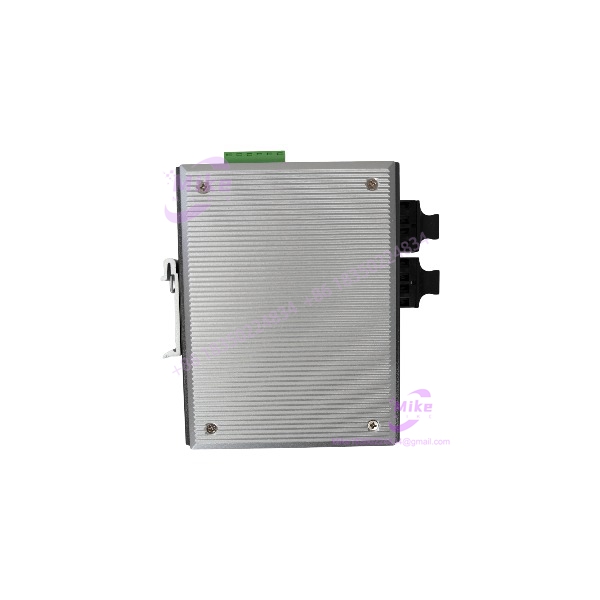
EDS-508A-MM-SC
Key Technical Specifications
- Ethernet copper ports: 6 × 10/100BaseT(X), RJ45
- Fiber ports: 2 × 100BaseFX multimode, SC connector
- Copper negotiation: Auto-negotiation, full/half duplex, Auto MDI/MDI-X
- Fiber type: Multimode fiber
- Typical multimode fiber distance: Up to approximately 4 km under the specified fiber conditions
- Power input: 12/24/48 VDC
- Power architecture: Redundant dual inputs
- Operating voltage: 9.6 to 60 VDC
- Input current: 0.30 A at 24 VDC for the EDS-508A-MM/SS variants
- Operating temperature: -10 to 60°C for the standard EDS-508A-MM-SC
- Storage temperature: -40 to 85°C
- Relative humidity: 5 to 95%, non-condensing
- MAC address table: 8K
- Maximum VLANs: 64
- Packet buffer: 1 Mbit
- Priority queues: 4
- Housing: Metal, IP30
- Dimensions: 80.2 × 135 × 105 mm
- Weight: Approximately 1.04 kg
- Installation: DIN rail; wall mounting with optional kit
- Console: RS-232
- Industrial protocols: EtherNet/IP and Modbus TCP filtering
- Redundancy: STP, RSTP, MSTP, LACP, Turbo Chain, Turbo Ring v1/v2
- Security/management: VLAN, SNMP, SSH, HTTPS/SSL, RADIUS, TACACS+
- MTBF: 1,105,486 hours
These specifications are based on Moxa’s published documentation. Do not confuse the standard EDS-508A-MM-SC with the EDS-508A-MM-SC-T, which is the wide-temperature version rated from -40 to 75°C.
Application Scenarios & Pain Points
Legacy Control Network Migration
Without fiber: Long copper runs between buildings, substations, or separated process areas can become a nuisance—especially where electrical noise, grounding differences, or distance start eating into network stability.
Two multimode SC fiber ports provide a clean optical path while six RJ45 ports remain available for local PLCs, HMIs, drives, remote I/O gateways, or engineering workstations. The fiber interface is 100BaseFX rather than Gigabit Ethernet, so this is a replacement for the right legacy architecture, not a universal substitute for modern high-bandwidth switches.
Ring Redundancy Applications
A failed network cable should not automatically become a production event.
The family supports Turbo Ring, Turbo Chain, STP, RSTP, MSTP, and LACP. That gives the controls engineer several ways to design around a single communication-path failure rather than relying on a flat, single-path Ethernet layout.
High-Noise Industrial Areas
Motor-heavy cabinets: VFDs, contactors, large motors, and long cable trays can create an unpleasant environment for copper Ethernet. Fiber provides electrical isolation across the optical link, which can be especially useful when connecting separate electrical zones.
Network Segmentation
A legacy automation network may need logical separation without replacing every endpoint. The switch supports 802.1Q VLANs, port-based VLAN, IGMP, GVRP, and GMRP, with up to 64 VLANs documented for the series.
Downtime Calculation
If a production cell costs even $5,000 per hour in lost throughput, a 30-minute network-related stoppage represents roughly $2,500 before labor, scrap, restart time, and downstream effects are counted. That is why an exact replacement part can make more economic sense than redesigning an otherwise functional network.
QA & Live Testing SOP
For an industrial Ethernet switch, a visual inspection is only the first filter. A powered test tells you much more.
- Origin verification: Check the Moxa identification label, exact model designation, serial information, housing condition, connector condition, and OEM markings. The unit must read —not the visually similar MM-ST, SS-SC, or MM-SC-T variant.
- Power test: Apply the correct DC input and verify PWR1/PWR2 behavior, fault indication, and stable operation.
- Copper Ethernet test: Connect multiple 10/100BaseT(X) endpoints and verify link negotiation, full/half duplex behavior, and packet transmission.
- Fiber test: Test both 100BaseFX SC ports with compatible multimode fiber equipment and verify optical link establishment.
- Management test: Verify access through the appropriate management interface and inspect VLAN, port, redundancy, and diagnostic functions where applicable.
- Protocol test: For an application requiring Modbus TCP or EtherNet/IP traffic, verify actual Ethernet communication rather than merely checking that the port LED illuminates. Profibus is not a native interface on this switch.
- Physical inspection: Check terminal blocks, SC interfaces, RJ45 jacks, DIN-rail hardware, and enclosure condition for mechanical damage.
- ESD-safe packaging: Protect the unit from static discharge and physical shock during packing; fiber connectors should be capped and protected from contamination.
One important distinction: the is a network switch, not a PLC I/O module. There is no PLC scan-time specification to quote here. Network latency, packet handling, ring recovery behavior, and application traffic loading are the relevant engineering concerns.
Field Engineer’s Pitfall Guide
❗ Do not order the MM-SC-T just because the part number looks close. The standard is rated for -10 to 60°C, while the extends the operating range to -40 to 75°C. If the cabinet routinely drops below -10°C, the standard unit is the wrong choice.
❗ Do not connect the wrong fiber type and assume the link will negotiate. The MM-SC version uses 100BaseFX multimode fiber with SC connectors. The MM-ST and SS-SC variants are physically similar but use different optical interfaces or fiber types. Verify the complete optical path before commissioning.
❗ Do not treat redundant power as automatic UPS protection. The switch accepts 12/24/48 VDC through redundant inputs, but the upstream power supplies, fusing, grounding, and distribution architecture still determine whether the network remains energized after a supply failure. Moxa specifies an operating voltage range of 9.6 to 60 VDC.
❗ Firmware matters. Do not assume an older configuration file or management procedure will behave identically across firmware generations. Back up the existing configuration, document the firmware revision, and verify feature compatibility before performing a replacement in a live production network.
Intent-Driven FAQ
8A-MM-ST?
No—not as a direct physical replacement if your existing fiber plant uses SC connectors. The MM-ST version uses ST fiber he uses two multimode SC ports. The electrical Ethernet function is similar, but the physical fiber interface is different.
s the a managed switch?
Yes. It is a Layer 2 managed industrial Ethernet switch with VLAN, SNMP, port mirroring, redundancy, security, and network-management functions. It supports STP, RSTP, MSTP, LACP, Turbo Chain, and Turbo Ring.
s the support Modbus TCP?
Yes. Moxa lists Modbus TCP and EtherNet/IP among the industrial protocols supported by the family. Remember, though, the switch filters and manages Ethernet traffic—it is not itself a Modbus controller.
he in a -20°C cabinet?
Not if the unit is the standard . Its published operating range is -10 to 60°C. For -20°C service, the wide-temperature is the relevant variant, with a published range of -40 to 75°C.
What powerXA require?
The switch accepts 12/24/48 VDC through redundant dual inputs, with an operating voltage range of 9.6 to 60 VDC. /SS variants, Moxa specifies approximately 0.30 A at 24 VDC.
What is the dhe and -SS-SC?
The MM-SC version has two 100BaseFX multimode SC fiber ports. The SS-SC version has two single-mode SC fiber ports. They are not interchangeable merely because both use SC connectors—the optical transceiver and intended fiber plant are different.
Does Moxa still document this model?
Yes. Moxa’s current support resources continue to list the Series and provide a current datasheet, manuals, and related technical documentation. That makes the exact model designation particularly important when sourcing replacement hardware for an installed legacy network.
What warranty should I expect?
Moxa currently lists a 5-year warranty period for the product family. However, warranty coverage for a separately sourced surplus or aftermarket unit depends on the seller’s own warranty terms, so the listing’s stated warranty should be checked before purchase.





