


Description
MKS Instruments 979B-01-0013 | Atmosphere-to-Vacuum Transducer Core Category
Dynamic Product Introduction
Monitoring continuous chamber pressure transitions from roughing down to high-vacuum processing usually requires managing multiple disparate gauges and complex controller modules. When an aging vacuum sensor drifts or loses its filament response during critical pump-downs, entire tool recipes abort and ruin production runs. The MKS Instruments 979B-01-0013 atmosphere-to-vacuum transducer eliminates these complications by integrating a MEMS-based MicroPirani and a miniaturized hot cathode into a single compact housing.
Unlike single-technology sensors, this combination unit bridges the measurement gap seamlessly, providing reliable feedback across extreme pressure differentials. Maintaining absolute pressure tracking on legacy vacuum systems demands exact hardware matching—making this specific wide-range transducer essential for preventing unexpected fab downtime events.
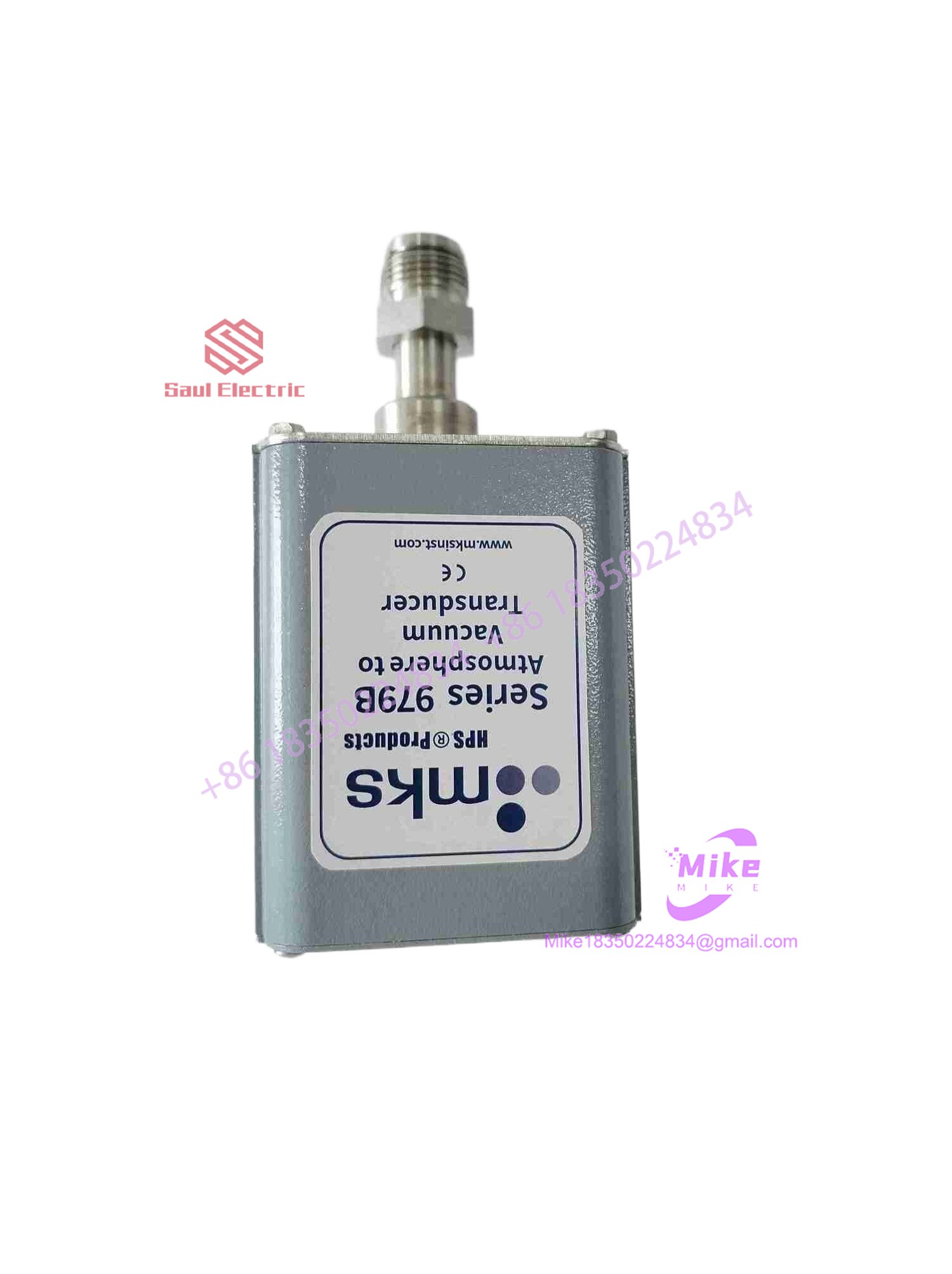
979B-01-0013
Key Technical Specifications
| Parameter | Specification Detail |
| Manufacturer | MKS Instruments |
| Model Number | 979B-01-0013 (Series 979B ATV) |
| Measurement Range | 10^{-10} Torr to Atmosphere (5 \times 10^{-10} to Atmosphere typical via combined elements) |
| Sensor Technologies | MEMS MicroPirani (low vacuum/atmosphere) + Hot Cathode (high vacuum) |
| Digital Communication | RS-232 / RS-485 interface |
| Analog Output | 0 – 5 VDC linear pressure output |
| Electrical Connector | Standard 15-pin D-sub interface |
| Operating Environment | Semiconductor processing tools, vacuum chambers (15^\circ C to 40^\circ C) |
Global Sourcing & Live-Test SOP (Transparency Core)
Acquiring secondary-market vacuum instrumentation requires strict mechanical and electrical validation to ensure zero filament wear, outgassing, or calibration drift before installation. Our qualification workflow covers:
- Inbound Verification: Incoming transducers undergo microscopic visual inspection along the vacuum flange, wetted internal grid structures, and electrical connector pins to check for particle contamination, pin corrosion, or mechanical damage. OEM laser tags are authenticated against global traceability databases.
- Live Simulation: We mount the sensor onto a dedicated vacuum test manifold configured to cycle pressures from atmospheric levels down to high-vacuum turbo states.
- Diagnostics: Transducers are subjected to full-range pressure sweeps while monitoring analog output linearity and digital RS-485/RS-232 packet handshakes. Hot cathode emission stability and MicroPirani baseline resistance are logged over an accelerated 24-hour operational soak.
- Final Prep: Once testing criteria are verified, the vacuum port is fitted with a cleanroom-grade seal flange protector, and the unit is double-bagged in antistatic, moisture-barrier packaging.
The Field Engineer’s Pitfall Guide
❗ Hot-Plugging Electrical Connectors: Never plug or unplug the 15-pin D-sub cable while power is actively supplied to the transducer. Doing so can send destructive voltage spikes through the internal controller logic, instantly frying the communication transceiver.
❗ Exposing Hot Cathodes to Atmosphere: Opening the vacuum chamber to air while the hot cathode filament is actively emitting at high vacuum will instantly oxidize and burn out the filament. Always ensure the cathode is safely disabled via interlock or software command before venting.
❗ Improper Mounting Orientation: I’ve seen technicians mount sensors directly underneath particulate-shedding evaporation sources without shielding, leading to rapid contamination of the internal elements. Mount with the port facing downward where possible to keep debris out.
Intent-Driven FAQ
Can the 979B-01-0013 transducer operate as a standalone unit without an external display controller?
Yes. The transducer functions entirely autonomously, providing a direct 0-5V analog output signal to your system PLC or tool controller, alongside optional digital RS-232/RS-485 communication lines.
What causes the hot cathode sensor inside the 979B to fail prematurely?
Continuous operation in corrosive gas environments, high operating pressures above its safe firing threshold, or sudden inrushes of air while the filament is energized are the primary causes of premature burnout.
How do I test if my pressure reading error is caused by the transducer or the cabling?
Verify the input voltage across the 15-pin connector rails using a digital multimeter. If power and ground rails are stable but the analog output remains pinned or dead during a known pressure shift, connect via RS-232/RS-485 to check internal error registers before condemning the hardware.
Is the calibration adjustable on this wide-range gauge?
Yes, zero and span calibrations can be executed via digital commands over the serial interface or through designated top-panel service routines when matching specific system process requirements.
What level of warranty is included with this surplus vacuum transducer?
We back this component with a comprehensive one-year replacement warranty, covering electrical performance and vacuum measurement integrity under normal operating conditions.





