

Description
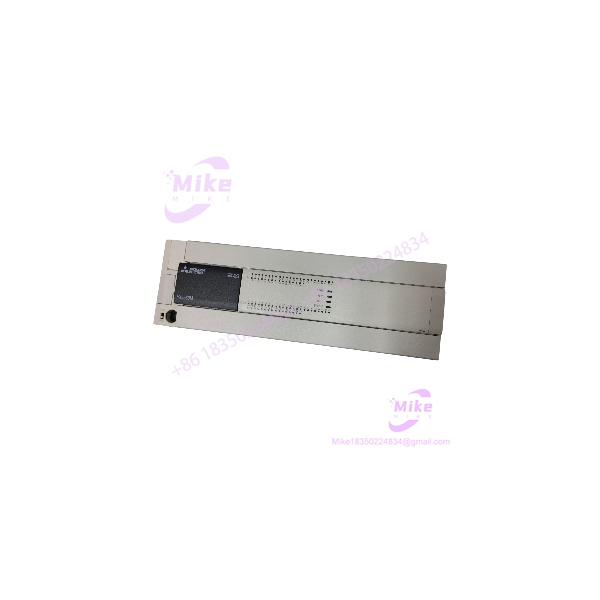
Mitsubishi FX3U-80MR/ES-A | 80-Point Relay PLC
Dynamic Product Introduction
For a machine built around conventional discrete control, the Mitsubishi FX3U-80MR/ES-A is the sort of PLC that makes sense to evaluate by terminal architecture first and software second. You get 40 DC 24 V inputs and 40 relay outputs in the main unit, with enough expansion capacity to support substantially larger control schemes. That combination suits machine builders and maintenance teams dealing with contactors, solenoid valves, interlocks, indicator circuits, motor starters, and other discrete field devices.
The important procurement issue is the complete model suffix. Mitsubishi’s FX3U 80-point family includes relay and transistor-output variants, as well as 24 VDC and 100–240 VAC power versions. The FX3U-80MR/ES specifically means the AC-powered relay-output configuration. The FX3U-80MR/DS, for example, is a 24 VDC-powered relay version, while FX3U-80MT variants use transistor outputs.
That distinction is not cosmetic. A relay-output PLC and a transistor-output PLC can have completely different suitability for the existing machine wiring and switching duty. If this unit is being purchased as a maintenance spare, matching the original nameplate and terminal architecture is more important than simply matching “FX3U” and “80 points.”
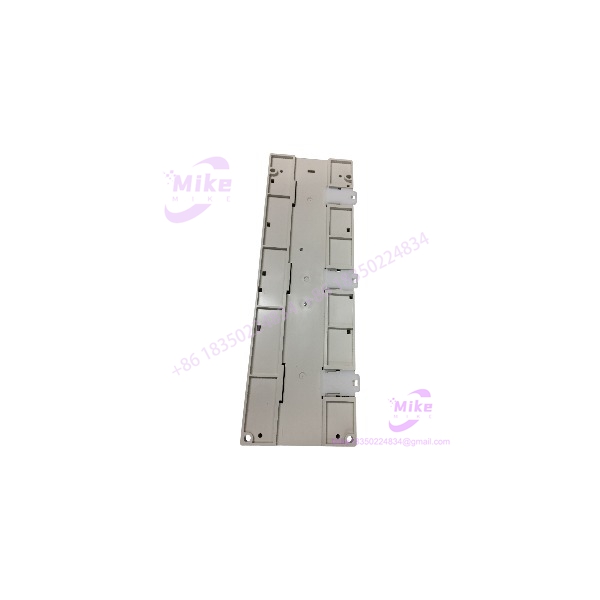
FX3U-80MR/ES-A
Key Technical Specifications
- Manufacturer: Mitsubishi Electric
- Series: MELSEC-F
- Model family: -80MR/ES
- Listed designation: -80MR/ES-A
- Integrated I/O: 80 points
- Digital inputs: 40
- Input voltage: 24 VDC
- Input type: Sink/source
- Digital outputs: 40
- Output type: Relay
- Power supply: 100–240 VAC
- Program memory: 64K steps
- Local I/O points: 256
- Local + remote I/O points: 384
- Expansion: Supported
- LD cycle time: 65 ns
- MOV cycle time: 642 ns
- RS-422: 1 port
- USB: Optional
- Power consumption: 50 W
- Protection class: IP10
- Operating temperature: 0 to 55°C
- Dimensions: 285 × 90 × 86 mm
- Weight: Approximately 1.20 kg
- Battery backup: Supported
Mitsubishi’s current product data lists 64K-step program memory, 256 local I/O points, 384 local-plus-remote I/O points, a 65 ns LD instruction cycle time, and a 642 ns MOV instruction cycle time.
The hardware manual also confirms the 285 × 90 × 86 mm form factor and approximately 1.20 kg mass for the -80M series. The unit can be installed on a 35 mm DIN rail or by direct screw mounting.
Global Sourcing & Live-Test SOP
With an older unit, I would not accept “powers on” as a meaningful functional test. The controller has enough integrated I/O that a proper incoming inspection can reveal problems before the unit reaches a production machine.
1. Inbound identity verification
- Photograph the complete front nameplate.
- Confirm the physical markinginst /ES documentation.
- Verify that the unit is the relay-output version.
- Confirm the AC power configuration.
- Inspect terminal blocks for cracks, deformation, heat discoloration, or missing screws.
- Check the expansion connectors and communication ports.
- Record serial number and revision information.
- Inspect mounting tabs and DIN-rail hardware.
For the specific listing designation, the physical nameplate should take precedence over an abbreviated seller description.
2. Controlled power-up
Apply the specified AC supply through a controlled test arrangement. Verify normal CPU startup and LED behavior before connecting field loads.
Check for:
- CPU diagnostic indications
- Abnormal startup faults
- Communication errors
- Battery-related indications
- Unusual heating
- Physical noise from the relay section
3. Input simulation
The 40 inputs should be tested individually using an appropriate 24 VDC test source.
Exercise every channel rather than checking only a sample. Confirm that each input state appears correctly in the programming/monitoring environment.
This is particularly useful with older equipment because an apparently healthy PLC can still have isolated input-channel failures.
4. Relay-output verification
Test all 40 relay outputs with a controlled load or suitable relay-output test fixture.
Verify:
- Output ON command
- Output OFF command
- Contact switching
- Consistent operation across repeated cycles
- No abnormal contact resistance
- No evidence of welded or intermittent contacts
Relay wear is one of the areas that deserves attention when sourcing used equipment. A CPU can execute perfectly while an individual output contact is mechanically or electrically degraded.
5. Logic execution
Load a controlled test program and verify:
- Basic logic execution
- Internal relay operation
- Timers
- Counters
- Interlocking
- Sequential output operation
- Program read/write
- RUN/STOP transitions
- Diagnostic behavior
Where the production machine uses expansion modules or communication networks, test the relevant architecture rather than validating the main unit in isolation.
6. Extended heat run
For a production spare, run the PLC through an extended test period under representative I/O activity. A 24-hour heat run is a reasonable internal procurement SOP where the application warrants it.
Record operating behavior and any intermittent faults.
7. Final procurement record
The final inspection record should identify the exact model, revision, test environment, I/O channels tested, communication interfaces checked, and any limitations discovered.
That documentation becomes useful months later when a maintenance engineer needs a spare and has no time to reverse-engineer the purchasing history.
Field Engineer’s Pitfall Guide
1. Do not treat “-80” as a sufficient part number.
Mitsubishi offers multiple 80-point varia The /ES has 40 relay outputs and a 100–240 VAC power supply, w the /DS has 24 VDC power. The MT versions change the output technology to transistor.
I’ve seen replacement orders go wrong because purchasing matched the I/O count while ignoring the final two or three characters of the model number. On a legacy machine, that is an avoidable mistake.
2. Verify the relay-output duty before treating the PLC as a direct replacement.
The MR designation means relay outputs. That is appropriate for many conventional discrete loads, but it should not automatically be substituted for a transistor-output PLC where high-speed switching, pulse generation, or specific output behavior is required.
Conversely, an MT replacement is not automatically equivalent simply because it has the same 80-point count.
3. Do not overlook the lifecycle issue.
Mitsubishi currently identi the /ES as an end-of-life announced material in its European product data. Mitsubishi lists FX5U-80MR/ES among the successor options, while the Japanese product information also identifies successor configurations.
For maintenance procurement, this creates two separate decisions: securing an exact spare for an existing installation and developing a longer-term migration strategy. Those should not be treated as the same project.
Intent-Driven FAQ
1. What is the Miishi /ES-A?
Thsted /ES-A designation corresponds to the Mitsubishi MELSEC-F 80-point AC-powered relay-output PLC architecture. The cial /ES specification provides 40 24 VDC inputs and 40 relay outputs.
2. the /ES use 100–240 VAC?
Yes. Mitsubishi specifies a 100–240 VAC power supply the /ES. The 40 integrated inputs operate at 24 VDC.
3. How many outputs the /ES have?
It has 40 integrated relay outputs. Combined with 40 integrated inputs, the main unit provides 80 integrated I/O points.
4 the /ES expandable?
Yes. Mitsubishi lists the unit as expandable, with up to 256 local I/O points and up to 384 local-plus-remote I/O points depending on the expansion and remote-I/O architecture used.





