

Description
Mitsubishi FX2N-128MR-001 | 128-Point Relay PLC
Dynamic Product Introduction
Some PLCs become difficult to replace not because the control logic is complicated, but because the machine around them has been wired, programmed, and commissioned around one specific controller generation. The Mitsubishi FX2N-128MR-001 is a good example. It is a large FX2N main unit with 128 integrated I/O points, combining 64 inputs with 64 relay outputs in a compact machine-control platform.
The MR designation is significant: this is the relay-output version, not the transistor-output FX2N-128MT family. The -001 configuration belongs to the 100–240 VAC-powered FX2N main-unit family. Mitsubishi’s own replacement documentation specifically lists the FX2N-128MR(-001) and recommends the FX3U-128MR/ES(-A) as the replacement family.
For legacy machinery, however, “recommended replacement” does not mean “swap it without engineering.” Existing expansion modules, communication boards, special-function units, program memory, addressing, wiring, and machine-specific timing all need to be reviewed before migration.
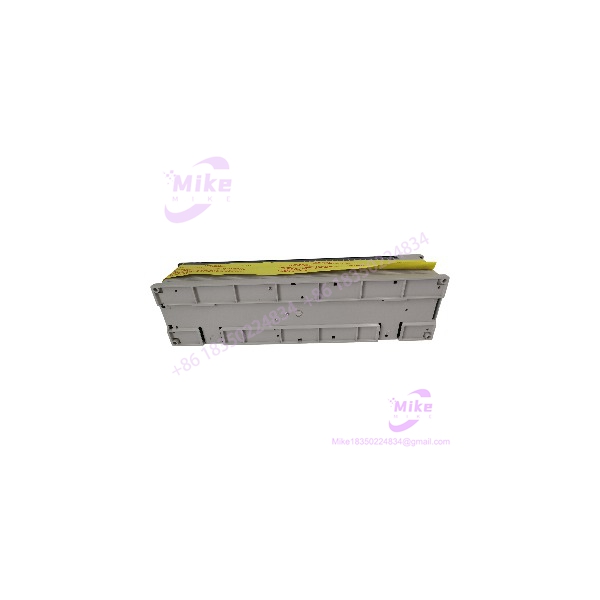
FX2N-128MR-001
Key Technical Specifications
- Model: FX2N-128MR-001
- Manufacturer: Mitsubishi Electric
- PLC Family: MELSEC-F
- Controller Type: main programmable controller
- Total Integrated I/O: 128 points
- Digital Inputs: 64 points
- Relay Outputs: 64 points
- Output Technology: Mechanical relay
- Power Supply: 100–240 VAC class
- Program Capacity: platform supports up to 8K steps of built-in RAM program capacity, with expansion capability depending on memory configuration
- Programming Environment: FX-series programming tools, with legacy applications commonly maintained using Mitsubishi FX programming software
- Expansion: architecture supports additional I/O and special-function modules
- Communication: Built-in FX-series communication interface with optional communication expansion
- Series Status: Legacy/discontinued platform with Mitsubishi replacement guidance available
- Recommended Mitsubishi Replacement: FX3U-128MR/ES(-A), subject to application-specific migration review
The exact machine configuration should be checked before relying on generic specifications. In particular, do not confuse the FX2N-128MR-001 with the 24 VDC-powered -D variants or the transistor-output MT models.
Global Sourcing & Live-Test SOP
A surplus FX2N-128MR-001 should be treated as a complete PLC assembly, not simply as a box with 128 terminals.
1. Nameplate verification
Confirm the exact designation FX2N-128MR-001. Photograph the Mitsubishi nameplate, serial information, terminal area, expansion connectors, and housing.
2. Physical inspection
Check the enclosure for cracks, deformation, corrosion, contamination, or evidence of overheating. Inspect terminal screws and removable terminal blocks for damage.
3. Power-supply verification
Confirm that the replacement unit is the correct AC-powered configuration before energizing it. Do not substitute a visually similar variant with a different supply architecture.
4. CPU startup test
Apply the correct supply under controlled conditions and verify normal CPU operation. Check diagnostic indicators and confirm that the controller does not immediately report a hardware fault.
5. I/O verification
Exercise all 64 digital inputs using a controlled test source. Then test the relay-output channels individually under an appropriate load or test fixture.
6. Relay inspection
Relay outputs deserve special attention on used units. Check for intermittent switching, welded contacts, excessive contact resistance, or channels that fail to change state after repeated operation.
7. Program and communication test
Where possible, load a controlled test program and verify scan execution, timers, counters, internal relays, registers, and communication functions required by the target machine.
8. Expansion-bus verification
If the target installation uses expansion or special-function modules, verify that the controller communicates correctly with the connected expansion architecture. A CPU can pass a standalone bench test while still failing the actual machine integration test.
9. Extended run
Run the PLC continuously under representative I/O activity. Monitor supply behavior, CPU status, relay switching, and abnormal heating before approving the unit as an operational spare.
Field Engineer’s Pitfall Guide
1. Do not confuse MR and MT.
The uses relay outputs. The -128MT family uses transistor outputs. They are not interchangeable simply because both provide 128 I/O points. Output behavior, load characteristics, wiring, and application logic can all be affected.
2. Do not treat the FX3U replacement recommendation as a plug-in swap.
Mitsubishi explicitly provides an -to-FX3 replacement guide and maps the -128MR(-001) to the FX3U-128MR/ES(-A). That is a migration path, not permission to ignore the installed expansion modules, program, communications, and field wiring.
3. Check relay condition on every used unit.
A CPU can boot perfectly while individual relay contacts have degraded through years of inductive switching. For a machine with safety interlocks, contactors, solenoids, or motor-control commands, test every output rather than assuming that the PLC’s RUN indicator proves the output section is healthy.
Intent-Driven FAQ
What is titsubishi ?
The is a 128-point Mitsubishi Electric -series PLC main unit with 64 digital inputs and 64 relay outputs. It belongs to the MELSEC-F programmable-controller family.
Is relay output or transistor output?
It is the relay-output version. The MR designation distinguishes it from the transistor-output MT family.
How manoes have?
The controller provides 128 integrated I/O points: 64 inputs and 64 relay outputs.
What oes use?
The (-001) is in Mitsubishi’s 100–240 VAC power-supply main-unit category. Do not confuse it with the separate 24 VDC -D models.
Is the discontinued?
It is a legacy platform. Mitsubishi’s current documentation provides an -to-FX3 replacement guide and identifies the FX3U-128MR/ES(-A) as the recommended replacement for (-001).
Can be replaced directly by FX3U-128MR/ES?
Not as an automatic drop-in replacement. Mitsubishi identifies the FX3U-128MR/ES(-A) as the recommended replacement, but the migration still requires verification of the existing program, expansion modules, communications, I/O addressing, power arrangement, and physical installation.
What programming software is used with ?
systems belong to Mitsubishi’s legacy FX programming ecosystem. Existing installations may contain programs created with older Mitsubishi programming tools, so preserve and back up the original application before attempting a migration to newer FX hardware.
sed be tested before purchase?
At minimum, verify the exact model, power the CPU from the correct supply, confirm normal startup, exercise all 64 inputs, test all 64 relay outputs, and verify expansion/communication functions required by the target machine. For a critical production spare, an extended run under representative load is preferable to a simple power-on test.
What should I request whenlus ?
Request clear photographs of the complete nameplate, terminal blocks, expansion connectors, front LEDs, and housing. For a used unit, ask whether all I/O points have been tested and whether the relay outputs have been checked under load. A documented functional test is substantially more useful than a generic “powers on” statement.





