

Description
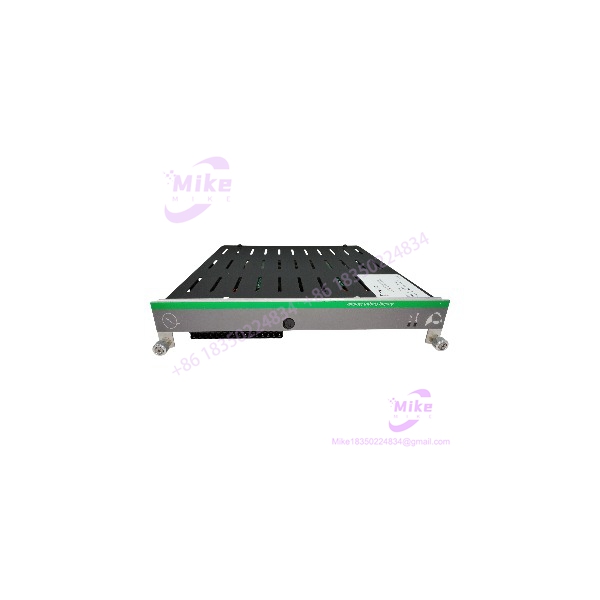
Metso IOP320 | 8-Channel 4–20 mA Analog Output Module
Product Introduction
A legacy DCS analog output card has a direct role in maintaining process control. The Metso IOP320 converts digital output commands from the distributed processing unit (DPU) into eight 4–20 mA signals for connected field devices. It is designed for the Metso maxPAC I/O subsystem, making exact model and configuration verification important when sourcing a replacement.
The maxPAC Hardware Reference Guide documents 12-bit resolution, a 750 ms rise time, 0–800 Ω load impedance, and automatic calibration at power-up when the calibration jumper is set. The module also detects open loads and reports them to the DPU. These documented characteristics make the IOP320 identifiable as a current-output module—not a general-purpose analog I/O card.
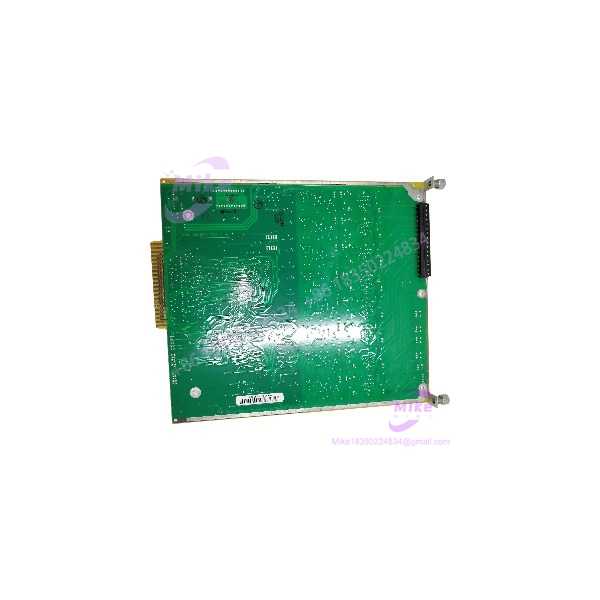
IOP320
Key Technical Specifications
- Model Number: IOP320
- Manufacturer: Metso Automation
- I/O Classification: Analog Output
- System Compatibility: Metso maxPAC I/O system
- Output Channels: 8
- Output Signal Range: 4–20 mA
- Resolution: 12 bits
- Accuracy at 25°C: ±0.1% of reading ±0.05% of full scale
- Rise Time: 750 ms
- Load Impedance: 0–800 Ω
- Temperature Sensitivity: ±0.004% of reading/°C; ±1.5 µV/°C RTI
- System Supply: 24 VDC via backplane edge connector
- Input Power: 175 mA from the 24 V system supply
- Loop Power: 24 VDC supplied through the backplane
- Channel Power Arrangement: Common loop supply for all eight outputs, with a shared fuse-disconnect indication
- Isolation: Field-to-logic isolation through optical isolators
- Calibration: Self-calibration at power-up when the calibration jumper is set
- Open-Load Detection: Detected and reported to the DPU
- Watchdog: Monitors I/O bus communications; timeout occurs after approximately 0.7 seconds without communication
- Output Behavior on Watchdog Timeout: Reset or hold last state, depending on onboard program-jumper position
- Bus Addressing: Eight bus addresses; starting address must be divisible by 8, within the documented 32–240 decimal range
Specification note: These values are drawn from the Metso maxPAC Hardware Reference Guide. Verify the applicable manual revision and module configuration before using them for acceptance testing or installation.
Global Sourcing & Live-Test SOP
For a legacy Metso IOP320, a credible sourcing process should establish both hardware identity and functional behavior. A seller’s “tested” designation should be supported by actual test details.
Incoming Verification
- Confirm the IOP320 model marking and manufacturer identification.
- Record serial number and board revision, where present.
- Inspect PCB, connectors, edge contacts, and visible signs of corrosion, damage, or repair.
- Photograph the module and labels for procurement records.
Configuration & Authenticity Review
- Compare the module against available maxPAC documentation.
- Verify bus-address switch settings and onboard jumper positions.
- Confirm that the unit is the —not the isolated-output IOP321 or another similar-looking model.
- Review any available service or repair history.
Functional Test Procedure
- Use a compatible maxPAC test setup and suitable calibrated instrumentation.
- Confirm power-up behavior and available diagnostic indications.
- Apply output commands through the DPU and verify the 4–20 mA response on each tested channel.
- Test output behavior across representative points in the operating range.
- Check load response within the documented 0–800 Ω range, using an appropriate test setup.
- Verify open-load indication and DPU reporting where supported by the test configuration.
Extended Run & Documentation
- Record test conditions, channels exercised, measured output values, and any faults.
- Perform an extended run when included in the seller’s test scope.
- Document jumper settings and bus address.
- Package the module in ESD-protective material with suitable cushioning.
Testing transparency: These are recommended procurement and acceptance steps. They do not establish that the specific unit being offered has been tested, calibrated, or warranted. Confirm actual condition, test evidence, and return terms with the seller.
Field Engineer’s Pitfall Guide
- ❗ Do not treat and IOP321 as interchangeable. Both are 8-channel 4–20 mA output modules, but the IOP321 has isolated outputs and different performance characteristics. Confirm the exact installed model before substitution.
- ❗ Check the bus address and jumper configuration. The uses eight bus addresses, and the starting address must follow the documented 8-address boundary rule. The program-jumper position also affects output behavior following a watchdog timeout.
- ❗ Verify the common loop-power arrangement. The uses a shared 24 VDC loop supply for its eight outputs. A loop-power fuse issue can affect all eight channels. Confirm the fuse-disconnect status and field wiring before diagnosing multiple output failures as independent channel faults.
Intent-Driven FAQ
Q1: What is the Metso used for?
The is an 8-channel analog output module that converts DPU commands into 4–20 mA current signals for compatible field devices.
Q2: Is the an analog input or analog output module?
It is an analog output module. The IOP302, by comparison, is a 16-channel 4–20 mA analog input module.
Q3: What is the output resolution of the ?
The maxPAC Hardware Reference Guide specifies 12-bit resolution.
Q4: Can the drive a control valve?
It can provide 4–20 mA control signals to compatible current-loop devices, including valve positioners. Confirm the field device’s input requirements and loop design before installation.
Q5: Is the hot-swappable?
Do not assume hot-swap capability. Follow the applicable maxPAC maintenance procedure and site isolation requirements before removing or installing the module.
Q6: What should I verify before ordering a replacement?
Confirm the model marking, board revision, bus address, jumper configuration, physical condition, and compatibility with the installed maxPAC system. Verify whether the offered unit has been functionally tested.
Q7: Is the obsolete, tested, or covered by a warranty?
The is a legacy Metso maxPAC module. Current OEM support, actual unit condition, test status, and warranty coverage must be confirmed with the seller. No warranty or test status is implied by this listing.





