


Description
LENZE EPL10200 | Drive PLC Controller
Product Introduction
When an older Lenze drive cabinet has been running for years, the difficult part is rarely programming a replacement from scratch. The real headache is finding the EPL10200 with the correct hardware and software generation before a failed controller turns a routine maintenance job into an extended production outage.
The LENZE EPL10200 is a compact Drive PLC intended for decentralized control within Lenze automation and drive architectures. Its I/O configuration combines 8 digital inputs, 4 digital outputs, 3 analog inputs, and 1 analog output, allowing local logic and process signals to be handled without pushing every control function back to a central PLC. The unit is designed around a 24 VDC control supply and integrates with Lenze drive-system communications.
This is legacy automation hardware, and that matters. The EPL10200 has documented software generations extending from early releases through later V8.x environments, so firmware and application compatibility deserve a proper check before installation.
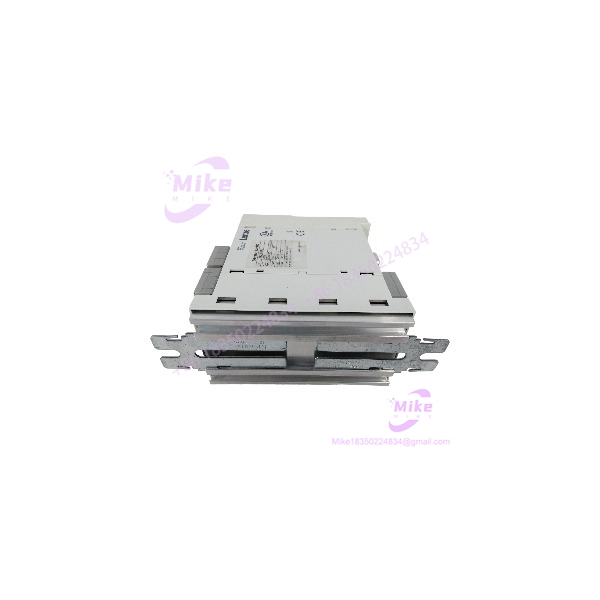
EPL10200
Key Technical Specifications
- Manufacturer: LENZE
- Model: EPL10200
- Product Family: Lenze Drive PLC
- Controller Type: Decentralized industrial PLC / drive controller
- Supply Voltage: 24 VDC nominal
- Digital Inputs: 8
- Digital Outputs: 4
- Analog Inputs: 3
- Analog Outputs: 1
- System Communication: Lenze integrated system bus / CAN architecture
- Programming Environment: Lenze Global Drive PLC Developer Studio
- Programming Standard: IEC 61131-3 based PLC programming environment
- Application: Drive control, machine sequencing, motion-related logic, and decentralized automation
The EPL10200 is documented for use with Lenze Drive PLC systems and related Global Drive equipment. Communication and expansion options depend on the installed hardware configuration, so the exact nameplate revision should be checked before procurement.
Application Scenarios & Pain Points
Legacy Drive Cabinet Replacement
The maintenance team can retain the existing Lenze control architecture instead of immediately redesigning the machine around a newer PLC platform.
Without the correct spare:
A failed controller can force an emergency engineering project—program migration, I/O rewiring, drive communication changes, commissioning, and production acceptance testing.
That is a very different cost profile from replacing one verified controller.
Machine Builder Retrofit
The fits applications where PLC logic and drive coordination need to remain physically close to the motion hardware. Its combination of discrete and analog I/O makes it useful for machines handling sensors, actuators, speed references, positioning logic, and drive-related sequencing.
For an older packaging, material-handling, winding, or production machine, keeping the original controller architecture can reduce the amount of cabinet modification required.
Communication-Dependent Motion Control
Lenze documentation identifies the within its Drive PLC ecosystem and supports communication interfaces used with Global Drive equipment. That makes communication configuration just as important as the controller itself.
A replacement should therefore be checked for the installed communication module, system-bus configuration, software revision, and application project—not simply its external dimensions.
Software-Version Recovery
Here is the uncomfortable part: two controllers carrying the same basic identification may still require different engineering treatment depending on their hardware and software generation.
Lenze documentation specifically records different software generations, including V1.0, V2.0, V6.0, V7.0, and V8.0-era documentation.
That makes version verification a procurement step, not a commissioning afterthought.
QA & Live Testing SOP
For a legacy Drive PLC, visual inspection is only the first gate.
Our engineering-oriented inspection sequence should include:
- Part-number verification: Confirm the identification against the purchase specification.
- Nameplate inspection: Record hardware revision, serial information, and visible LENZE markings.
- PCB inspection: Look for corrosion, contamination, damaged components, cracked solder joints, and signs of previous repair.
- Terminal inspection: Check connectors and terminals for mechanical damage or oxidation.
- Power-up verification: Apply the specified control voltage using a controlled test setup and monitor startup behavior.
- I/O verification: Where suitable test equipment is available, verify representative digital and analog I/O operation.
- Communication testing: Confirm the appropriate Lenze communication interface and system-bus behavior for the applicable configuration.
- Software compatibility check: Compare the installed hardware/software generation with the target machine before deployment.
- ESD packaging: Protect the controller in anti-static packaging with mechanical protection around connectors.
We do not call a controller “tested” simply because the LEDs illuminate. For legacy PLC hardware, startup, I/O behavior, communication, and revision compatibility are separate checks.
Field Engineer’s Pitfall Guide
❗ Do not assume every software generation is interchangeable.
Lenze documentation identifies multiple software generations for the Drive PLC. Check the existing project and controller revision before moving the replacement into production.
❗ Do not ignore the communication hardware.
The controller may depend on a specific communication module or system-bus configuration. If the machine uses LECOM, CAN, PROFIBUS, DeviceNet, or another installed interface, verify the actual configuration before commissioning.
❗ Check the I/O architecture before rewiring anything.
The provides a defined mixture of digital and analog I/O. Do not assume an external expansion board or communication accessory is included with the base controller.
❗ Do not treat a replacement as a plug-and-play PLC upgrade.
If the original application contains motion sequencing, drive parameters, analog scaling, or machine-specific logic, the controller hardware is only one part of the recovery process.
Intent-Driven FAQ
Is the LENZE a PLC?
Yes. The is a Lenze Drive PLC designed for decentralized machine and drive control rather than a conventional standalone office-style PLC application.
What voltage does the use?
The controller is designed around a 24 VDC control supply. Verify the actual machine wiring and controller documentation before energizing a replacement.
How many I/O points does the have?
The commonly documented configuration is 8 digital inputs, 4 digital outputs, 3 analog inputs, and 1 analog output.
Can I replace an older with another ?
Usually, that is the correct starting point—but do not stop at the model number. Check hardware revision, software generation, application program, communication hardware, and installed drive configuration.
Is the obsolete?
It is a legacy/discontinued Lenze Drive PLC platform, which is why sourcing exact replacement hardware can be more practical than attempting an immediate machine-wide redesign.
Can the communicate with Lenze drives?
Yes. The Drive PLC architecture is designed for integration with Lenze drive systems and associated communication interfaces. The exact interface depends on the installed configuration and communication hardware.
What should I verify before ordering an ?
Send the seller the exact controller identification, hardware revision, software/firmware version if available, communication-module type, and a clear photograph of the nameplate. Those details can prevent an expensive wrong-revision purchase.
Is this suitable as a direct emergency spare?
It can be, provided the replacement matches the installed application and hardware/software environment. For a production-critical machine, verify compatibility before installation rather than discovering a revision mismatch during a shutdown.
Bottom line: The is a legacy Drive PLC worth keeping on the maintenance-spares list when the installed machine still depends on the Global Drive architecture. Exact revision matters, and a proper compatibility check is far cheaper than discovering the mismatch after the cabinet is already offline.





