

Description
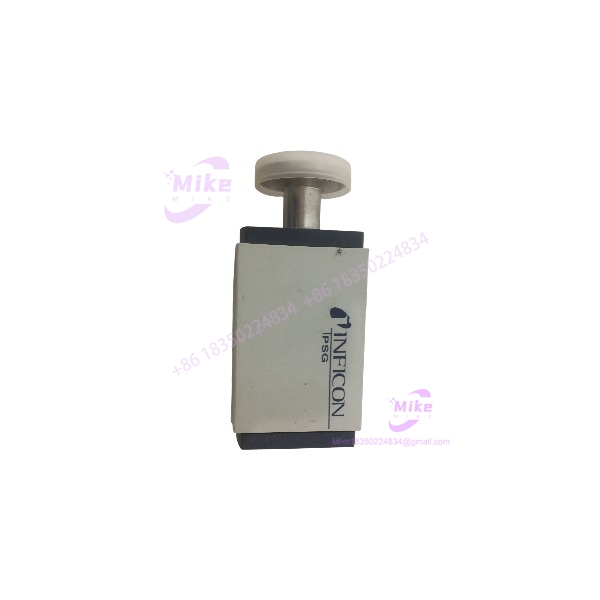
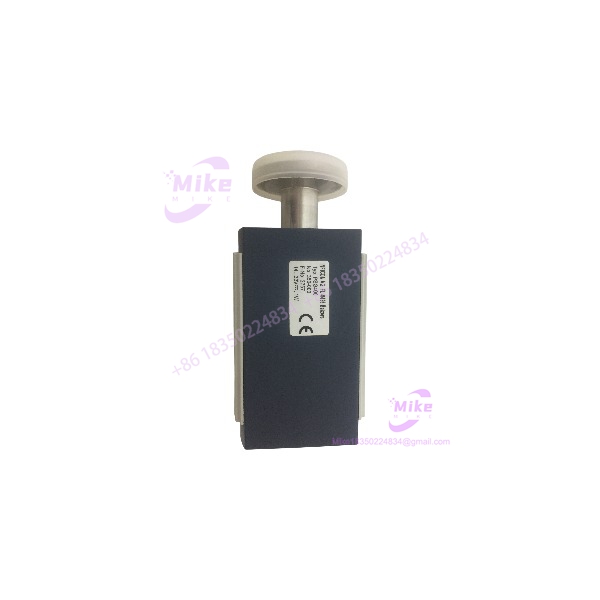
Inficon PSG400 | Standard Pirani Vacuum Gauge Sensor
Dynamic Product Introduction
Vacuum pressure dropouts during sputtering or plasma etching cycles lead directly to lost wafer lots and damaged batch runs. Standard cold-cathode or ion gauges cannot operate at atmospheric pressure without risking filament burnout, making thermal conductivity gauges essential for chamber roughing. The Inficon PSG400 standard Pirani gauge delivers stable, wide-range pressure measurement spanning rough vacuum to high vacuum zones.
Using a rugged tungsten filament suspended inside a compact stainless steel sensor cell, the PSG400 generates a continuous logarithmic 0 to +10.3 V output signal scaled at 1.286 V per pressure decade. Its integrated signal processing electronics fit directly onto the measuring head, eliminating the need for bulky external controller racks in modern tool architectures. Whether installed on load locks, forelines, or general vacuum process systems, this sensor provides precise pressure feedback while withstanding harsh process gases—though long-term accuracy depends on preventing oil vapor deposition on the sensing wire.
PSG400
Key Technical Specifications
- Measurement Range: 3.8 \times 10^{-4} to 750 Torr (5 \times 10^{-4} to 1000 mbar)
- Sensing Technology: Thermal conductivity (Pirani principle) with tungsten filament
- Measurement Accuracy: \approx \pm 10\% of reading within 1 \times 10^{-2} to 100 mbar range
- Repeatability: \approx \pm 2\% of reading (1 \times 10^{-3} to 100 mbar)
- Analog Output Signal: Logarithmic 0 to +10.3 V DC (1.286 V / decade)
- Response Time: 10 ms fast response
- Input Power Supply: +14 to +32 V DC (1 W max power consumption)
- Electrical Connection: FCC68 8-pole shielded RJ45 connector socket
- Vacuum Flange Options: DN 16 ISO-KF, DN 16 CF-R, 1/8″ NPT, 1/2″ Tube, or 8 VCR female
- Wetted Materials: Tungsten, stainless steel, nickel, glass, Pyrex
- Operating Ambient Temperature: +5^\circC to +60^\circC
- Maximum Overpressure: 10 bar absolute
Global Sourcing & Live-Test SOP (Transparency Core)
Sourcing surplus or replacement vacuum instrumentation requires physical and electronic verification before mounting sensors onto semiconductor tools. Every Inficon PSG400 passing through our inventory undergoes a strict quality control routine:
- Inbound Verification: Part numbers (e.g., 350-000 for DN 16 ISO-KF) and serial numbers on the aluminum housing are checked against OEM production records. We inspect the vacuum flange sealing surface for scratches and check the FCC68 socket for bent pins.
- Live Simulation: The PSG400 sensor is mounted onto a turbomolecular vacuum pump test bench using a clean centering ring and clamp. The 8-pin FCC68 port connects to a calibrated Inficon VGC series controller or a 24 VDC bench power supply.
- Diagnostics: Pressure is pumped down from atmosphere (1000 mbar) to base pressure (<10^{-4} mbar). The analog output voltage is monitored via a Fluke 87V digital multimeter, confirming smooth logarithmic transitions across the entire 1.9 V to 10 V active curve.
- Zero & Atmosphere Calibration: At base pressure, atmospheric zero offset is checked. Filament health is verified to confirm no internal resistance shifts or thermal drift occurred.
- Final Prep: Baseline calibration curves are logged, the vacuum flange is sealed with a protective plastic cap, and the PSG400 unit is sealed inside cleanroom-compatible ESD packaging.
The Field Engineer’s Pitfall Guide
❗ Over-Torquing NPT and VCR Flange Connections: Forcing the threads on 1/8″ NPT or 8 VCR versions of the PSG400 without proper counter-wrenching can twist the internal sensor stem. This mechanical strain fractures the glass-to-metal feedthrough seals housing the internal tungsten wire, causing permanent atmospheric leaks into the vacuum cell.
❗ Inappropriate Gas Correction Factors During Venting: Pirani sensors measure heat loss through process gases. If you vent a chamber with Argon or Helium while reading a raw PSG400 voltage calibrated for Nitrogen/Air, the indicated pressure will be wildly inaccurate. Nitrogen reads normally, but Argon conducts heat poorly—making actual pressure much higher than indicated, which can lead to over-pressurizing chamber viewports.
❗ Deposition Contamination from Hydrocarbon Oil Vapors: Installing the PSG400 on forelines without oil mist traps exposes the hot tungsten wire to rotary vane pump oil vapors. As hydrocarbons bake onto the wire filament, a carbon layer builds up, altering thermal conductivity. In field deployments, this shows up as zero-point voltage drift at high vacuum that manual recalibration cannot correct.
Intent-Driven FAQ
Q: What is the main operational difference between the standard PSG400 and the PSG400-S model?The primary difference is the setpoint relay functionality. The standard PSG400 provides pressure output measurement only, while the PSG400-S includes an integrated setpoint relay with potential-free contacts to trip external isolation valves or signal interlocking safety loops when pressure passes a preset threshold.
Q: Can I connect the PSG400 directly into a standard PLC analog input card without an Inficon controller? Yes. The PSG400 requires a 14 to 32 VDC power supply and outputs a standard 0 to 10.3 VDC linear-logarithmic analog signal. You can wire this signal directly to a PLC analog input module and convert the voltage to pressure using the formula: P = 10^{(U – c) / 1.286}.
Q: What is the bakeout temperature limit for the PSG400 vacuum gauge? The maximum bakeout temperature at the vacuum flange is 80^\circC with the electronics unit attached. If higher bakeout temperatures up to 250^\circC are required on CF flanges, you must unbolt and remove the electronic housing block from the sensor cell first.
Q: How can I tell if the internal tungsten filament inside the PSG400 has burned out?If the filament ruptures, the analog output voltage will jump to an out-of-range error signal (>10.3 V or <0.5 V). You can also test continuity across the sensor pins using an ohmmeter while unpowered; an open circuit confirms a broken filament wire.
Q: Is the sensor cell on the PSG400 field-replaceable if it gets contaminated? Yes. Inficon supplies replacement sensor heads (such as P/N 350-990 for DN 16 ISO-KF). You can detach the top electronic module from the contaminated lower stainless steel body and mount it onto a new replacement sensor cell without buying a complete electronic assembly.





