

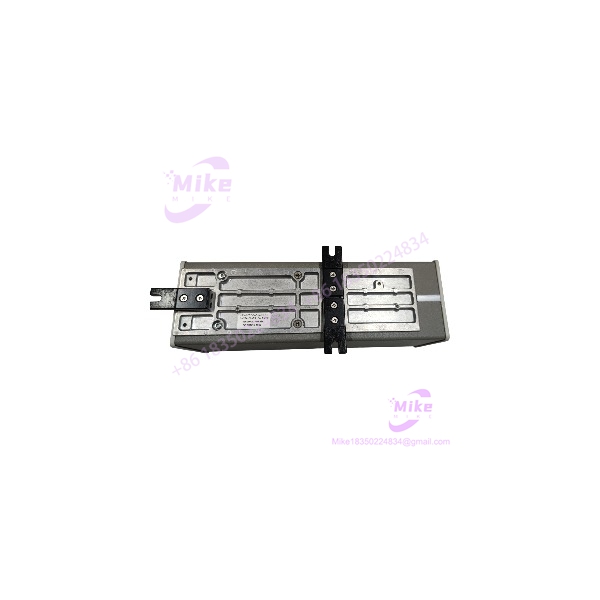
Description
HP 5517B | Laser Interferometer Laser Head
Dynamic Product Introduction
The HP 5517B is not a conventional laboratory laser and should not be evaluated as one. It is the laser head at the front end of a precision laser interferometer measurement system, combining the stabilized He-Ne laser tube, control electronics, sampler assembly, reference receiver, and high-voltage power supply inside one measurement head. The original HP service documentation explicitly identifies these assemblies as integral parts of the 5517B/C/D laser head.
Its defining characteristic is the stabilized optical reference rather than raw optical output. The 5517B operates with a 1.9–2.4 MHz reference frequency and a nominal 6 mm beam, supporting precision displacement and velocity measurements through compatible interferometer optics and receivers. Keysight specifies a maximum linear velocity of 500 mm/s with linear optics, although the actual permissible velocity depends on the complete receiver/electronics configuration.
The 5517B is the higher-reference-frequency successor to the older 5517A architecture. HP documentation notes that the 5517B provides higher measurement slew capability than the 5517A while using a smaller package. The 5517B also differs from later 5517C/D models primarily through reference-frequency range and related configuration characteristics.
That distinction matters when buying surplus equipment. A laser head that physically fits the mounting arrangement may still be the wrong optical/electronic match for the interferometer receiver.
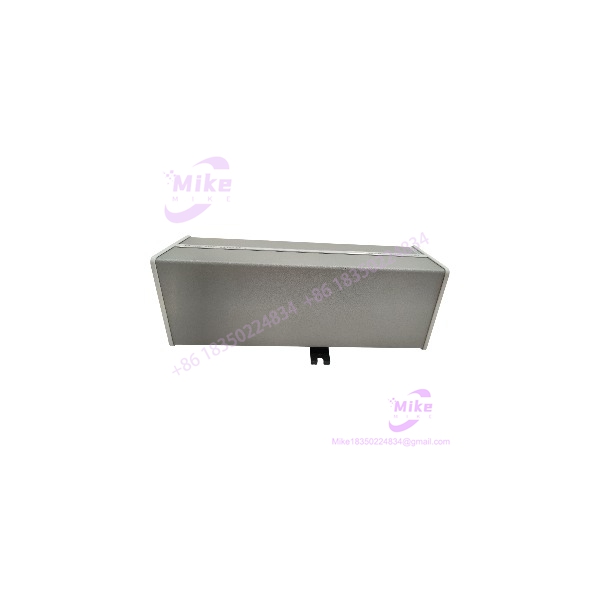
HP 5517B
Key Technical Specifications
- Manufacturer: Hewlett-Packard, later Agilent Technologies and Keysight Technologies
- Model: 5517B
- Product Category: Laser head / laser transducer
- Laser Medium: Helium-neon
- Nominal Wavelength: 632.8 nm in air
- Reference Frequency: 1.9–2.4 MHz
- Optional H10 Reference Range: 2.2–2.4 MHz
- Maximum Linear Velocity: 500 mm/s with linear optics
- Beam Diameter: 6 mm nominal
- Minimum Optical Output: 120 µW current Keysight specification
- Beam Height: 79.5 ±1.0 mm
- Supply Voltage: +15 V ±0.3 V and −15 V ±0.3 V
- Weight: 3.4 kg
- Warm-Up Time: Approximately 90 minutes
- Application: Precision laser interferometry
- Compatible System Types: VME, PC-based systems, and 5527A laser measurement systems
- Physical Family: 5517B/C/D share the smaller laser-head package; the 5517BL/DL/FL versions use a vented configuration and slightly different beam height
Power Specification Note
There is a discrepancy among published/archived specifications concerning the exact current limits.
The current Keysight product page states +15 V ±0.3 V at up to 3.0 A and −15 V ±0.3 V at up to 0.3 A. Older service and test-equipment documentation gives lower typical/max current figures, such as approximately 2.2 A on +15 V and 0.02 A on −15 V. For procurement and bench testing, use the specification applicable to the exact revision/options on the physical 5517B rather than mixing values from different generations.
Global Sourcing & Live-Test SOP
1. Inbound Verification
For a used or surplus HP 5517B, optical condition matters as much as electronic condition.
- Photograph the complete model and serial-number label.
- Confirm 5517B, not 5517A, 5517C, or 5517D.
- Record any installed option such as H10.
- Inspect the laser aperture for contamination or physical damage.
- Check the housing for impact damage and signs of overheating.
- Inspect the rear connector and cable interface.
- Check mounting surfaces and beam-height geometry.
- Record manufacturing date or laser-tube information if visible.
- Request the seller’s actual optical output/reference-frequency test results where available.
2. Power-Up Test
Do not immediately connect a questionable surplus head to expensive interferometer electronics.
Use a verified ±15 V supply and appropriate current limiting.
Confirm:
- Correct polarity
- Supply current at startup
- Stable laser operation
- Reference signal
- Absence of excessive heating
- Normal warm-up behavior
The 5517B incorporates its own control electronics and high-voltage laser power supply, so the external supply should provide the specified low-voltage rails rather than attempting to power the laser tube directly.
3. Optical Test
After the appropriate warm-up period:
- Verify visible laser emission using safe optical procedures.
- Measure optical output with suitable calibrated equipment.
- Confirm reference-frequency stability.
- Check beam alignment and beam height.
- Inspect the beam for abnormal intensity variation.
- Confirm that the reference receiver produces a clean signal.
The 5517B is specified for approximately 90 minutes of warm-up, so a quick five-minute power-up is not a meaningful metrology acceptance test.
4. Interferometer Simulation
Where possible, connect the laser head to compatible interferometer electronics and a known-good optical path.
Verify:
- Reference acquisition
- Receiver lock
- Directional response
- Displacement counting
- Velocity response
- Signal stability
- Error reporting
The laser head should be evaluated as part of the measurement chain. A visually clean red beam does not prove that the reference frequency and optical heterodyne performance are within specification.
5. Extended Stability Run
For a production replacement, operate the head through a complete thermal stabilization cycle.
Record:
- Warm-up time
- Reference frequency
- Optical output
- Supply current
- Housing temperature
- Reference-signal stability
- Interferometer measurement stability
A laser that starts correctly but drifts outside the expected reference range after several hours should not be released simply because it passes an initial power-on test.
6. Final Preparation
Before shipment:
- Record exact model and serial number.
- Record options.
- Record measured reference frequency.
- Record optical output where measured.
- Record warm-up behavior.
- Protect the laser aperture.
- Use shock-resistant packaging.
- Prevent connector damage.
- Include the functional-test report.
Field Engineer’s Pitfall Guide
❗ 1. Do not substitute a 5517C/D solely because the connector and housing look similar
The 5517 family contains different reference-frequency ranges. The 5517B is specified at 1.9–2.4 MHz, while the 5517C and D occupy higher reference-frequency ranges. HP/Agilent documentation explicitly distinguishes these models by reference frequency.
This is one of those replacements where “same connector” is not an adequate compatibility test.
❗ 2. Reference frequency can expose an aging or misclassified laser
A particularly useful field check is the reference frequency. A secondary repair source reports 5517B units whose measured reference frequency had drifted into the 2.5–2.9 MHz range—outside the documented 5517B range and into the 5517C range. That source notes that some machines may flag such a unit even when optical output remains strong. Treat that as a field-service observation, not as an OEM specification.
For high-precision equipment, measure the reference frequency rather than relying on a seller’s statement that the laser “lights.”
❗ 3. Do not judge condition by visible beam power alone
The 5517B is a metrology component. Interferometer performance depends on the stabilized reference, optical alignment, receiver response, and system electronics—not merely whether a red beam is visible.
HP’s service documentation identifies the sampler, reference receiver, laser tube, control circuits, and high-voltage supply as parts of the laser-head assembly. A fault in one of those subsystems can produce a marginal measurement system even when the laser appears to operate normally.
Intent-Driven FAQ
What is the HP 5517B?
The HP 5517B is a stabilized He-Ne laser head for laser interferometer systems. It generates the optical reference used by compatible interferometer optics and receiver electronics for precision displacement and velocity measurement.
Is HP 5517B the same product as Agilent 5517B?
Yes. The product lineage moved from Hewlett-Packard to Agilent and later Keysight. Current Keysight documentation continues to identify the product as the 5517B Laser Head.
What is the reference frequency?
The standard 5517B is specified at 1.9–2.4 MHz. Option H10 is specified at 2.2–2.4 MHz.
What is the maximum measurement speed?
Keysight specifies 500 mm/s maximum velocity with linear optics, while noting that the actual limit depends on the electronics/receiver combination. Some system documentation gives a higher figure under particular receiver conditions, so the complete interferometer configuration should control the application limit.
What power supply does the 5517B require?
The laser head requires positive and negative 15 V rails. Current Keysight documentation specifies +15 V ±0.3 V and −15 V ±0.3 V; the published maximum-current figures differ between current and historical documentation, so the exact revision should be checked before bench powering.
How long should an HP 5517B warm up?
Keysight specifies approximately 90 minutes for warm-up. This matters when validating a used laser because reference-frequency and optical stability should be evaluated after thermal stabilization rather than immediately after power-up.
Is the HP 5517B still available from the OEM?
Keysight continues to document the 5517B, but its current product page indicates that it is not purchasable through the normal procurement session. The current market therefore includes used, refurbished, repair, and calibration-service channels.
What should I verify before buying a used HP 5517B?
Request:
- Complete model and serial number
- Option identification
- Reference-frequency measurement
- Optical-output measurement
- Warm-up test
- Laser-on operating time, if available
- Power-supply current
- Interferometer functional test
- Connector condition
- Calibration or repair history
- Warranty terms
For a machine-tool or semiconductor-metrology application, reference-frequency verification is especially important.
Procurement Note
Use the following identification for purchasing:
Hewlett-Packard / Agilent / Keysight 5517B — Stabilized He-Ne Laser Head / Laser Transducer
Do not describe it simply as a “He-Ne laser.” The HP 5517B is a specialized component of a laser interferometer measurement system, with an integrated reference receiver, control electronics, sampler, and high-voltage laser power supply.





