

Description
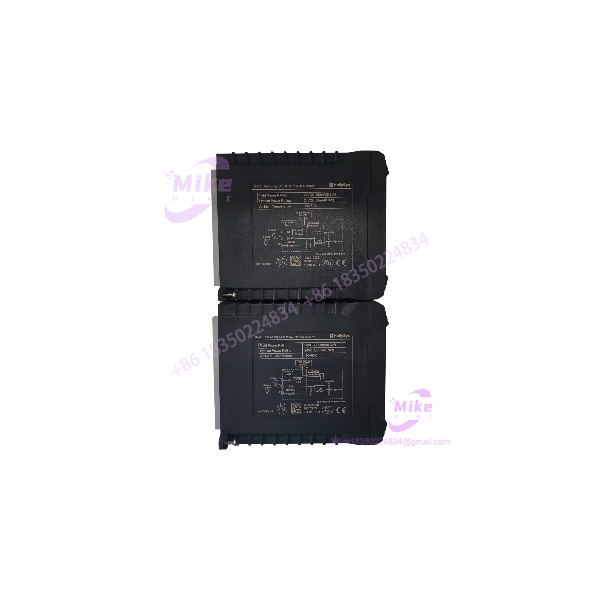
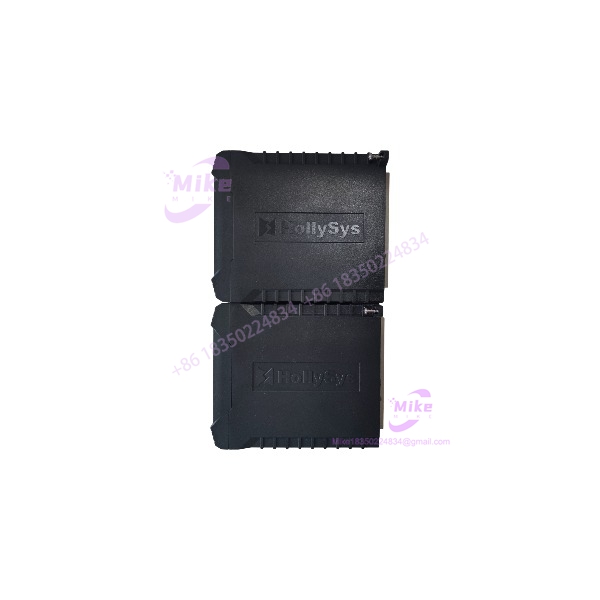
HollySys K-AI01 | 8-Channel Analog Input Module
Product Introduction
When a DCS analog input channel fails, the replacement must match more than the signal type. Channel configuration, terminal-base compatibility, redundancy arrangement, and controller engineering all affect whether the spare can be returned to service without creating new commissioning issues.
The HollySys K-AI01 is an 8-channel current-input module in the HOLLiAS MACS-K DCS family. HollySys documentation specifies 4–20 mA signal input, a 0–22.7 mA full range, 24-bit ADC resolution, and optional redundancy. The module supports 2-wire, 3-wire, and 4-wire transmitter arrangements when used with the appropriate terminal hardware.
For plants maintaining installed MACS-K systems, the K-AI01 is a configuration-specific DCS spare—not a universal analog input card. Confirm the module revision, terminal base, field wiring, and configured channel parameters before approving a replacement.
K-AI01
Key Technical Specifications
- Manufacturer: HollySys
- Model: K-AI01
- System Family: HOLLiAS MACS-K DCS
- Module Type: 8-channel analog input
- Input Signal: 4–20 mA current
- Full Input Range: 0–22.7 mA
- ADC Resolution: 24 bits
- Accuracy at 4–20 mA: 0.10% F.S. from 10°C to 45°C
- Accuracy at 4–20 mA: 0.25% F.S. from -20°C to 60°C
- Stability at 4–20 mA: 0.05% F.S. from -20°C to 60°C
- Input Impedance: 230–300 Ω
- Channel Scanning Period: Minimum 90 ms per 8 channels
- 2-Wire Transducer Supply: At least 14.8 V at 20 mA; up to 26.4 V at 0 mA, per manual
- Maximum Channel Current: 30 mA
- Redundancy Switching Time: Less than 10 ms
- System Power Consumption: 0.9 W
- Field Power Consumption: 6.3 W
- Weight: Approximately 200 g
- Supported Transmitter Wiring: 2-wire, 3-wire, and 4-wire, with approved terminal hardware
- Diagnostics: Channel/device diagnostics, including open-circuit, short-circuit, and NAMUR underrange/overrange conditions
- Hot Plug: Supported by the MACS-K hardware documentation; confirm site procedure and exact system configuration before live replacement
Specifications are based on the HOLLiAS MACS-K hardware manual. Power consumption and field-transmitter supply behavior depend on the installed base and wiring configuration.
Global Sourcing & Live-Test SOP
For a used or surplus HollySys K-AI01, the inspection should establish module identity, physical condition, and functional performance. A clean exterior does not establish channel accuracy or DCS compatibility.
1. Inbound Verification
- Photograph the full nameplate and confirm K-AI01.
- Record serial number, hardware revision, and any additional OEM markings.
- Inspect the module housing, connector contacts, locking features, and anti-mixing pin.
- Check for corrosion, contamination, cracked components, or evidence of prior repair.
- Verify that the offered item is the module itself; do not assume a terminal base or accessories are included.
- Compare the module with the site’s existing hardware and approved spare-parts record.
- Retain available supplier traceability and condition documentation.
2. Controlled Power-Up and Functional Simulation
- Use a compatible MACS-K base and approved test configuration.
- Verify the correct system and field-power arrangements before energizing.
- Confirm module recognition and status indication.
- Apply calibrated 4–20 mA signals to the channels using an appropriate test source.
- Check channel readings at representative points across the operating range.
- Verify channel diagnostics and record any abnormal indications.
- Do not claim calibration or accuracy certification unless supported by documented test results.
3. Channel and Wiring Diagnostics
- Verify the intended 2-wire, 3-wire, or 4-wire transmitter arrangement.
- Confirm the terminal-base model and wiring diagram.
- Check channel configuration and signal scaling in the DCS engineering environment.
- Test open-circuit and other applicable diagnostic behavior using the approved procedure.
- Confirm that field wiring and loop power are appropriate for the connected transmitters.
- Document channel-specific faults rather than reporting only a module-level pass.
4. Redundancy and Extended Run Test
Where the installed system uses redundant K- modules:
- Verify the intended primary/standby arrangement.
- Confirm redundancy configuration and module recognition.
- Test switching behavior only through an approved maintenance procedure.
- Record diagnostic status before and after the test.
- Conduct an extended powered run while monitoring channel stability, module status, and unexpected faults.
Do not perform live redundancy or hot-plug tests on a production system without authorization under the site’s approved maintenance procedure.
5. Final Preparation and Shipment
- Record the complete model, serial number, and hardware revision.
- Document the test setup, applied signals, and channel results.
- Clearly state whether the module was bench-tested, system-tested, or supplied untested.
- Photograph the module and connector condition.
- Protect connector contacts and use ESD-safe packaging.
- Identify included and excluded accessories.
- Do not overwrite customer configuration data or represent third-party testing as HollySys factory certification.
Field Engineer’s Pitfall Guide
❗ K- is not the same as K-AIH01
The K- is the standard 8-channel current-input module. The K-AIH01 is the related model with HART communication capability. If the application depends on HART access, do not substitute a K- without confirming the required system functionality.
❗ Terminal-base and wiring compatibility must be verified
The K- operates within the MACS-K I/O architecture and uses compatible base hardware. Confirm the terminal base, wiring arrangement, field-power requirements, and module revision before installation. A matching module name alone does not verify the complete loop configuration.
❗ Optional redundancy is a system configuration—not a standalone module guarantee
The K- supports redundancy, but redundant operation depends on the configured system and compatible hardware. Verify the installed architecture, controller configuration, and approved maintenance procedure before replacing or testing a module in a redundant pair.
Intent-Driven FAQ
What is the HollySys K-?
The HollySys K- is an 8-channel analog input module for the HOLLiAS MACS-K DCS. It is designed to acquire process-current signals, commonly 4–20 mA.
How many channels does the K- have?
The K- has 8 analog input channels.
Does the K- support 4–20 mA signals?
Yes. HollySys documentation specifies 4–20 mA current input, with a full-scale range of 0–22.7 mA.
Does the K- support HART?
The standard K- is not the HART model. HollySys identifies K-AIH01 as the related 8-channel analog input module with HART communication functionality. Confirm the exact model required by the application.
Does the K- support redundant operation?
Yes. The module supports optional redundancy within the MACS-K system architecture. Actual redundancy depends on the configured system and compatible hardware.
Is the K- hot-swappable?
The MACS-K hardware manual identifies hot-plug support. However, live replacement should only be performed where the installed system configuration and site’s approved maintenance procedure explicitly permit it.
What should be checked before buying a used K-?
Confirm the exact model, hardware revision, connector condition, terminal-base compatibility, included accessories, and supplier test status. For a working spare, request channel-level test results and verify whether the module is suitable for the site’s MACS-K configuration.
Bottom Line for Buyers
The HollySys K- is an 8-channel, 4–20 mA analog input module for the HOLLiAS MACS-K DCS. Its documented 24-bit ADC resolution, channel diagnostics, transmitter-wiring support, and optional redundancy make it a configuration-dependent spare for installed MACS-K systems.
For procurement, specify the exact K- model, request clear nameplate and connector photos, and confirm terminal-base compatibility. If the application requires HART, verify whether K-AIH01 is the required model before ordering.





