


Description
Fireye EB700 | Flame-Monitor Burner Control Chassis
Product Introduction
The Fireye EB700 is the physical chassis at the heart of the E110 Flame-Monitor burner-management system. It is easy to misclassify because the EB700 itself does not contain the complete burner-sequencing logic. Instead, it provides the common base into which the appropriate programmer module and flame-amplifier module are installed.
That modular architecture is one of the defining characteristics of the Fireye Flame-Monitor platform. The programmer determines the burner sequence and timing, while the amplifier provides the appropriate flame-detection interface. Fireye’s official E110 documentation describes interchangeable programmer and flame-amplifier modules, allowing the same chassis architecture to support different burner-control and flame-sensing requirements.
So, from a procurement perspective, EB700 should be purchased as a chassis/base assembly, not as a complete replacement for an E110 control unless the required plug-in modules and accessories are included and verified.
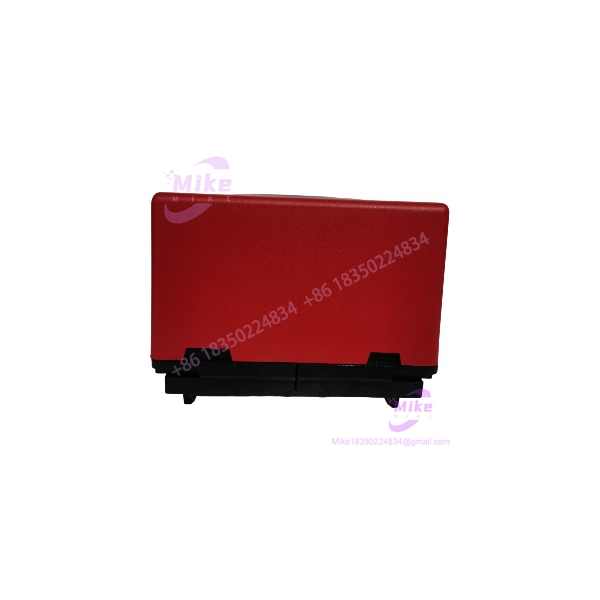
EB700
Key Technical Specifications
Basic Configuration
- Chassis model: EB700
- System: Fireye Flame-Monitor
- Primary complete-system designation: E110
- Control type: Flame safeguard / burner-management system
- Installation: Panel-mounted burner-control equipment
- Required plug-in modules: Programmer and flame amplifier
- Optional display: ED500 or ED510 depending on system configuration
- Dust cover: EC600 associated with the E110 assembly
- Mounting hardware: Fireye mounting screw P/N 48-1836 for the E110 assembly
Fireye’s official documentation specifically states that the consists of the EB700 chassis, EC600 dust cover, and mounting screw, with the display module ordered separately.
Electrical
For the configuration:
- Supply voltage: 120 VAC
- Tolerance: +10% / −15%
- Frequency: 50/60 Hz
- Power consumption: 25 VA
The corresponding 220/230 VAC Flame-Monitor configuration uses the EB701 chassis rather than . Fireye’s documentation lists at 120 VAC and E120 at 220 VAC, and explicitly includes /EB701 in the operating-temperature specification.
Environmental
- Operating temperature: −40°F to +140°F
- Operating temperature: approximately −40°C to +60°C
- Application environment: Industrial burner and boiler control
- System function: Burner sequencing, ignition management, flame monitoring, and safety shutdown when configured as a complete Flame-Monitor system
Fireye cautions that selection of the correct control and associated modules is a safety-critical engineering decision and should be performed by competent burner-service personnel.
What the Does — and Does Not Do
A common procurement mistake is calling the a “complete burner controller.”
It is more accurately the chassis/base of the Flame-Monitor.
The system architecture is approximately:
chassis → Programmer Module + Flame Amplifier → Burner Safety Functions
An optional display can provide operating and lockout information.
The programmer handles functions such as burner sequencing, ignition timing, interlocks, and shutdown logic. The flame amplifier provides the interface to the selected flame detector technology. Fireye specifically describes interchangeable programmer and amplifier modules as part of the Flame-Monitor architecture.
This matters when comparing a surplus with an installed . A chassis-only cannot necessarily be installed and commissioned as a complete burner control without transferring or supplying the correct programmer, amplifier, and associated accessories.
Application Scenarios & Pain Points
1. Industrial Boiler Burner Control
The forms the chassis for Flame-Monitor systems used in automatically fired burner applications.
The completed system manages burner startup, ignition, flame verification, and protective shutdown.
2. Gas and Oil Burners
Fireye specifies the Flame-Monitor for automatically ignited oil, gas, and combination-fuel burners.
The correct programmer and flame amplifier must be selected for the actual burner and flame-sensing arrangement.
3. Legacy Boiler Maintenance
The is especially relevant when maintaining an installed system.
A failed chassis does not necessarily mean that the entire programmer/amplifier configuration must be discarded. If the existing plug-in modules are compatible and in good condition, a properly qualified chassis replacement can preserve the existing control configuration.
4. Burner Retrofit
When replacing an obsolete or damaged burner-control assembly, the temptation is to match only the chassis.
That is the wrong approach.
The programmer model, flame amplifier type, display interface, burner sequence, timing requirements, and field wiring all need to be checked.
QA & Live Testing SOP
For a used , I would use a different acceptance standard than for ordinary PLC hardware because this chassis forms part of a combustion safety system.
1. Identity Verification
Confirm:
- model marking
- Fireye identification
- Engineering/version information where present
- Connector configuration
- Chassis condition
If possible, photograph the complete existing assembly before removing the old chassis.
2. Mechanical Inspection
Inspect:
- Plug-in module sockets
- Card-edge contacts
- Terminal connections
- Mounting hardware
- Housing
- Internal contamination
- Signs of overheating
- Corrosion
- Evidence of previous modification
3. Programmer Compatibility
Identify the programmer installed in the existing system.
Do not assume that any Fireye programmer is compatible merely because it physically plugs into the chassis.
Fireye specifically warns that programmers are mechanically interchangeable in some configurations but must still be selected correctly for the application. An inappropriate combination can create an unsafe operating condition.
4. Flame Amplifier Verification
Identify the installed amplifier.
Verify that it matches the actual flame detector:
- UV
- Self-check UV
- Infrared
- Flame rectification
- Other supported sensing arrangement
The amplifier is not an interchangeable accessory in the casual sense; it directly affects the flame-detection method.
5. Controlled Power-Up
With the correct modules installed, verify:
- Proper startup
- Correct status indications
- No unexpected lockout
- Correct programmer/display communication
- Correct flame-signal indication
6. Burner Functional Test
A genuine acceptance test should be performed using the site’s approved burner commissioning procedure.
Verify the complete sequence:
Safe start → purge/interlocks → ignition → pilot verification → main flame → normal operation → flame failure response → safe shutdown
Do not bypass burner safety interlocks merely to prove that the chassis powers up.
Field Engineer’s Pitfall Guide
❗ 1. is not the complete burner controller.
The chassis requires the correct programmer and flame-amplifier modules. Fireye identifies as the chassis used by the Flame-Monitor system.
❗ 2. Do not substitute for EB701 without checking supply voltage.
The / configuration is associated with 120 VAC, while the E120/EB701 configuration is intended for the higher-voltage supply configuration.
❗ 3. Do not evaluate a used with a simple bench power-up test.
This hardware is part of a combustion safety system. Proper acceptance requires verification of the programmer, flame amplifier, wiring, flame detector, burner sequence, interlocks, and shutdown response. Fireye itself cautions that incorrect control selection can produce hazardous conditions.
Intent-Driven FAQ
What is the Fireye ?
The is the chassis/base assembly used in the Flame-Monitor burner-management system. It houses the appropriate programmer and flame-amplifier modules.
Is a complete burner control?
No. is the chassis. A complete system includes the chassis plus the appropriate programmer and flame-amplifier modules, with the display selected separately when required.
What voltage does use?
The is associated with the 120 VAC Flame-Monitor configuration, with Fireye specifying 120 VAC +10%/−15%, 50/60 Hz.





