


Description
FANUC A06B-0238-B605 | Alpha iS 8/4000 Servo Motor, New Surplus
Architect’s Product Breakdown
The A06B-0238-B605 sits at the heart of high-precision motion control architectures, commonly driving feed axes on milling centers and lathes. As an Alpha iS 8/4000 variant, it balances high dynamic response with robust continuous torque output, handling rapid acceleration and deceleration profiles demanded by aggressive machining programs. The inclusion of an integrated holding brake secures vertical or gravity-loaded axes instantly upon emergency stop execution or power interruption, preventing costly tool crashes.
Integrating this motor requires strict attention to feedback cable integrity and mechanical alignment. Because it communicates via FANUC’s high-speed serial pulse coder protocol, any shielding degradation or pin contamination in the feedback connector immediately flags communication alarms on the CNC control. When swapping out a legacy unit, verify that the mechanical pilot and bolt circle match the casting tolerance exactly to prevent coupling wind-up and premature bearing failure.
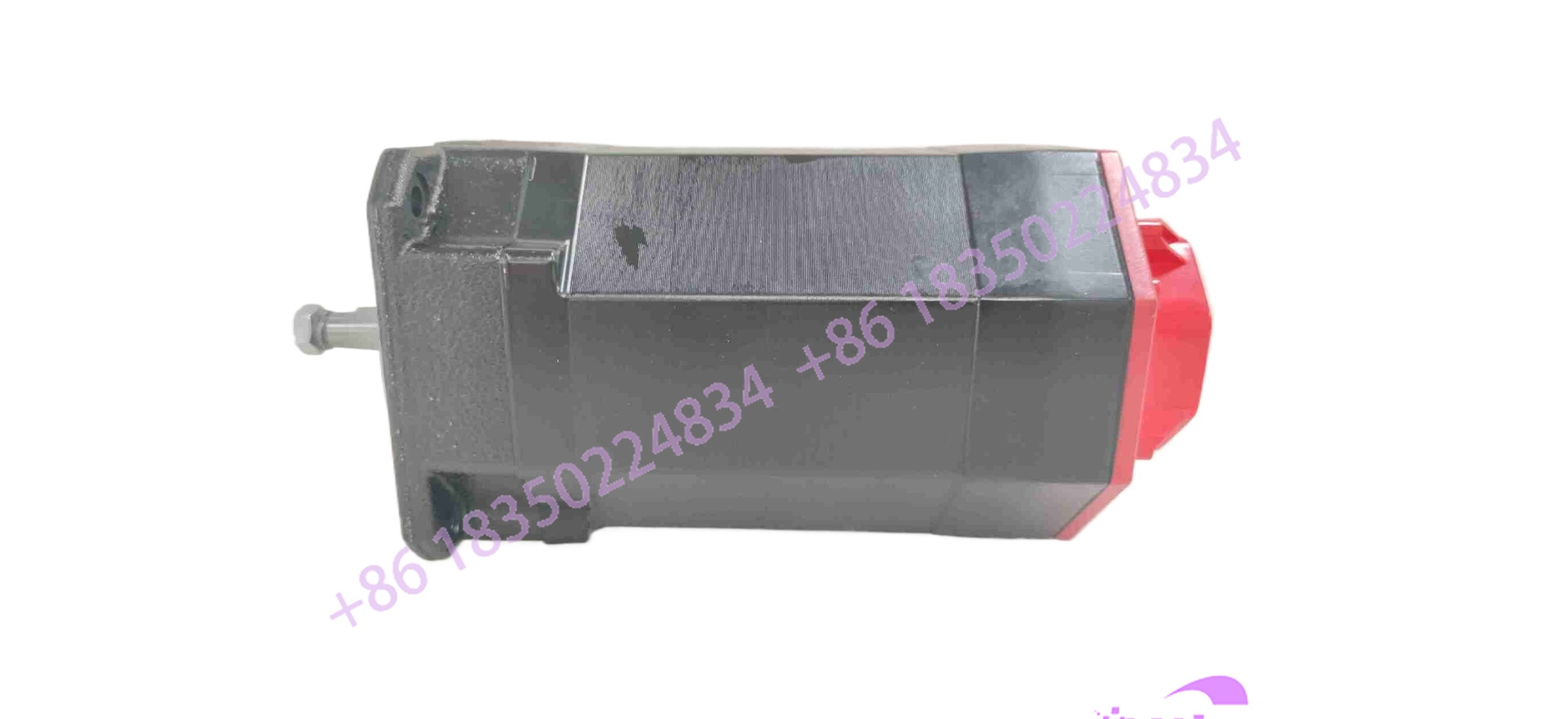
A06B-0238-B605
Key Technical Specifications
| Parameter | Specification |
| Manufacturer | FANUC |
| Part Number | A06B-0238-B605 |
| Series | Alpha iS 8/4000 |
| Rated Speed | 4000 RPM |
| Feedback Type | Alpha i Pulsecoder (Serial/BiSS) |
| Holding Brake | Yes (Integrated 90VDC Brake) |
| Taper/Shaft Type | Straight Shaft with Keyway |
| Protection Class | IP65 (Standard dust and water jet protection) |
| Cooling Method | Natural Convection / External Fan-Assisted (Depending on Cabinet) |
| Operating Temperature | 0°C to 40°C |
Field Engineer’s Pitfall Guide
- Ignoring Shaft Seal Integrity in Wet Environments: Warning: Coolant ingress is the number one killer of these motors. If the front oil seal is exposed to aggressive synthetic cutting fluids without a slinger ring or proper purge, fluid bypasses the lip seal and enters the bearing cavity, washing out the grease.
- Pulsecoder Cable Strain: Do not let heavy feedback cables hang unsupported. I have watched technicians lose hours troubleshooting intermittent pulse-coder errors (like Alarm 300) simply because dynamic flexing near the connector shell fatigued the internal solder joints. Always utilize proper strain-relief clamps on the cable tray.
- Brake Voltage Verification: Never apply full 24VDC directly to a 90VDC brake release circuit without the proper switching module, or vice versa. Failing to verify brake release voltage results in either a dragging brake that scores the friction disc or a failure to disengage, which instantly overloads the amplifier during axis motion.
QA & Testing SOP (Transparency)
- Visual & Mechanical Inspection: Every unit is checked for shaft runout, housing cracks, flange damage, and OEM label legibility.
- Stator Insulation Testing: Technicians perform a high-potential (hipot) and megohm insulation test on all motor windings to guarantee zero leakage current to ground.
- Feedback Alignment & Handshake Test: The integrated Alpha i pulsecoder is connected to a dynamic test stand to verify absolute position tracking, zero-point communication, and error-free serial handshaking.
- Dynamic Run-Up & Thermal Audit: The motor is coupled to a dynamometer test bench, spun up to rated speeds across various load profiles, and monitored for vibration signatures and bearing temperature stability.
Technical FAQ
Can I replace this motor with a non-brake variant if my application does not strictly need it?
Physically yes, but electrically and structurally it changes the axis configuration. Removing the brake version alters the weight distribution and requires parameter adjustments in the CNC software, plus you lose the vital safety holding torque on vertical axes.
What causes an absolute position data loss alarm after installation?
This typically happens if the backup battery voltage dropped while the feedback cable was disconnected, or if the pulsecoder’s internal capacitor discharged. You will need to perform a zero-point return (reference setting) after clearing the alarm.
Is the pulsecoder field-replaceable?
Yes, but it requires precise alignment tools and re-calibration. Swapping the pulsecoder in the field without proper alignment jigs often results in commutation errors; factory replacement of the complete motor assembly or pre-calibrated encoder module is strongly recommended.
Does this motor support high-pressure coolant environments out of the box?
No. While it features an IP65 rating against standard dust and splashing water, continuous exposure to high-pressure coolant jets requires auxiliary sealing, protective boots, or specifically rated connector housings.





