


Description
FANUC A05B-2452-C900 | Dual Cooling Fan Unit Assembly, New Surplus
Architect’s Product Breakdown
The A05B-2452-C900 acts as a primary thermal defense mechanism within demanding robotic cell architectures. Stationed directly inside controller cabinets, this dual-fan assembly prevents localized thermal throttling and catastrophic component degradation of internal drives and power supplies. Operating environments on shop floors are rarely hospitable; ambient temperatures often push limits, making reliable forced-convection cooling a necessity for uninterrupted multi-axis motion control.
When replacing this assembly, engineers must verify cabinet sealing integrity and check wiring harnesses for insulation brittleness caused by years of exposure to oil mists and thermal cycling. Neglecting a failing fan unit triggers cascading over-temperature faults on servo amplifiers, translating directly into unplanned line stoppages. Dropping in a direct OEM replacement restores proper static pressure and airflow channels, securing the thermal lifecycle envelope specified by the manufacturer.
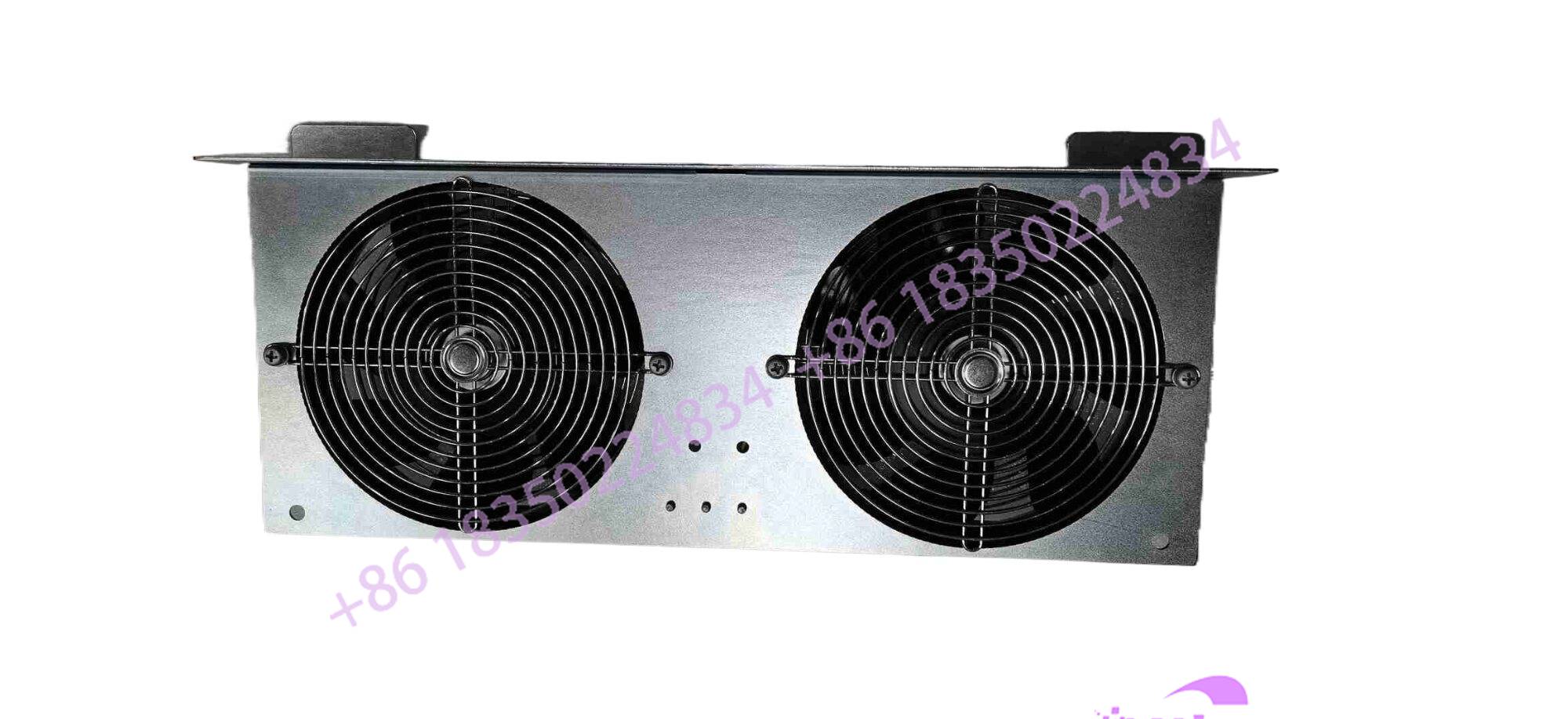
A05B-2452-C900
Key Technical Specifications
| Parameter | Specification |
| Manufacturer | FANUC |
| Part Number | A05B-2452-C900 |
| Equipment Category | Panel Accessories / Thermal Management |
| Operating Voltage | 240V AC |
| Phase | 1-Phase |
| Configuration | Dual Fan Assembly |
| Target Application | FANUC Robot Controllers (e.g., R-J3iB, R-2000iB series) |
| Mounting Type | Chassis / Panel Mount |
| Weight | Approx. 4.10 lbs (1.86 kg) |
| Operating Temperature | 0°C to 45°C (Standard Industrial Cabinet Limits) |
Field Engineer’s Pitfall Guide
- Polarity and Phase Wiring Errors: Warning: Mismatching terminal connections on 240V lines can cause reverse impeller rotation. Always verify airflow direction arrows stamped on the fan housing before buttoning up the cabinet panel; a reversed fan pulls hot ambient air inward instead of exhausting it, creating a thermal trap.
- Degraded Vibration Dampers: Over years of continuous operation, the rubber mounting grommets harden. Do not reuse crumbling mounts. Failing to replace them transfers high-frequency motor vibration directly to the sheet metal chassis, accelerating bearing wear and generating annoying acoustic resonance.
- The Clogged Heat Exchanger Trap: I have seen maintenance teams swap this dual-fan module only to watch the controller throw thermal overloads an hour later because they ignored the intake filter mat. Always clean or replace incoming media filters simultaneously. New fans cannot push air through a choked, oil-soaked filter grid.
QA & Testing SOP (Transparency)
- Visual & Origin Verification: Every incoming unit undergoes rigorous physical inspection for OEM markings, structural integrity of the plastic housing, and housing corrosion.
- Bench-Top Insulation Test: Technicians perform a megohmmeter test on the winding leads to ensure zero insulation breakdown to ground under high-potential stress.
- Live Spin & Current Draw Test: The assembly is mounted to a test rig, powered with nominal 240V AC single-phase voltage, and monitored using a digital clamp meter to confirm stable running current and absence of mechanical binding.
- Acoustic & Airflow Audit: Units are checked for decibel thresholds and smooth rotational velocity before being sealed in anti-static, moisture-barrier packaging.
Technical FAQ
Can I hot-swap this fan unit while the robot controller is powered on?
No. Because the assembly operates directly on 240V AC line voltage, hot-swapping introduces severe electrical shock hazards and risks shorting exposed leads against live backplanes. Always execute a complete lockout/tagout (LOTO) procedure before servicing.
Is this assembly interchangeable across different controller generations?
No. While physical dimensions may appear similar, mounting bracket alignments and connector types vary significantly between controller families (such as R-J3iB versus newer generations). Always cross-reference the exact part number suffix.
Does power loss to the fan unit instantly trigger a safety fault?
Not immediately, but internal cabinet temperatures will rise rapidly. Most FANUC controllers rely on internal thermal sensors; if airflow ceases, software flags a thermal warning before forcing a controlled emergency stop to protect the main CPU and drives.
What is the proper procedure for storing a spare unit?
Store the module in its original anti-static, climate-controlled packaging between -20°C and 60°C. Keep it away from high-humidity areas to prevent premature oxidation of the motor windings and electrical terminals.





