


Description
FACTS F1-130DR PLC 10 DC Inputs 8 Relay Outputs
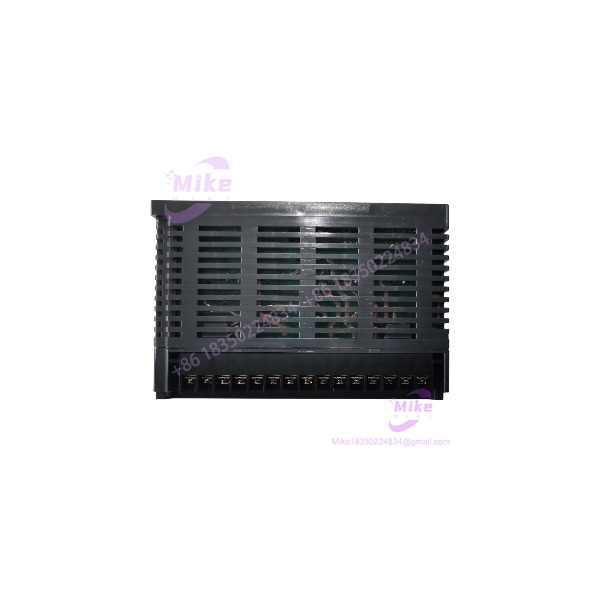
F1-130DR
Product Introduction
A machine still running on a DL105 does not care that the controller is old. It cares whether the replacement executes the existing logic, accepts the same field signals, and brings the machine back online without forcing a wholesale controls redesign.
That is where the FACTS Engineering F1-130DR remains relevant. This compact DirectLOGIC 105 PLC combines 10 DC discrete inputs with 8 relay outputs, making it particularly useful for legacy machine-control systems built around pushbuttons, proximity switches, limit switches, contactors, solenoids, and other discrete field devices. The controller uses an AC power input and provides an isolated auxiliary +24 VDC output capable of supplying up to 500 mA of combined external load.
The F1-130DR is not the same electrical variant as the F1-130DR-D. The latter is designed for 10–30 VDC main power, while the F1-130DR uses the AC-powered DL105 architecture. This distinction matters during replacement procurement because the two models can look similar while requiring completely different control-panel power wiring.
Key Technical Specifications
- Part Number: F1-130DR
- PLC Family: DirectLOGIC 105 / DL105
- Controller Type: Micro PLC
- Discrete Inputs: 10
- Input Type: DC
- Input Voltage: 10–26.4 VDC
- Input Configuration: Sink or source
- Input Impedance: 2.8 kΩ at 12–24 VDC
- Minimum ON Current: Greater than 3 mA
- OFF Current: Less than 0.5 mA
- High-Speed Inputs: X0–X3 support high-speed input functions
- High-Speed Input Voltage: 10–26.4 VDC
- Minimum High-Speed Pulse Width: 100 µs
- High-Speed Input Frequency: Up to 5 kHz
- Discrete Outputs: 8
- Output Type: Relay
- Output Configuration: Four isolated output commons
- Relay Operating Voltage: 12–250 VAC or 12–30 VDC at up to 7 A
- Higher DC Range: 30–150 VDC at 0.5 A resistive
- Maximum Output Current: 7 A per point, subject to derating
- Maximum Current per Common: 14 A
- Maximum Motor Load: 1/3 HP
- Minimum Recommended Load: 10 mA
- Relay Response: Approximately 15 ms ON-to-OFF / 5 ms OFF-to-ON
- Output Protection: No internal output fuses; external protection recommended
- Main Power: 94–240 VAC class
- Maximum Inrush: 12 A, less than 0.5 ms
- Maximum AC Power: 30 VA
- Auxiliary Supply: Isolated +24 VDC
- Auxiliary Supply Capacity: 500 mA combined load
- Communication: K-Sequence serial communication
- Communication Speed: 9600 baud
- Programming: DirectSOFT32 or handheld programmer
- Programming Cable: D2-DSCBL for PC connection
- Retentive Memory: 2.4K
- Programming Style: Relay Ladder Logic
- Functions: Forced I/O, timer/event drum sequencing and ladder programming
- Approximate Dimensions: 5.12 × 3.16 × 3.63 in
- Operating Temperature: -20 to +70°C class
- Manufacturer Ecosystem: FACTS Engineering / Koyo / PLC Direct legacy DL105 platform
The technical data above is based primarily on the DL105 user manual. In particular, the manual identifies the F1-130DR’s 94–240 VAC power architecture, 10–26.4 VDC input range, 12–250 VAC / 12–30 VDC relay capability, 7 A point rating, 14 A common rating, 30 VA maximum AC power, and isolated 500 mA auxiliary +24 VDC supply.
Application Scenarios & Engineering Pain Points
1. Legacy machine PLC replacement
The F1-130DR is a practical candidate when an existing DL105 controller has failed but the machine’s ladder logic and field wiring remain serviceable.
Keeping the same controller family can reduce migration work substantially. You avoid immediately redesigning every discrete I/O circuit simply because the original PLC has become difficult to source.
2. Relay-output machine control
The eight relay outputs are useful where field loads require AC switching, DC switching, or electrical isolation between output groups.
The relay contacts are rated for applications substantially above typical solid-state micro-PLC outputs, but the 7 A figure is not a blanket rating for every operating condition. Temperature derating and the 14 A common limitation still apply.
3. Mixed-voltage field wiring
Four isolated output commons allow different output banks to be arranged around separate field supplies. This can be useful when one machine combines AC contactors with low-voltage DC solenoids or other loads.
That isolation is one of the more useful characteristics of this particular variant.
4. High-speed discrete sensing
Inputs X0–X3 provide high-speed input capability, with the documented input circuit supporting operation up to 5 kHz. This makes the F1-130DR more useful than a basic slow discrete controller for selected pulse-counting or fast sensor applications.
5. Legacy controls inventory
For plants maintaining older packaging machines, conveyors, assembly equipment, process skids, or custom machinery, keeping a tested F1-130DR in maintenance inventory can be more practical than waiting for a production failure before starting a replacement search.
QA & Live Testing SOP
For a used or surplus F1-130DR, cosmetic inspection is not enough.
We recommend checking the following before shipment:
- Verify the nameplate is clearly marked F1-130DR, not F1-130DR-D or another variant.
- Inspect terminal blocks, housing, mounting points, and communication connector for physical damage.
- Check for corrosion, contamination, overheated terminals, or evidence of previous field modifications.
- Verify the AC power section before applying power.
- Power the PLC from a controlled source within the documented range.
- Confirm CPU operation and status indicators.
- Establish serial communication using the appropriate programming interface.
- Verify communication at the documented 9600-baud K-Sequence configuration.
- Load a controlled test program where appropriate.
- Exercise all ten DC input channels.
- Verify the eight relay outputs individually.
- Check relay operation under a controlled test load rather than assuming a relay is healthy because its indicator illuminates.
- Verify the auxiliary +24 VDC output if the unit will be used to supply field devices.
- Record any abnormal relay contact resistance, intermittent I/O behavior, or communication instability.
The original documentation specifically provides PC programming through DirectSOFT32 and a handheld-programmer method, so a proper bench test should verify more than simple power-up.
For shipment, protect the terminal area and exposed connectors against mechanical impact and ESD. Legacy PLC housings can survive decades in a control cabinet, yet one careless packing operation can turn a usable replacement into a damaged spare.
Field Engineer’s Pitfall Guide
❗ Do not confuse F1-130DR with F1-130DR-D.
The F1-130DR is the AC-powered model. The F1-130DR-D uses a 10–30 VDC main power supply. They are not drop-in electrical equivalents.
❗ Do not treat the 7 A relay rating as a universal load rating.
Relay output capacity is subject to temperature derating, and the documented maximum is 14 A per common. Motor and inductive loads also require appropriate suppression and external protection.
❗ Do not assume every has the same I/O architecture.
The family contains AC-input, DC-input, AC-output, DC-output, and relay-output variants. Verify the complete part number before replacing a failed controller.
Intent-Driven FAQ
Is the FACTS Engineering F1-130DR a PLC?
Yes. The F1-130DR is a DirectLOGIC 105 Micro PLC with 10 DC inputs and 8 relay outputs. It is part of the legacy FACTS Engineering / Koyo / PLC Direct ecosystem.
What is the power supply for the F1-130DR?
The F1-130DR is an AC-powered variant using a 94–240 VAC-class input. The manual specifies 30 VA maximum AC power consumption and a maximum inrush current of 12 A for less than 0.5 ms.
How many inputs and outputs does the F1-130DR have?
It provides 10 DC discrete inputs and 8 relay outputs. The inputs support sink/source arrangements, while the relay outputs are organized across four isolated commons.
Can the F1-130DR switch AC loads?
Yes. Its relay outputs are documented for 12–250 VAC at up to 7 A, subject to the applicable derating requirements. The contacts can also switch DC loads within their specified limits.
Does the F1-130DR have high-speed inputs?
Yes. Inputs X0–X3 are the high-speed input channels, with documentation specifying operation up to 5 kHz and a minimum pulse width of 100 µs.
Can the F1-130DR be programmed with DirectSOFT?
Yes. controllers can be programmed from a PC using DirectSOFT32 or with the appropriate handheld programmer. The documented PC connection uses the D2-DSCBL cable.
What is the difference between F1-130DR and F1-130DR-D?
The critical difference is the PLC’s main power architecture. F1-130DR uses AC power, while F1-130DR-D uses 10–30 VDC. Both use DC inputs and relay outputs, but they should not be treated as electrically interchangeable replacements.
Procurement Note
For a legacy-control replacement, verify the complete F1-130DR part number, terminal configuration, power source, I/O wiring, and existing program compatibility before purchase.
If the application depends on the controller’s original ladder program, preserving the existing program backup is often more important than the PLC hardware itself. A physically compatible controller without the correct program can still leave the machine down.
The exact unit condition should also be stated honestly — new surplus, open-box/NOS, used-tested, or refurbished are materially different procurement categories. The marketplace listing supplied for this part describes the unit as new/open-box surplus, but actual condition should be verified against the physical inventory before publication.





